The story in brief
Despite the shift toward corporate enterprise and modern administrative burdens, generational ranchers and farmers maintain a deep, enduring affection for the landscape, choosing to preserve their rich heritage of self-reliance, family unity, and harmony with nature.
Full transcript
long before the clatter of Modern Life was heard in Martin County a different song arose from the Shady hammocks and rain-soaked marshes it was a medley of sounds from man and Beast rifle-like crack of a Cowboys whip the soft-lowing of vast herds roaming freely across grass plants and boggy slews crackle of wilderness campfires as a lone harmonica…
Read full transcript
long before the clatter of Modern Life was heard in Martin County a different song arose from the Shady hammocks and rain-soaked marshes it was a medley of sounds from man and Beast rifle-like crack of a Cowboys whip the soft-lowing of vast herds roaming freely across grass plants and boggy slews crackle of wilderness campfires as a lone harmonica pierce the dark from the 1840s on hundreds of courageous settlers forged a new life in these swamps and prairies raising cattle and citrus to feed their families and fuel their dreams this is their story of hardship and Triumph the Wilderness that became Florida had sheltered the A's and other native tribes for centuries before Spanish explorers arrived in
the 1500s but these conquistadors brought two legacies that changed Florida forever the longhorned Andalusian cattle and the tiny orange seed the Spanish eventually abandoned this mysterious land but their free roaming cattle remained and Native Indians scattered orange seeds deep into the Florida peninsula by 1817 Florida became known for the violent clashes between adventurous settlers and Seminole Indians who had migrated here in the 1700s after the Bloodshed of the Second Seminole War Congress moved to encourage settlement by giving 160 Acres of wilderness to any armed settler who could build a home farm the land and survive for five years the new flow of settlers resulted in statehood three years later in the 1890s one of Western
Martin County's first settlers arrived by Ox cart Francis Marion Platt his wife Annie and their four children traveled from Pine Level near Arcadia bringing their cattle in search of open range they lived alongside the Seminole Indians on high ground in Western Martin County Francis named his tiny one house town Annie after his wife it later became known as Indian Town like many early settlers they raised both cattle and citrus a bad year for one crop could be balanced by the other they cleared the first road into Stuart a twisting Wagon Trail so that their children could attend school originally called the steward Annie Road it laid the path for today's State Road 76. isolated deep
in the wilderness where survival relied on Ingenuity and back-breaking work the Platts found the open space Frontier families coveted these people some of them still has the treat they didn't want anybody living very close to him if he was in five miles of his house you were stepping on his toes you better move further out and they they kept that going his houses built all over Florida and that was the reason they were built everywhere another Indiantown Pioneer in the late 1890s was Joe Bowers Uncle Joe and his brother learned from the Seminole Indians to plant their Citrus Groves on the high Knolls they traded regularly with the tribe which had settled nearby in a
patch of Oaks that is now Indiantown Middle School there is a Little Thicket of of uh of Oak scrub oak trees there today and the children now parked their bicycles out there but that's where the Indians settled and Joe Bowers dealt a lot and traded with them he had a little trading house parts of the Bowers Grove still exist today as does another Pioneer home built there a decade later in the early 1900s the Platts built a home in Stuart bringing their children closer to school the family's two-story house which also stands today was a testament to the success these Pioneers had achieved in the wilderness life in the Florida Wilderness whether raising cattle Citrus
or both meant dealing with nature on her terms some of the obstacles and difficulties they had with lack of Transportation except by horseback or with an ox cart oh the mosquitoes the sand flies and the horse flies I guess the rattlesnake was one of the worst things and then high water everywhere they went they had to swim their horses if it rains and the Hurricanes there were no warning like there is today about a hurricane coming you had to watch the weather and just kind of go by a field Florida's weather notorious for its abrupt changes Delta's stinging surprise to unsuspecting Citrus Growers a cold snap in late 1894 was followed with a catastrophic freeze
in early 1895. the only warnings were the train whistles frantically signaling the advancing Arctic air during the 95 freeze of February a story's been told that a grower could stand in his Grove and the noise of the tree splitting would sound like rifle shots it was said that some Growers told at the dinner table of the impending damage Rose from their seats and left the state overnight the Florida Citrus industry was essentially wiped out the turn of the century brought enormous changes to the settlement now known as Indian Town a large Company Southern States land and Timber bought Indian town and 2 million surrounding Acres Sawmills sprang up along the lake shore transforming Majestic Pines
into railroad ties many families were supported by the Sawmills but the native landscape was irrevocably ravaged by 1910 Southeast Florida was being hailed around the globe as a Land of Plenty here it was said Navas Farmers could plant orange trees and harvest their Fortune investors who bought a 10-acre plot in the newly created St Lucie Inlet Farms also received a free Town lot in Salerno prominent Palm Beach Attorney Charles chillingsworth used the same strategy to create Palm City two years later his Palm Beach Land Company developed hundreds of 10-acre farms and sent traveling pitchmen to find buyers many families lured by Promises of a cornucopia of abundance settled in Palm City they struggled mightily to
clear their land and plant Groves but early 20th century technology was no match for nature back when they planted those grows in those years they planted they we didn't have the Saint Lucie Canal they weren't in existence at that time and we don't have all the modern didn't have all the modern conveniences that we have today Florida's torrential downpours periods of drought and occasional Frost proved overwhelming to the small family farmer many settlers put their last dime into the sandy soil only to abandon their farm and return North with dreams and finances in Ruins in 1915 the United States Army began dredging an immense 25-mile long drainage ditch from Lake Okeechobee to the St Lucie
River the Saint Lucie Canal was envisioned as a thriving water Highway that would transform Stuart into a major port this grandiose dream never materialized but the Bessemer company in Port mayaka foresaw an equally promising use once water flowed through the Monumental Channel it could be pumped onto thirsty Groves along the Route and offer precious relief for flooded pastures it took eight arduous years to complete the canal but when water first gushed through the mighty ditch it signaled the dawn of a new era in agriculture for the first time man was the master of water and Bessemer was able to harvest the potential as the railroad carved its way through Cypress Bays swamps and hammocks the
Seaboard Airline Railway made Indian Town their southern division headquarters but the railroad's president a Davies Warfield saw even more he wanted to create a model city as a crowning centerpiece Warfield built the splendid Seminole Inn with its pecky Cypress ceilings made from trees in the alapata flats he died suddenly in 1927 and the Seaboard company abandoned his plans up until the 1920s fate had been far kinder to the cattle rancher than the Citrus grower weathered hard-working Cowman had turned wild scrubbed cattle into impressive herds that roamed freely across open range each spring the Roundup or cow hunt as it was called started anew cow man rode hundreds of miles chasing cattle out of hammocks and
swamps while fighting off hordes of mosquitoes with homemade Skeeter brushes sometimes where they didn't burn the woods the Flies would get so bad that they would kill some of the cattle and uh they would they would kill deer far out on the free range cow men would bed Down Under the Stars if it rained they had to sit up in their Saddles all night under a slicker food and shelter at the Cow Camp was limited to whatever they could find or carry from home the way we had to sleep on the ground was we had to cut Palmetto fans and stacked them up and that would keep the underground moisture from coming up and wetting
you from the bottom we didn't have ice like we had them had salt meat down and uh you got used to eat a lot of salt with me and I'd keep that but we just cook over fire and uh we get up early in the morning build fire if you if you're lucky had a coffee pot a lot of times what we had yes you can and we'd hang our meat on a stick the most time we didn't have no Grill like they did this day and time and you could take a sharp cabbage uh old Palmetto felt what we got shot just in all stick it in your meat and stick the other in
the ground and stick it on fire cowboying was a rough and tumble job that required a level head good cow sense and the right tools a horse a whip and a dog early settlers were able to make use of wild horses descended from those left by the Spanish these were small tough horses called cow ponies or Marsh Takis but a hearty horse was not enough to chase stubborn cattle out of the swamps cow dogs were essential to controlling wild cattle that could Stampede or scatter at a moment's notice in emulsive places the dog is a drive dog our dog is not that kind of dog we can drive the cattle we can't stop them we
got to have something to go up there to get ahead of them stop them because we can't outrun them to the Cypress ponds and the boggy marches and places the dog has to go hold them up for you to drive old blues struck his Trail Beauty treaty run that fox up a tree perhaps few cowboying tools capture the imagination as well as the whip made of woven hide stretching 12 to 15 feet it makes a rifle-like crack that could be heard for miles making the whips by hand was an art that George Jr Mills began at a young age many a cow man has carried his handcrafted whips as an invaluable tool and sometimes a
signal a lot of fellas would know if you pop that whip as much as three or four times successfully one right behind the other they'd say that man needs some help the cows are getting away from him or whatever you know they kind of we learned to go by it as a kind of a signal lag from one bunch of men to the other you know raising cattle or Citrus was not just a man's work women were the backbone of the ranch and farm keeping dozens of details running smoothly like I say I did a little bit of everything from cooking and and riding and working cows and running errands for parts and then every
now and then having to operate a tractor when you live 12 miles out from the nearest Hard Road you kind of have a different aspect on life you have to be able to do a little bit of everything so it didn't matter whether you were male or female black or white you had a job to do by the age of two Ranch children were riding in the saddle with their parents to work the cattle by five they had their own horse and a list of chores to do each day I remember one day Thomas about six years old he said daddy we never get to play baseball or anything like that uh and maybe all
the kids we don't have a swimming pool like the kids in town hey uh and I didn't realize they missed those things but life on the ranch had an intimacy with nature unknown to city Folk a ranch child's best friend might be a horse or baby pig but I was the youngest of four children the only Playmates I had were my animals and my brothers worked just like men I raised everything from alligators possums Hogs I just never played with dolls doing without was a constant theme in ranch life families often worked without outside hired help or the latest newfangled tractor but that pioneering ability to make do could spell the difference between success or
failure another thing is that my dad always told me it don't make any difference who you know or what you know how smart you are or how dumb you are or anything the only thing that counts in success is knowing what you can do without life in the saddle herding ornery cattle was never easy but in the 1920s it became much tougher the Texas tick arrived infesting cattle and other livestock a Statewide eradication program required Cattlemen to dip their cows in Vats of arsenic every 14 days cowboying turned into an endless cycle of rounding up cattle for dipping fences sprang up to separate infested cows from the dipped animals it was the beginning of the
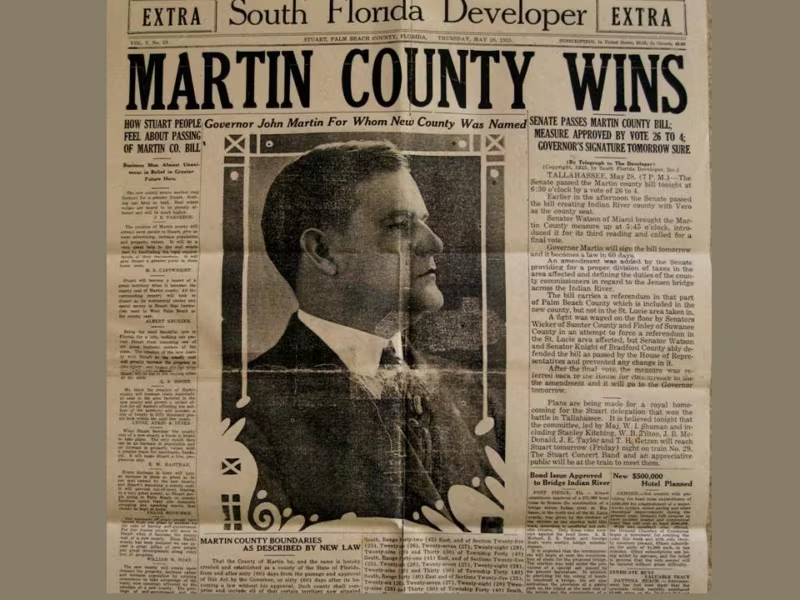
end of free roaming cattle herds in 1925 Martin County was formed with Steward as the County Seat but the new County quickly faced one of Florida's worst disasters the very next year two hurricanes wiped out the only large Grove in Palm City Farms plunging the area into economic turmoil but that was just a taste of the destruction to come in 1928 a hurricane with Winds of 130 miles per hour barreled across Southeast Florida powerful enough to break the Lake Okeechobee dike the storm's winds and floods killed over 1800 people most of the storm's victims were buried in a mass grave at Port mayaka those who survived faced homes in ruin crops underwater and an increasingly
Bleak local and National economy while Floridians struggled with the depression yet another Western Pest left a lasting mark in the 1930s dustbowl cattle were shipped to Florida bringing with them the screw worm they had a devastating effect on the cattle and the wildlife the Hogs the deer and everything and they would literally eat the animals alive screw worms laid eggs in any open wound making it necessary to constantly check the cattle for scratches cow men used tar from pine trees to protect wounds and replaced whips and catch dogs with lassos until the infestation finally ended but the cost of fencing and dipping cattle together with the depression put many small Cattlemen out of business to
encourage more tax income the state let new owners buy Ranch land for the cost of back taxes alone fencing rather than free-ranging became the sensible way to manage herds which were being upgraded with better bloodlines but putting fences in boggy marshlands was agonizingly slow work tractors were outfitted with wooden pads under metal tracks to keep them from sinking in the muck when I got to my land in Martin County it wasn't even a fence around it there were several ponds in there that was so boggy that even a man couldn't walk across and we'd have to lay down and kind of crawl over and through the water there in the mud to get to the
other side of it the 1930s also proved to be a turning point for the Seminole Indians the Indians believed they owned this land where their forefathers had hunted and lived but when they were unable to produce a title or proof of ownership the Indians were forced to relocate the ranchers and Growers who took their place also found their way of life changing ranches grew bigger in the 1940s major Cattlemen like GC troupe who created an ingenious gravity irrigation system worked on a larger scale the years of fence free riding had vanished along with a sense of adventure and kinship a lot rather live back in them days than I had today eat one of the
hard circumstances like I never had an electricity in the house or running water gloves 30 years old and we didn't have any televisions and no radios or nothing like that I missed the wildness of it because it was really wild and the cattle were wild and a lot of your horses you fed everybody that came by if you had to feed them the last pork chop in the house you fed them and you fed them with a smile because you wanted them to come back you wanted them to feel at home and feel welcome and it was really a lot of fun the day is not fun like it was today they got it downstairs
and it was a lot better life back then it was rougher and tougher but it's more fun The Winds of Change were sweeping through the Citrus Groves as well severe freezes in Central and North Florida forced the Citrus industry to move further and further south by the 1950s these Growers had discovered Martin County with its warm ocean breezes this was the perfect Citrus region but only for those with enough money to tame the tough land Western Martin County's topsoil had always been a three foot layer of rock hard dirt called hard pan in the 1950s and 60s specially created tillers and Powerful bulldozers equipped for boggy spots were able to reach the fertile soil hidden
below but this technology was expensive at almost impossible for the small family grower to afford would not be practical for instance to in most cases to plant a 10 acre or 20 20 acre grove it had to be usually hundreds of Acres huge Groves owned by multinational corporations spread across Western Martin County One By One The quaint old packing houses fell silent As Time swept away their purpose today only the Owens Grove packing house with its vintage equipment is still in operation the fresh fruit Packers were replaced with huge plants to process juice frozen concentrate and other by-products which early settlers could not even imagine but we also use a rind that's using cattle feed
we also have other products that are used in flavorings perfumes the hand cleaning materials and many other products that come out and this is a still an area that's expanding and growing no longer were a small family Groves planted wherever the ground was high and dry today perfect rows of citrus stretching for miles are shaped by machine Martin County Growers even helped create Innovative new ways of watering and fertilizing Conquering the twin Demons of drought and disease 1974 I did pioneer the the beginning of the microjet system a friend of mine brought the idea back from South Africa and we were desperate for some type of system because with three Springs in a row we
had run out of water in one of our other Groves in another County the high profitability of citrus in the 1980s together with more freezes in Central Florida spurred record plantings in Martin County but the overused supply has created new problems for Growers what's happening is that the supply is over the demand so right now orange juice is very reasonable for consumers however it makes it very difficult for the Citrus Growers to stay in business it's almost a break even and you really have to watch all your costs Citrus Growers still rely on the human touch to harvest and prepare their crops for Market this rugged land which once broke the hearts and finances of
countless small Growers now provides a living for thousands of citrus workers the future with its Global Market holds both Challenge and opportunity for Martin County citrus in these times of tightening competition and paper-thin profits the reputation of Indian River Citrus is worth its weight in gold the foreign competition doesn't produce as much grapefruit and it certainly doesn't produce as good a grapefruit as we can produce here in the river area and up and down the East Coast it's by far the best grapefruit in the world and one of the cattle men and women whose love for ranch life often transcends its profitability after Decades of protecting cattle from wild panthers and alligators ticks screw worms
mosquitoes droughts and floods today's Cattlemen face a different challenge our problems today is mainly taxation both state and County ad valorem taxes and the federal income tax which I'm sure you're familiar with today you have a lot of government regulation and if you run out of water and want a water hole you fish with waiting a year for a permit or something like that most of our problems today are paperwork but as tough and heartbreaking as the cattle business has been for some those who love working the herds would never trade their life for another well when you go through hardships and I don't think many people know what hardships are and you get through
and you can look out and see beauty and nature and you thank God how lucky you are I never made no big money if we went with the cow business but I've had some experiences that I wouldn't have never had if I'd have been involved in some other occupation you know you know after all I think sometimes that what a man's happy at doing is half of his life anyhow today's cattle rancher often chooses the business out of love rather than money Bob White has succeeded in a high-powered City Job but his Ranch offers an escape from the turmoil of Modern Life it's real important to me because you go to the coast all you
see is those concrete jungles you know uh I have no desire to be over there this is my life the cattle have given Bob and his family a refuge to ReDiscover the values of working alongside nature as evening drifts Across The Meadows Bob often pauses to watch the flourishing deer herds he's nurtured for him the ranch strengthens family bonds and creates lasting memories we work together and it you know as a family and I thought I'd just be tickled to death when Justin gets a little bigger where he can go along and help I like to see the kids have a good time I like to uh share with them what what I've got in
Pioneer Days Ranch families gave each newborn child their own calf cattle brands were like heirlooms to be passed from generation to generation today Parents try to hand down more than a ranch or a branding mark they want to preserve a fierce love of land and family so that it may never evade from memory foreign