The story in brief
He details numerous local projects, ranging from reviving abandoned athletic fields and establishing senior citizen initiatives to creating tiny "vest pocket" parks, all driven by the dedication of local civic organizations and residents rather than government funding alone.
About this story
Ultimately, the narrative serves as a warm tribute to civic pride and collective effort, emphasizing that robust parks and recreational spaces are essential for the mental health, creativity, and overall well-being of any community.
Full transcript
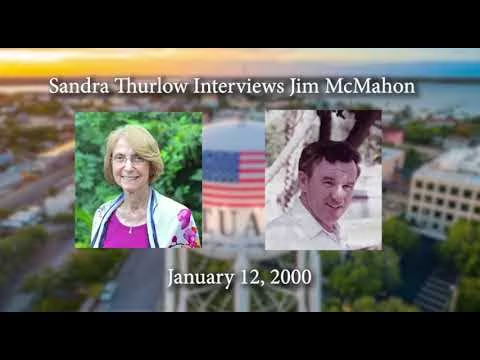
today is January 12th 2000 and I Sandra thurlo will be interviewing Jim McMahon Jim I'd like you to tell me how you came here and uh a little of your background your personal background uh as a young man I lived in the state of New Jersey and after I got out of the military a friend of mine…
Read full transcript
today is January 12th 2000 and I Sandra thurlo will be interviewing Jim McMahon Jim I'd like you to tell me how you came here and uh a little of your background your personal background uh as a young man I lived in the state of New Jersey and after I got out of the military a friend of mine was moving to Steward and uh three of us decided we would come that living in Florida sounded quite nice so I moved and I had planned on settling in the Cape Canaveral a area and uh I visited steuart and within one day I was employed and I've just been here ever since it's a wonderful place and this is what I I call home what year was that that was 1958 and um so who hired you and how did that happen when I first came to town I was employed by KRA and crane electric and uh I did uh residential type work and rebuilding electric motors and pumps and things of that nature but as a young man I had seen uh a lot of problems with youth not having constructive things to do so through the steart JC's I was working with uh four youth organizations and trying to plan activities for youngers from that uh an opening became available in the city of Stewart and I was approached about becoming director of what was then called the Stewart Civic Center on flag Avenue and so I accepted that and I went to work for the city of steart as the uh director of the recre of the uh Civic Center and the recreation department uh who hired you who approached you um I was approached by uh commissioner Ed Higby but the actual hiring was done by Joe Crowder who was the city manager but uh Mr Higby uh was a commissioner and he knew a friend of mine uh Bob Gan and Bob Gan was at that time the owner of Higby electric he had purchased it from Mr Higby and I had been working through the JC's and also Bob was in the JC's and Joe crankshaw who worked for the Stewart News at that time uh he was aware of some of the things that uh I was doing and somehow or another all three of them were talking about the recreation department and my name was mentioned and uh from that of course Mr Crowder being the uh uh official who was hired as the manager actually did the hiring were you single at the time or yes I was single and uh were there many single men in JC at that time there were quite a few yes I was uh I looked forward to getting into it I was the youngest JC at the time at then you had to be 21 and when on my 21st birthday I said I want to join and I joined the JC's so you were really young when you came here yes ma'am so so let's go when were you born 1937 October 4th okay and you were 18 when you came or 20 no I was I was right around 20 20 years of age 20 yeah I was between uh I should have been able to do that so okay so uh and you were single okay and could you name some of the other people in JC's at the time uh cotton Rogers uh Bob gatan a little later on Joe wette okay they just but it was quite active yes it where did you me mallerie Johnson or where did you mean at that time it was at the Lighthouse over the Roosevelt bridge and uh the owner of the lighthouse I can't think of his name right now now was in the JC's so we met in their meeting room uh Bishop was another man he was the administrator of the hospital I pretty sure was Evans CER senior you've really seen a lot of changes in this town yes ma'am he were bad active that young okay now tell me what you were faced with when you went to the wck center well at that particular time there was uh just a crowd of rough boys it was not the type of thing that you see nowadays where people were were uh robbing people or beating them over the head or using drugs but they would drink on the weekends and they would just you know race around with their automobiles they would do a lot of foolish things and I would say boy things that were not right but they were not malicious and so we started off to uh try to get a spirit of of uh feeling that the building was theirs I asked the commission if I could have permission to rename it the steuart youth center with the thought in mind that it would in no way change the operation of the facility uh noting that YMCA and YWCA let uh people of uh all Faith sin at that time they would let the women into the men's and so forth and and so it was it was just to give the young people an identity and so among our first projects was to to completely clean up and repaint the inside of the building one thing I do remember was we lowed the flag pole and uh bunny Abbott was uh with the Stuart news and he came down to take a picture and he wanted the young people to pose similar to the U raising of the flag on Evo gima so he went wanted to have them in a pose similar to that when they raised it well there were quite a few rough boys that were helping put the flag back up pole back up and uh people said why did you put their picture in the newspaper I said well because they're the ones who painted the building and painted the pole and uh are you happy to see them doing that rather than some of the other things that you were doing so from that we went forward uh we tried different things we had uh what we call jamere days where had the young people at that time the high school was on uh Fourth Street which is now East Ocean Boulevard and they would walk over and we had our own records and with a ticket you could select three records that we would play your requests and we put out a potato chip uh package and alongside of it was a little tube that I had gotten from one of the the news media people and it used to be that if you bought a newspaper You' put a dime or whatever the paper was a quarter maybe on the weekend or something into this tube so I asked him if I could have one of those tubes and I uh put in an honor System for potato chips which everyone laughed at and said you won't have any chips by the end of the day well much to everyone's surprise and I was very happy we came up short once in a while and some times we'd come up with too much but the honor System worked pretty good and uh then our young people I thought well we ought to be doing something for the girls so we ought to have baking classes so I ran down and I bought mixes that were as instant as they could be at that time and I read the directions and everybody thought I was Chef boy ad or something we were we were baking cookies and then we were sell telling them to the boys well the girls couldn't make the cookies fast enough till the boys ate them and they wanted to go on to bigger and better and that really uh was not my forte at all they quickly found out that if I couldn't read the directions ahead of time we couldn't do it so I approached the uh junior Women's Club of Stewart and the junior Women's Club came in and they helped the ladies with all all kinds of programs how to make uh fancy sandwiches for parties how to bake how to groom themselves how to walk properly and they put on a a lot of excellent programs over the years for the young people and in the beginning I had sent out letters to all of the Civic organizations and inviting them to participate and uh be part of the department and to bring us ideas and also was sent out to the various churches in the area the group that held in there the longest with us while everyone would help when we asked the junior Women's Club of Steward every single year until they went out of existence did a program for the for the young ladies and worked with us they were also instrumental in uh giving uh buying all new curtains for the recreation center and also helping spearhead uh the building uh expansion of room number four and they received a considerable help from The Jeffersons on that as well so the junior Women's Club did a lot with us as well as other organizations but they were especially good with the young ladies and we just explain room number four it is the room that is uh facing it's separate from the rest of the building and it uh faces the steart feed store so if you used US1 for North and South it's very difficult because actually Colorado Avenue is north and south so if you use directions everybody's lost but if you would use Flagler Avenue it would be going in the direction of city hall or the feed store and it's the separate building uh to itself can you remember that year no years I'm I'm going to be real hard on giving you years I but that you're talking about Peter and Joan Jefferson that is correct and they coordinated so long ago I you know I can vaguely remember right and they coordinated uh as I said through the junior Women's Club they were the ones actually headed it up but uh uh Peter drew the plans and Joan was quite helpful and uh you know helping them talk to contractors and things of that who paid for it it was paid for for the most part through donations and uh near the end the city did put some money into it uh I can tell you that Ed Glascock was the uh city manager at that time but they did all sorts of things they asked contractors to help donate money they also sold blocks out back for $100 and you would put your name on the Block and if you go behind the building they're still there on the on the patio and that's what they made the patio out of these squares it was just an overall Community effort that's great and that's one of the things uh now I know you began with just the white children do can you remember when uh well did it start just when we integrated the school that you uh no we were actually uh the city of Steward had a dual program it was uh segregated when I came with the city but we had a lady by the name of uh edria Mackey and she uh had a small Center on East 10 Street and next to it was a uh an old tennis court it was a concrete type tennis court I might say that the the tennis courts and down town were deplorable too so I mean it was not unusual but uh when I came I went over and introduced myself and even though I was had nothing officially to do with the building I always uh kept in touch with her and keeping the pool sticks in shape and helping buy things and whenever I would present something to uh at that time Mr crowed a purchase we would purchase a uh a similar item for the 10th Street Center when it uh for instance since recovering pool tables or things of that nature uh we did them both at the same time uh the facilities though uh at that time they were segregated and I assume that the the youth center now was better a little better than the 10 Street it was larger uh the building originally was a Uso for the military and through uh uh changing of hands and so forth it became city property so the city did not have to uh build the building uh the city uh when I came to work for it was uh so to speak almost living hand to mouth uh I went to work for the city for $70 a week which was actually a a $10 decrease from the the job I had I uh I wanted to get into uh uh working with young people and but they we just didn't have anything a little side issue that would be funny uh it it has nothing to do with Recreation but just to to let you see the city was that I saw one of our City trucks going down the road and it had dual wheels in the back and it had two tires and the two tires held the older ones off the ground so they didn't touch the ground and I went to the superintendent and I said I'd never seen anything like that in my life I said why why did they do that and he said well we could only afford two tires for the truck he said and when we go out to the dump and we sink down in the sand the other two take over and can help us pull through I don't think many people have seen a city that was uh struggling like that is that something so in the city um you had the city manager who was U Mr Crowder that's correct okay and the commission who else was there you had a clerk we had Mrs mccre was the city clerk when I first came Ben hadap was the street superintendent and uh most everything uh came out of that department at that time any kind of construction it was a small City or anything that had to be done they would call up the sanitation department and the people would do it from you know trying to paint lines for uh parking automobiles to if something went wrong at the building there was a uh Louie gray was a maintenance man and he just went wherever they sent him and many things were done uh through Community effort in other words if you wanted something or needed something uh you would make a plea to a Civic organization and they would help uh an example being the U steuart tourist club which back then had uh old meetings that exceeded 400 people and when we needed tables they were willing to uh purchase the materials and then of course Louis gray the maintenance man made the tables and just things went on like that as I say uh our our furniture which was uh World War II vintage uh the stuffed uh cushions that went with were just worn out and they looked terrible and I remember the ladies from the Garden Club said they would put cushions on it and they were very concerned because it was going to cost almost $1,800 to do that and they were concerned would it last with the young people take care of it and uh we're very delighted to say that that went for years and years years and years and the cushions were still there so the ladies did that sort of thing and it just went on like that so many things we uh when we needed heaters uh one of the clubs gave half the money and the city gave the other half to buy kerosene heaters to to heat the building back then and uh in the in the summertime it was kind of warm and the duplicate bridge club bought the fans uh secondhand in Palm Beach County some big estate took these paddle fans down and uh they were purchased and we install them the city did it I did some of the electrical work on it myself and uh we we did it and that's the way the community was and I I think that has been over the years one of the things that I have been very very proud of with with our city is that when something had to be done they come together I can remember uh and this is not Recreation oriented although they used our building was that when kidney machines first came out they were given to individuals if you didn't have a kidney machine you didn't live and if you couldn't prove to them that you could maintain which was quite expensive uh the machine and get whatever chemicals and all were necessary you were not put on the list and our community came together and there was a man by the name of Paul Bud that needed a machine and they had a big festival and they fish fry and did everything all around the recreation building and raised the money and and had enough to keep that machine going and that's the kind of thing that I've seen over and over again in steart you've mentioned the tourist club and the duplicate bridge and the youth um other things that went on at the re Center we had uh at that time uh Stewart was was the really the main hub for everything so at the uh Flagler facility which went by different names it started off the Civic Center it went to the uh steuart youth center and it the steuart recreation center is the present name and each of them it was felt uh improved the the uh image to the public the actual operation didn't change but we had all of the Cub Scout and boy scout organizations there the junior Conservation Club met there uh we had craft classes for ladies of all type whether it be um pine needle it was scrapped craft it was uh knitting crocheting you you name it all sorts of things uh people would come in the beginning uh television the reception was not all that good it came out of Miami and West Palm Beach and if you didn't have a very good antenna you didn't get it so just having people come in and watch ball games and sporting offense and sit in the front and do that uh that was something that the young people people and and old people themselves like to do and over the years um with all of the different types of organizations like uh I could go on and on Anglers Club was there um it's just difficult now all I can see the junior orange bow contest was there it was originated summer camp summer camp we had all the time and it just went on but one of the the things that that I think made us a little bit unique and it was one of the things that while I was there and then later became director uh I didn't want to lose was I did not believe isolating people by age was a good idea now I believed in keeping them separate in rooms so they wouldn't drive one another crazy but all of the common areas were shared by all ages so that if people were of age of grandparents they came and they saw the young people doing things in other areas likewise the younger people saw what the older people were doing now along with this building of course there was the one on East 10 Street and while it was a smaller building they had um all sorts of table games over there we eventually put basketball on the outside for them uh they had pocket billiards uh they had summer camp program and for instance speaking of working with organizations the the Club 400 was a ladies group and uh came Easter time we just didn't have very much money so we went to different clubs and organizations and they were one of them and they would purchase eggs so that we could have an Easter egg hunt for the black children and then we would color the eggs we the Club 400 uh afroamerican yes it was it was all black ladies and they were in the uh community and uh I went to them and told them I would like to do something for the youngsters at Easter and would they be able to help us buy the eggs so they bought us the eggs and then I had so after immigration you were in charge of 10th Street too uh that came that came a while later it came when uh uh Mr Glascock first became the city manager he did not realize that my title only was for the one building because I used to watch over the other one all the time and he came to me about a budget and so forth and I told him well I had never done it that uh way because I was only in charge of that building and uh at that time the city was in very desperate Straits and he said well he said I'll tell you what he said I can give you the title he says I can't give you raise and I can't give you any money do you want to do it and I said yes I said I'm already doing it so we we did that and as I say there were a number of uh uh black uh programs that we had put on and we asked the community for help and then integration came along of course with that we had uh along with that facility uh we had a number of parks but we also had the shuffle board building which predominantly uh at that time and even to this day as far as the courts are concerned were retired people we had two clay Courts for tennis which were in deplorable condition uh on uh stman Boulevard and one concrete one at the 10th Street Center and we had two baseball diamonds and a group of men stman are you talking about really right at Memorial Park still that is correct yes stman that road okay stman used to go through from Georgia Avenue at the middle school over to Flagler and only with the recent Renovations of the ballpark was that road uh divided up so that you can't go all the way through um but the the ballparks themselves everything what you have to realize is it was a small community and volunteerism was the name of the game and while I was the paid employee for the recreation department you can imagine one person can't do very much of anything and uh eventually the the department was formed when Mr Glascock came around and I was given the oldest employees in the city to work for me because they felt like if they were in indoors it was a little easier on them uh back then there was no retirement there was nothing so what the city would do was with these older gentlemen and one one man for instance that worked for the city 40 years Mr Clark Tom Clark and so so long as he was physically able to come in and do some kind of work the city was going to allow him so it's almost like welfare but you worked I me it was yeah I wouldn't exactly say it was welfare they were doing their job but they eased them into work that was less strenuous for instance uh uh sweeping and cleaning the buildings was like a lot easier than than trying to pick up garbage cans or pick up rubbish along the road or paint out in the hot sun so they were actually doing their job it was uh it was just an easier type of employment for them and this Mr Thompson Tom Clark Tom Clark okay what had he done before uh he had worked through the uh which that time was sanitation did everything so he was in the sanitation department he was it he it well I mean he was he was one of the employees over there and then there was Tom Newman who worked at the recreation center in City Hall and I can't think of the other name Westerfield I think it was I'm not positive but he worked over at the he worked at the ball diamonds and took care of those and because almost everything that went on in the county went on in Stewart we were in need of additional fields and uh Cal Montgomery headed up a group of people along with the baseball coaches and little league coaches and they came to the city about building a new set of bleachers at saish Ballpark and they also wanted to put two addition fields on the outside of the concrete fence now sailfish was originally built uh and had a wonderful Set of Lights it was for the Miami Marlins and they played here and unfortunately the lights had not been used at all and I came along and I was young and a little crazy and there were 70t poles and and they weren't working and and we didn't have the money to have the lights fixed and I asked the city manager I said well if I change the lights will you buy the light bulbs for us and he said yes to that so I went over to Mr higgy who was in the electrical business and I borrowed a safety belt which he said it hasn't been used in a long time and I don't know whether it's good now if you're going to hang upside down from a pole 70 ft that's not the thing you want to hear so I took the the belt and one hand and I held on at all times and went up and uh we got the lights working well enough to play night ball which hadn't been done in quite a few years I assume you weren't a single man risking your life at this point no I was I was a little older but uh I was still probably a little crazy but you had children and uh right no that was early on very early was early on so it at that point I I may not have had children yet but I it was a a life threat yeah it was it was fun well Whitfield the funny part of it was that the man who worked with me the elderly man is name we called him Whitfield and I can't think of his his regular name his job was to point out which ones to change and and uh send the light bulbs up well he he kept looking at the ground and I holled what field withfield so finally I came off the pole I said you have to look up I said you I can't hear you when you're looking at the ground he said well I can't do that said why is that he says when the clouds were going by he felt like he was moving and he would fall down so I told them I said lay down on the ground and you'll know you can't fall so he would lay down and holler so we had a lot of fun in the old days but at any rate missed the he got him to work oh yes he oh yeah we work I mean the lights there yes we got them to work we didn't get them 100% but we had there were so many lights because it was the Marlins I remember the number there was 144 1,500 watt lamps on that you could probably get a suntan so even though we couldn't get all of them working there was more than enough to light up the fields for for nighttime ball uh do you know the uh story about the Marlins coming and how they happen to come here and no unfortunately they had left and that's why the field was not maintained but the Marlins uh which was uh at that time was a semi-pro team played here but we had men's baseball here and we had some wonderful players uh judge Harris Lowry uh and uh Charlie Hall the stories that I have been told is that when when they played baseball they would tell castal lumba company so they could park their their truck underneath the shed because these men hit the ball so far that it would bounce outside the ballpark and sometimes on the Hop would go and hit the trucks and it would break their windshields so they would tell them when they were having ball gam so that they would put the trucks inside under the shed but at any rate U Mr mon gy and uh all of the volunteers from the different organizations put up a a new set of bleachers and rebuilt field number one and two and then went on the outside and put up two smaller Fields one was a little league size field and also for girls softball and the other one was a t-ball type field so then we went from two to four ball fields and and uh many things were done the the clay courts no one was playing on the clay courts and I tried getting them going and I talked to different people and it was you had to water them and roll them and we did that and uh got them in shape to where people could play a little bit but the tapes were getting old and finally we uh were able to budget to have those two courts resurfaced uh tennis courts and the hospital Pond area were they playable no when when I uh when I came to the city that was that was just a very rundown very deplorable uh Corner uh I don't know what happened along the line how how things uh slipped I don't know whe the private individuals which back then a lot of those things were clubs and organizations would get together and they and they didn't have an interest and then the city didn't follow through uh some of the people that I know of which uh during the war time was Mrs Krueger was involved in it and uh Mrs Bartlett from what I understand helped out some at the uh recreation center and then that was taken over after that by a a gentleman called pop cablo and after Mrs uh after pop C Bloom was a Mrs gaale and uh Mrs Dave gaale and she was called Diane she went to work at the Stewart News and then somewhere in between and I'm not sure whether it was before or after was Tom shreen Goos and he was there for a while and then eventually I came along and during that period of time as I say it was like you know um people probably were were to be just at the recreation center and even though that's what I was hired for I saw that the other things needed to be done and I was going out and doing it but uh uh it was not anything official and it was every time I would see something I would have to go into uh try and get money for that particular one because I didn't budget for that and it was all to get an okay when you had an idea or did you have to go to the city manager or any of the clubs and organizations and things that I did at the recreation center I was pretty well left to my own to do that but when I went out into other areas like when I went over to 10th Street or if I went to the ball diamonds or the shuffle board court or any place that was not actually my responsibility I would tell the manager that that's said come come to my attention that there was something needed to be done whatever it is did he feel we could do it occasionally he'd say yes and then other times you say no we don't have the funds now you know you have to wait and look at budget when it comes around if we can uh can do that uh with the passing of Mr Crowder uh uh that's when I uh got authority to do things through a glass coock and of course then it was through the budget procedure and that was presented to the commission you would tell them what your ideas were and it went you know forward from there did Mr glascott pay more attention than Mr Crowder was it more a lazy affair with Bob Crowder uh it I think what it was is that uh the community was starting to grow more and it's like anything if you have someone that's organizing and working with volunteers you can bring more to the Forefront in other words like if you had the baseball people and they were saying they were needing more equipment or more space or whatever it is and someone could say you know the city is not going to be able to afford that for quite a while maybe we can get volunteers to do things and you would just you know kind of be the the spark to get things going now to be truthful I did not uh I was not the one who got things going uh for the first renovation of the ballpark but naturally people did come to me and talk to me and everything but there was a very dedicated group of uh uh volunteers that saw that need and they were the ones who started to present it go to the city Cal Montgomery Cal Montgomery and that group yes there were there were a number of people the reason why I remember Cal's name more so was that he was the one who was drawing the plans and so forth and that's were the things that I was looking at with him but there were just literally you know dozens and dozens of of people that were out there uh working like the parks you were you responsible for the parks themselves well here again what we had is uh eventually as things started to break away they had a parks department which was Mr Amer and the cemetery so Mr Amer had those two I had the recreational facilities and because it was necessary for me to have things in order I did a certain amount of parks work if it was a recreational type example being Memorial Park he took care of all the grounds but the ball diamonds because I had to have the fields cut and dragged and so forth for for ball games I had at that time started getting some people to be able to do that so that if someone was booking a ball game uh we could coordinate all maintenance on on those facilities ourself now as time went by and Mr Amy retired then uh Robert Hall came along and he had it uh that he took over the position that Mr Amer had and then as time went by uh further and uh Robert Hall left then Recreation and Parks were put together and streets and Cemetery went together and then eventually the cemetery was sold off to private Enterprise so that was kind of the progression when I left the city I was a director of Recreation and Parks when that when they sold the cemeter it seems like they sold it to acop First did they can you remember they sold it I can't tell you the year but but I mean they if just too much to maintain wasn't it well again it's how much of a business approach now this is my feelings towards it Mr Amer while he was still with the city he was trying to get them to bring mzs in and he had gotten information on it and Mr Hall had done the same also the fact that the lot sold at very reasonable amounts of money uh in comparison you know the two so what it really needed was someone to be able to bring in the mums and the city did not seem to want to do that course the superintendent tried bringing that forward and the the ideas were not accepted and also uh for the city to try increasing the price of the lots that was uh also um something they didn't want to do by turning it over to private Enterprise that was the first thing they did they immediately put a mum in uh you know they they were uh coordinating packages where they could sell a fun funeral and and a plot with it and everything else and it just took on a different approach I think the city could have done it if they wanted but they felt that uh just sending it off to private Enterprise rather than being the cemetery business was what they wanted to do now even with the school system even the buses I mean just changing so okay can you go through the property that you were aware the city owned sure uh first of all when I came to the city I was uh uh at the the recreation which was uh the steart youth center Stewart cic Center three names the same building which is next to the Stewart Feed Store on Flagler the city had uh the piece of property there and then it went along the river down to the building that the coot auxiliary met in it's City owned building but the property line actually went right along the eve of the building and the Ashley family many years back had in sold the property from the coot auxiliary and that dirt road that ran down through there up to the railroad tracks They sold it to the railroad with the uh caveat that if they did not use it for railroad purposes that they would be given first offer on purchasing the land back now all details of it I don't know but most people thought that the park was that far out myself included until it was uh until it was surveyed the dirt road that was there was not the dividing line that was actually on FEC property and uh we we actually had installed a piece of equipment off of our property not knowing where the property line was then as years went by uh the blakesley family owned two lots that were between the recreation center and the Stewart feed store and those two lots were purchased by the city so then they they own those two lots there we had a park that was had nothing it was just it was just there it was land and that was Shephard Park which is located uh West Ocean Boulevard which was also known as Fourth Street and US Highway number one and there was there was literally nothing there you just went in eventually we got a few picnic tables and so forth in in later years it was uh developed with uh funds from the U State of Florida with the called the fap program and the city put put money in it as well the small piece of property which was called Church Street park it had other names prior to that but it was at the end of Church Street at the railroad tracks that was in the East stward area uh it was overrun with with uh sandspurs as all our Parks were and there was some piece some pieces of of playground equipment that went into that park now I don't know who purchased the equipment for that but I do know that the jcss had purchased the equipment in fly on the end of Flagler before I became the director and that equipment was the same type so whether they did it for both parks I don't know but it was exactly the same equipment it was It was a the company was American and there was no mistaking their equipment it was good rugged heavy equipment then there was uh of course a 10th Street and it had a small recreation building on it and it had the concrete court next to it which was uh used more for basketball than it was for tennis but it it was there then on okay which side of 10th Street this is uh where where the present Poli the police station five uh no that's that's seventh 10th Street is three more blocks over okay but where where the Boys and Girls Club is uh it's it's called the steuart Civic Center it's the City recreation facility and they may be one of the groups that are meeting there but it is the city facility and the smaller building over there was the the center the new one was built next to it but that was the original Center yes it's still there and it was built from scratch it was built from scratch hand me down no then Dixie Lane which is now Housing Authority property there was a ball field uh football and baseball field that were used by black people when the Housing Authority was being developed there was a deal made that they would let that land be used to build houses providing they would take over the recreation area and put in some nice equipment and so forth and this Arrangement was made with the city they never did fulfill the commitment uh because they didn't have the money they did modernization to the building's Electric System and they put a ceiling and some lights in and they did put some recreation equipment in but they were supposed to uh you know replace the ball diamonds and everything else the the facilities that you see over there now were done mostly through the city and uh through a program uh uh with the federal government where they came in and gave assistance with it it was a a program that I had uh applied for and was able to get now the Housing Authority isn't that fedal too I mean I I don't understand but they didn't have money they did not have when they built the facilities they did not have the money to do the things with Recreation that they thought they were going to be able to do so they were supposed they were supposed to be the ones to install the ball diamonds and or the ball diamond and the lights and things of that nature so we must have owned that that property for a long time maybe when it was platted way back I the the property itself was has been owned by the city for years because it was the original wellfield for the city War system oh oh okay and when we were doing planning for the city I had requested and the city uh did it was to put in various pieces of property into what I call dual use which that it was actually first preference was whatever the water department needed but that it could also be used by the recreation department and that was one of the pieces of property that we were able to to do that with so we lost the property on Dixie Lane and we deed over 5 or 10 acres to the to the housing authority and have gotten comparatively speaking very little in return for that swap it did not go the way it was supposed to now the Housing Authority is a separate entity of city government so it's not like you know it's a it's a lost deal it's what they do what the City commissioners appoint the hosing Authority board which operates the Housing Authority but it is the steuart Housing Authority with Federal money in it so it's kind of a joint effort and it those those uh uh Parks were there we had of course Memorial Park and uh many years back there was a need for the courthouse house to expand on East Ocean Boulevard or Fourth Street and in doing so they were encroaching into the park which upset many of the volunteer groups they did not want to see Park land they also had expansion through the sewer plant over there the Wastewater Plant and it upset a great deal of people and the city and the county uh made a a deal to purchase they were homes on Georgia Avenue and the homes on Georgia Avenue were right next to the shuffle board Club so they purchased those homes and demolished them and gave the city that land in return for being able to uh build additional additionally onto the uh Courthouse and expand out into the park so there were private homes with kind of within Memorial Park well they they were in the property that was yes was made they were there prior to being made into Memorial Park now uh that that was uh accomplished and and that land swap was was made it still did not make the ladies very happy because they made some other expansions and they finally uh said they were so unhappy that they were leaving and they wound up purchasing posum long and that was one of the things that did it was that uh one of the expansions knocked down a a slat house so to speak and and potting area and so forth and they felt like that anything that they did was was uh subject to being moved by the city if they had to or the county if they had to expand governmental facilities so the ladies uh went off and purchased the posum long and that's what the Nature Center is so probably pink husty in that group yes so um Virginia Forest maybe yes Mrs forest was very very involved that she was the one who placed the eagle in the front of the uh Memorial Park that eagle is uh was placed there by her of course that's when she was spearheading the drive Nationwide bringing attention to the uh to the plight of the eagle wasn't it originally a bronze eagle and didn't it I mean wasn't there something about the ego being going to no the to my to my knowledge that particular one has always been the one that's there yeah um now the water treatment plan was there quite some time ago wasn't it right yes it's been expanded the water treatment plant and uh there used to also be the the water plant was on the opposite side of the street but as it grew it it moved down to to yes to 10 Street and Palm Beach Road so it's there but so you've watched all that Evolution we had oh I'm I have this uh paper that Dr Minar wrote and about how he exper headed the movement to get Memorial Park it was called 47 acre subdivision yes and and I guess those houses it was a failed subdivision so maybe they sold a few lots and that's what those houses were just right there actually the original uh the original property went over where the pond is in front of the middle school and uh even the from what I've been told I haven't seen these documents even the The Log Cabin that is now in Jensen Beach was on the property that was part of that original deal to get that that fits with my what my research has been I used to have if they didn't throw everything out after I left I had a lot of that documentation at the recreation center I wonder where it is because it surely would be helpful the files the files were there as a matter of fact I had a copy of every one of the comprehensive plans that the city of Stewart have put together and to my knowledge outside of uh Bob Green the first one he and I were the only ones that had it because I took his and copied it and I used to let people look at it but I wouldn't let them go out of the building with it I said you can't leave with it you have to look at it here and when you retired they were just still there yes that well it was you know it's all City documents so you know and and since they've done everything over again I bet they are well a lot of times I think what happens is people look at something and they say oh look at this old thing you know we don't need that anymore we should check it out maybe they did survive well we've had other Parks if you I don't know would you interested me going through all of everything that's in the city of St and of course that was your domain right so yes so then we had of course we had a hospital Pond which uh uh Mr Amer and I worked on together and I had worked out a a deal with the G and freshwater fish commission that they would give us fish to go in that pond and also the very small one which is called Lake CLA which is on Palm Beach Road so we would send the truck out to the turnpike and they would drop off the turnpike and they would give you fish and uh if they saw that you were interested as we were and always showed up if someone someone along the line up further didn't get their fish they would give us extra fish so we developed that with the thought in mind that we would have a fishing area for children under 16 years of age if you went there with your dad or your mom that was all right but they weren't allowed to go there without the child so that it was supposed to be a child's domain then eventually uh we uh we had an opportunity and I went to the city manager and asked him if I could use prison help and he said yes so we took on what we call the 7th Street Pond area that was all overgrown woods and there were some uh ponds used in there for uh controlling the water runoff around the city and we cleaned that all up and we developed that into a a uh a park and we also put fish in that one so then as time went by the commission uh allowed us to put little small fishing peers on this and this was to enable people to be able to fish without uh the danger of sliding down the bank and also it uh we were becoming more aware of the fact that we had to give disabled people an opportunity to do things and by having these little peers then uh uh if you were on crutches or in a wheelchair or an elderly person or whatever you'd have an opportunity to go so we put fish into the ponds and we had the platforms and that was another one of the developments and you know the now we're getting into more recent years we started looking at the fact that the city had various roads that were not developed and many of them roads that went to the river so we thought we would try to make them little vest pocket Parks we would go in and use native materials we would put a park bench and while it was never completed I had retired before we got that far I wanted to have them tied together with distances so that people could walk and they would they would be all marked out and you'd have a destination and it was to tell people you can exercise and do things without going to the gym or going at this strenuous it's good just to get out and take a nice brisk walk and I had hoped as time went by that we would be able to put a water fountain in each one of these parks and eventually uh ask the neighbors get them involved to see if they would adopt it and take care of it we would send the people around empty the trash can and so forth but to see if they would do this so we did get several of the parks developed and we did get some of the people to uh to take care of them and we also had the uh Garden Club donated some trees to us for one of the parks and I'm not certain I would say that it was somewhere in the neighborhood of about eight of these vest pocket parks that we had established at the end of streets and it made it real nice because people were able to go down there and need see a a sunset or just sit and look out at the water eventually as things went by um was there somebody who spearheaded that this was something that was talked about for quite a while uh you know different people had talked about it the city had a uh a rule at the time it was an ordinance that they would not dispose of any property that went to the Waterway unless they had one of similar value given to them so you might be able to swap it but they did not want to just do away with it and these vacant Lots I had seen them around quite a bit and uh we were just putting like bush hog mowers in there and they were always trash collectors uh you know people that throw uh weeds and branches and everything and I thought well if they were developed it would be nicer but it was it was mentioned by different people over the years to do this and so it caught on and it was just to do little things like for instance mener park that is part of a roadway and uh Nancy sailor uh was instrumental in getting a lot lot of the donations by going to people that knew uh Mr manager as the flowering tree man and so that Park was developed and uh I believe that her husband uh did all of the construction on the little gazebo that's there but it was donated material here and there and that's that's as I said so many things like that with done we we had one at the had they plan to close that street anyway is that yes that was what it that's exactly what it was the the uh State reconfigured the intersections as they entered East Ocean Boulevard because when they widened it they felt they were going to increase speed and they didn't want them going at unusual angles so they reconfigured it at that which left that piece of property there so the city converted it to Parkland but also we have like for instance at at the Krueger Creek Bridge there we have a little small park on both sides of the bridge and it's K yes well there's many of those things that are around and uh it's it's kind of what makes Stuart unique is all these little pockets of parks around uh we think of wood law and that is uh on Colorado right near the uh confusion Corner intersection it's on the on the west side of the track or the South Side depending how you look at it and uh that Park had been there for a number of years the Old Red Cross building was in the park and it sat there and it didn't really do anything and uh my theory was when I was with the city uh that we should never give away even a postage stamp siiz piece of property and uh I offended people with that philosophy but I had seen bigger cities that I had visited and when they had these little small places they were like gold nuggets and if you give them to someone then you're out there paying a tremendous amount of money try to buy a single building lot that was a classic example of it it sat there for years and of course we heard that well no one uses it it's not anything we said well if there's nothing there people will not use it and uh the kaanas club came along and did a tremendous development in that Park and they were terrific people to work with uh they came along and they did that and the City built the restrooms and if you go there there are numerous people that use that Park and when you come into town and you drive through and you see these little places uh similar right over the uh tracks as you would go in the direction of the ocean on East Ocean Boulevard there is the Bandstand that is there now that was also spearheaded uh by The Jeffersons and Mr Jefferson donated the plans for that and of course that's a a wonderful park that's been developed there that was going to be a parking lot I think that looks a little nicer than a parking lot and uh there are afternoon concerts during the season that are held in that Park and many people enjoy it and you can get yourself a sandwich at one of the many restaurants and come over there for an hour or so and be entertained and so Stuart has a lot of very unique places like that we have on the north side of the Roosevelt Bridge a couple of walk ways that go down to the river and people can go down and again have one of these little vest pocket Parks now one that I was hoping to see get developed and it has kind of gone into limbo was that we had a couple of Street ends and a couple of lots that were put together and they were just uh if you if you look at us one as North and South not going by Direction but by going by the road it would be north of what used to be the Suns of Italy building and those lots are there and we had started to develop them when all of the construction and everything started it was my hope that maybe the footprint underneath the bridge and maybe some swapping of land which we could have put those Street ends and the lots that we had together and put them up by the bridge might have made another recreation area underneath the bridge in that area but all in all steuart um I'm a bit sad because I I almost think that we and I don't almost think my my feeling is that we have gone backwards that uh when a financial crunch came a while back everyone was looking to where do we save money and Recreation and Parks is somewhat looked at as icing on a cake it's it's not looked at as something that is there for the for the good of the people and the well-being and and the health of a community recreational programs are are releases for people they have a hard day they come and they release it's what makes them creative in other words they may not be able to make a living being an artist they may not be the the projects that they make may not be something that they can sell but it allows them to be creative and it brings it out in the young people it gives our our senior people a opportunity to do things that are constructive and that they enjoy and just sitting around and being with other people so when you take and you look at the recreation uh you look at our little theater groups you look at our libraries you just look at the volunteerism whether you're going to Mt Memorial Hospital to be a volunteer or you're being a mentor out at at the uh school system for younger children that is the the glue of the community is everyone being involved but I don't see Recreation and Parks as some kind of an icing on the cake I believe that it's necessary for the well-being of the community for the mental health of the people I think it's good and it for the creativity of people someone may have to go to work at a job that's a hum drum job every day because they have to make a living for their family and they know that the things that they want to do creatively they're not going to be able to bring money home but they can do it in Leisure Hours through programs for personal enjoyment and they can give them as gifts to people they might even sell some of them they may not make a living but they have the satisfaction of saying I did this and someone else thinks it's worthwhile so basically I think Recreation and Parks is should be high on the list of things that are part of government that's a nice ending to the speech but when to ask you I mean I'm thinking about the clogging and the square dancing and just can you just kind of go through you've mentioned some things but there are more things that you haven't mentioned oh there's there's a tremendous amount dancing of all types in other words as you said we we had ballroom dancing we had the clogging dancers we had tap dancers line dancing later line dancing in other words what ever was kind we used to have the youth dancers for the young people and bring in uh you know the live bands uh we used to block off the street the first the first street dance to my knowledge that we had was on Oola and I had gotten permission uh Mr Higby with a man who uh I told you was instrumental in me getting my position with the city Bob Gan was a friend of mine and then I knew next store the B brothers and so I asked them I said would you mind if I set up in front of your place of business on a weekend and would you let me run electricity out so we got a City truck and we put a band on it we had outdoor dancing there you had dancing on the street before they thought they came up with it we we got uh with our seniors I got one of the city uh rubbish trucks big truck and washed it all out in the afternoon and put straw in it and uh we went to Fort Pierce I had settled up with the recreation director up there that we could come up to them and they had what was Barn dancing and it was anybody could do it and ours was the uh uh more intricate dancing that we did in in our square dancing it was western style but we thought we would go up there so we went up Indian River Drive and on the way up I pulled off on this side street and we had a converter and we started up and we started dancing in the street up there and everyone figured I knew everyone up there and they were saying hello and going to the Neighbors at all and I I couldn't convince them that I didn't know the people yeah and this was people like uh Bob Green from Green's uh uh dry goods store and and Charlie fer and his wife and and the bouses and just a you know people in the community that if they had called the police down because we were causing a ruckus it wouldn't be believed who was there but we also with the young people uh we set up to get an old farm tractor and and wagons and we put hay wagons and I borrowed lights from the fire department to hang on this and we took them down several times to Hob sound to their civic center and we danced down there and I would probably be locked up and put in jail for having such a vehicle on the road but we could go almost all the way to Hoban and not pass another vehicle at all back then like a tractor it was a tractor pulling hay wagons on us one or a no on A1A down A1A and we had the portable lights hanging on the side of it and kids I'd tell them don't get off at but they jump off and run and jump on another wagon and back and forth and just many things we did anything ever backfire did you have an accident or or something that you wish you hadn't done no believe it or not uh God must have been watching over they say they watches over fools and drunks I would say I was a fool probably and um we didn't uh as a matter of fact I I was very proud of the fact that in my entire career with the city 33 years we never had one lawsuit brought against us and we're so that was successful worry about liability now it just cripples everything you can't do anything uh like we used to do and I can remember uh getting permission from the city manager Wednesday afternoon everybody closed down you couldn't it was only downtown Stewart you could have fired a cannon on Wednesday afternoon because everyone was closed so I checked with Mr Matson over in Palm City he had a pond over there and I told him who I was and I said that I was a certified lifeguard and can I bring the kids over from the recreation center to swim in his pond and he said yes you can just make sure they don't throw papers and trash around and so Wednesday afternoon we would close the recreation center and take the kids swimming in the pond uh I don't think the insurance company would care for that now with days nothing happened no one drown no and uh we had fishing uh programs for the young people on uh uh Jack Eardley was was wonderful about coming in and he would teach the children about fishing and then he would set it up with his with his uh senior group that they would take them out they will sometimes they would go on the bridge and they would take them out to the ocean and they would take them on boats and they would teach them all about fishing so is this Dr eckersley's father his father yes now he and now he is I mean one was a tremendous bridge player he in fact while he was doing the the things with the youth he was also teaching bridge and after I retired I went to the recreation center and just about no less than 5 minutes before I walked in Jack had passed out in the bridge program and passed away and uh one way to go yes doing what he loved to do and he would come uh he loved to play the harmonica and he would come at the holidays and he would play Christmas music with his harmonica the first senior group that got started in Martin County uh was started at our recreation center and what it was I believe it was President Carter put a program on where he wanted to hear from the seniors and they came and they started saying they wanted this and they wanted that and they wanted the other thing and they were giving all these suggestions and when they were through I asked if I could speak and they said yes and I said all the recreation things I said we can do for you next week and they looked at me and they said what I said yeah you want to come back next week Wednesday wday afternoons we had our senior group and it started right up from that and it went for years and now of course it's relocated it's over in Jensen Beach at the Log Cabin which was specifically built for them you started that yes from that will you run that by me again explain what what was it that what kind of the president was was gathering information on what seniors would like to do and so they had one of these information gathering meetings at the recreation center on FL pres of the United States the president of the United States okay and and I believe it was Jimmy Carter but I'm not absolutely positive of that and at any rate um from that this information was being gathered and most of the things that they were talking about not most but a good portion of them was all Recreation oriented and so I told them that we could we could do that so we started the very next it was a Wednesday meeting and I said well come on back next Wednesday and it went from there and it went for years and years and years are did you follow the log cabbing thing with it being dismantled and rebuil tell me about what you remember about yes the Log Cabin was um it had gotten too small for the use of the school system and they were looking to get rid of it and they were just about to demolish it and do away with it when Les Colmes who was the owner of the local radio station said no he wanted to preserve it and he went over there and Drew prints and put some kind of markings on each of the logs so that it could be reassembled and it was in storage for a number of years and a federal program came along that would restore historical buildings or of historical value and a move was made to do that and the money was accepted and the place that they found that they were able to do it was at Jensen Beach at Langford Park and then uh a local contractor Vince bino was I don't know whether he was in the contracting business or was hired as an individual and he headed up the the Reconstruction of the Log Cabin which now stands in lenford park very used do you feel kind of sad that didn't stay in store well I didn't at the time we really didn't have a place for it that was the unfortunate part in other words we had a we have Memorial Park which is not a very large Park and that would have been the only place that at that time we had that it would be able to go into and then if you did a building like that along with it you need parking so it would have just taken so much of it uh it would have been nice if for instance the the landfill which I had also requested that that be turned into dual use and so the landfill out on Monteray Road was also supposed to be used for recreational purposes now had we had that at the time that would have been a you know a very large place and something that that that could have been placed out there as it so happened Recreation is going out there but it's not public Recreation it's being leased for a golf course so it is while it will be used for for uh what we said as far as dual use and Recreation and we do have to look for partnership and things of that nature um at the time I had hoped that we would have been able to uh develop a place to fly model airplanes and there was some lakes and have you know remote control boats and places where people could run the little uh remote control cars a number of things like that I thought that would have been uh a nice park for it uh uh the commission decided they wanted to do some of the other to produce Revenue as well with it do people have to go to Port St Lucy to run those little things I mean May the high school something yeah uh I don't know right now where they uh they had one in h sound for a while which I think closed and uh and I had gone to one in White City where it was C the small cars and they did have a club that was was out at the uh Witham field I don't know as as uh much traffic as they're getting out of there with regular airplanes whether they allow them to go out in that area or not so I'm not uh I'm not aware of any sites for those types of programs right now now jump back to um to Street and we you were you were telling me something about uh HRS and can you remember what yes um you were asking about HRS and and it's not on 10th Street uh sth street it's on 7th Street yes now that that had nothing to do with the city at all but there are two facilities that there one is in the old post office building which was uh uh between A1A and Colorado Avenue in that section and then the other HRS building that is the one that's down right across from the Stewart police and fire station which is closer to the Palm Beach Road and uh that now is known as Martin Luther Dr Martin Luther King Jr Boulevard that is also the same street that has the uh uh P what we call 7 Street Ponds park but of course it had no official name to it but you worked on that right yes I did and the black people refer to that as the Blue pond you know from their childhood it's so hard to believe how they could call it Blue pond was there did there seem to be a spring associated with that or anything I I really couldn't tell you and I I am not certain uh I I I would say the pond that they're talking about is gone that was the one that would be where uh Mr Gary's uh commercial stores are there was a pond there okay and they fed it in and I believe that that one there is filled in and that's the one they used to swim in because I was told about it by numerous people that uh the parents didn't like them doing it and the boys had sneak down there and swim it so that's good to clear up with me cuz I see all that water uh in the Aerials of that that time and of course I couldn't tell which watery place would be their Blue Hole so it's good that you have that oral history that you know that that that is no longer it's not the ones that remain it was more where that's what I was told the boy swiming though I didn't actually see it but that's well that's you know that that that's what PR oted uh and I think that Felix Williams was one of the key people in it he kept saying that we need to have a community swimming pool and it was because the boys kept going down young fellas and swimming in these ponds which most people thought that they were going to go swimming down there and drown and no one would ever find them but uh there was a community effort of course it was picked up and and uh as time went by there was total integration of everything and instead of being a swimming pool for East Stewart it was decided to place it out of the high school and uh if I am not mistaken the Kanas had it up the last drive on that uh taking the funds that had been collected over the years and was placed out there so that the supervision and control of it would be under the school system and and they would be able to have all of the the uh children participate in swimming programs and then after hours other groups such as Red Cross or whatever would be able to have swimming classes and then even open swimming for the entire Community uh where the like in the summer months the uh County would assist them in in uh paying for lifeguards and things of that nature I see have worked out pretty well didn't it yes yes I think that what we have to realize all the water that we have around here and uh for instance when I took my lifeguard instruction uh I went down to the um sunrise in and we we uh were able to use their pool but there were no major pools in the area so you either went and swam in the South Fork of the river or something of that that nature well to try and give classes and something like that was just not possible so they would they would contact some of the private places and uh try and do it the Pelican uh I think they allowed them to use it a couple of times over there for classes as well which makes me think of the JC's and the silly things they used to do I mean like that they have the men dressed up in beauty contest when I first came to town I mean what we did to entertain ourselves the JC's sponsored the the runner up to the Miss America contest and I I think it was the Miss Florida first oh a real beauty contest these were men dressing up right and but they did that and they did it over at the Pelican pool and of course that was a very exclusive at that time uh facility and to be able to have activities like that there was were uh were really quite interesting when you how long have you lived I'm jumping to souls point now how long have you lived here on Souls point I would say something like 37 years when I first came to uh su's point there were 1962 yes there were there were maybe maybe 10 or 12 homes south of where I was at I'm half a mile I'm a half roughly a half a mile down from town hall and then beyond that there were maybe a dozen homes or so and uh just prior to me moving here a few years before that of course the new Bridges went in so therefore if you lived on Souls Point prior to that you went through Jensen Beach which was quite a long hike and when we first came to uh su's point and my wife had trouble in the summertimes and 12:00 noon trying to hang clothes out for the mosquitoes so it was uh before the development of Hutchinson Island uh each night the breeze would blow across and bring the mosquitoes and the and the sandflies and the next day they were hiding in all of your bushes and they would come out so it was brutal did you regret living out here for a while no no I I could tell you something funny there I I work for the city and I thought well I ought to live in the city limits but uh the housing in Stewart was too expensive I had to move out here and buy a house because it was more reasonable is that funny and now they talk about F Point exclusive Community we I had an old Model A Ford that I used to take a boys club out and that met at the recreation center as well it was the junior Conservation Club and I had a a hole drilled in the exhaust system and I had a pipe inserted and I used to go down to Mark withm and he would give me the chemical that the people used and after he saw that my system worked very good and that I was willing to go around and not only around my house but my neighbors he would give me more of the material than anyone else because he knew he says now you'll be fog in the whole neighborhood yep I will and so I used to do my little niche down there and everybody loved my old model A for and the mosquito people like me for doing it too explain how you hooked it up again you would take the exhaust manall which was very hot and you would drill a hole in it and then put a pipe in it and then a valve on the pipe and then you would take a gallon or larger container and you would have a pipe running out of the bottom of that with a hose and you'd hook it up and when you open the valve it would allow this material which was uh had a diesel base to it and then the chemical mixed in it it would go in and it would burn on the manifold and if you recall the old mosquito trucks how they foged so much well that's exactly what this thing would do and it would fog like crazy and cover the whole neighborhood up with this smoke and drive off the mosquitoes how did you know how to do that well I just asked people and uh of course the mixing of the chemical and everything was done by the by the county uh mosquito control and back then it was a very rural area and they would get a lot more complaints than they could ever handle they couldn't get around they didn't have enough people and employees and when the director of the mosquito uh group marked with them saw that I had an outfit that really put it out and then I didn't mind helping my neighbors he would give it to me in 5 gallon buckets and then I could take care of this neighborhood and he didn't get any complaints from from around here that's men's Garden Club yes the the men's Garden Club was was really a conservation type organization you take ying and people like that were in there and while they did the fishnick and it was out there to publicize and to give them a little bit of money more of their things were done behind the scenes but they donated money just like the women's Garden Club and the Woman's Club and all of these other organizations they donated money for the good of the organizations now I spoke earlier about the the junior Women's Club and how helpful they were with the recreation well they had an age limit on that and then they bumped it a little bit higher but eventually those women are gone most of them became back then s optimists and I don't know what they are now but we don't have our younger people getting involved that's well we do have Junior League they have these things but it's a little bit more social and Prestige type thing that just genuinely I'm talking about the people that want to get down in the dirt and do something someone who wants to really work and and uh not just say okay we're going to give a couple of dollars for it but get involved I remember when we were working at Shephard Park and uh we were having a cleanup and everything and and I asked the the the they don't like to be called the women's Garden Club but it is the Garden Club and they're all women and they were over there in the park pulling weeds and everything and we were having the biggest laugh because all of them were saying how they had gardeners to take care of their own property and here they were over there and they're pulling up old cans and trash and weeds and spreading Mulch and doing all the things and chuckling and having the greatest time doing it and the majority of these ladies were of retirement age but all kinds of things like that but it's that people were giving and that's that's something I think we have to keep instilling in people that we have to give we have to if you're going to have a community you have to give back to it you can't just take and and uh look for what's in it for me and that that's some of the things that I I would hope that are smaller Town atmosphere would keep although I do see some of the organizations like the junior Women's Club is going uh you don't hardly hear anything about the JC's I mean I remember when I was a young man in the J's and then finally uh they they made me uh they awarded me man of the year and I thought well that was the great I mean that was just such an honor to me oh it was a big big thing I mean um the JC's really were they were and and as I say the Women's Club they were all over the place the the present Christmas parade that we had was run by them for years and now it's disr they're doing well I think it's the S Optimus it might be some of the same people it is the same people you know and it goes on so a lot of that it's a it's a shame that those I would okay the one at the end of Colorado we're talking about the vest pocket parks and we decided Well you know we would let people donate trees and and anything they want so we had a motorcycle club come to us and uh they wanted to know if they could donate a tree and some things would they be allowed to put a plaque on it and what my thought of in a plaque was something you know like about a 5x7 or something like that uh and mounting it on a piece of wood and saying you know tree dedicated to so and so or whatever it was well lo and behold I asked the the park superintendent that I had it that was working at the time I said Brian worked with these folks well they said to him they said well can we make it a little nicer can we make it out of stone he said oh yes well it wound up they brought something down there that looked exactly like a headstone and it's you know I don't know exactly what's written on it like big Charlie we hope you're riding to Sky forever or something there was an article on the paper on that that recently about motorcycle man they kill and so we had people calling us up wanting to know if somebody was in fact buried there so some of the ideas that we had for people to develop like for instance uh the the original little garden areas that you see in the Downtown parking area we were attempting to get people to adopt it so that you would put on there it was uh one of the people that did it was Houston's and it was adopted by Houston's office supply and a little small signment on that that meant that they would weed it and take care of it and so forth and um The Jeffersons uh they took one uh when they had Peter had his architectural office down there and so they had one but we did have unusual things go because someone called me up and told me that they said have you been looking at them I said yes they have they said well have you noticed what's growing in the one by what used to be the old Florida Paran way and someone had planted a marijuana bush in it so in the middle of downtown Stewart we had a marijuana Bush growing in our Oh you mean right there by right there by the post office arcade yes right downtown right downtown it was growing there so then we were afraid that if we pulled it out we would now be in possession of a marijuana plant it truly was one it truly was one and finally we we ripped it out and got rid of it and ran our chances that we didn't get caught by the police department with this and up possession