The story in brief
Additionally, the speakers emphasize the vital importance of preserving local history, detailing ongoing projects to restore historical landmarks such as the railway depot, the Apollo School, and old community cemeteries.
Full transcript
i'd like to welcome everyone to our to the Steuart Heritage Museum's speaker at the Flaggler Uh particularly want to recognize uh Ula Clark our favorite city commissioner in attendance She's always very supportive of the museum and what we acco what we try to accomplish Before we get into tonight's program I'm going to take care of a little…
Read full transcript
i'd like to welcome everyone to our to the Steuart Heritage Museum's speaker at the Flaggler Uh particularly want to recognize uh Ula Clark our favorite city commissioner in attendance She's always very supportive of the museum and what we acco what we try to accomplish Before we get into tonight's program I'm going to take care of a little bit of uh uh housekeeping museum business Museum business Museum B Uh next month november 11 we'll have a speaker here again on the House of Refuge and the restoration that's going on currently Our speakers will be Jess Robinson and Kathleen Larson Both are actively involved in the restoration of the House of Refuge Come December we don't have
a speaker for December We have our open house on December 6th December 5 is the parade That's right Okay We go to the parade on the 5th and we have an open house on the 6th at the museum Love to have you all come in and share some holiday spirit with us going forward January we got Martin County Sheriff is going to be here to tell us a little bit about what's going on in the county So I look forward to having everyone here and please invite some friends Uh I'd love to see us fill these chairs up tonight We've got a crew I won't say we we we have a vast resource of knowledge
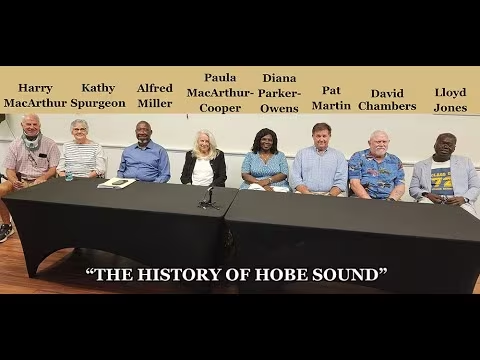
of Hope Sound and the history in Hope Sound I'm not going to go through introductions I'm going to let them tell you who they are So uh Harry MacArthur Uh my family came in 1952 and they came from Lakew Worth My name is Kathy Folk Spurgeon I think we were supposed to tell a little more Did you say anything or anything No Okay So so I'll tell I'll tell my story Harry is a native and I'm not um because I came to Martin County when I was three months old in a basket on a train I didn't have any option at all So and didn't know where I was going or what to choose My
father bought property on Jupiter Island and on Hutchinson Island And he said to my mother "Where do you want to live?" And my mother said "There's no electricity There are no roads There's no civilization on Hutchinson Island Can you imagine?" And Jupiter Island was developed So we ended up on Jupiter Island That's where I lived most of my life Good evening My name is Alfred Miller and I am a true native of South On my father's side uh his his father was from Long Island in the Caribbean Bahamas and his mother was from Luther Uh they connected in the Gomez area and my father was born on a flower farm was called Spicer's Flower Farm
right off Gomez Road His father at that point was the supervisor of the labor crew And my father grew up a lot of his formative years uh on Gomez Avenue And you couldn't hardly tell it now because there's not a whole lot of African-Americans that live in that area but once upon a time it was a very uh vibrant area where I was told that almost 70% of the people that lived on Gomez Avenue were of AfricanAmerican descent Paula MacArthur Cooper I'm Harry's sister Kathy was my first friend when we moved to Hope Sound and met her at the beach So that tells the story you know Um parents moved from Lakew Worth but really
Michigan Uh dad sailed on the Great Lakes Um but then we would come down in the winter cuz the boats would be in dry dock and so we'd go to Lakew Worth and he found the restaurant for sale came up and looked at it while mom was in the hospital having a sister Sally and they decided hey I think we can do this So we moved to Hope Sound My name is Diana Parker Owens and I am a real born true native of Hope Sound Born in Stewart at the old Stewart Hospital and bought the Hope Sign and I'm still there and I'm not going anywhere But my mom my mom was from Jupiter and
when she went away to college she moved was in St Augustine She met my father there and then she came down here and lived and worked at Steuart 1943 at the Stewart High School when it was not what I'm saying Steuart what did they call the Steuart color The Stewart colored school The Steuart colored No it wasn't It was the Steuart Colored School originally I think So yeah it was the Steuart Color School Um and so uh she worked there until they she got transferred to Hope Sound and then it was Dumbar Elementary School My dad was a minister and he actually grew strawberries in Hopetown Had huge crop of strawberries out back in Hopetown
And when we did some living history they tell me that he had some on Bridge Road in Hope Sound downtown Hope Sound but I never knew anything about that But he was a farmer and a minister and he grew strawberries for a living in Hope Sound My name is Pat Martin My mother is Suzanne Diamond Martin Um my grandparents came to Hope Sound in the 30s originally to run My grandfather was going to he set up the Tangerine Theater on Jupiter Island and then later started the garage on the island and then bought what is our garage now on the corner of uh Bridge and Dixie and Hope Sound We're still there Um I was
not born in Hopetown I was born in Daytona where my mom was teaching school and uh but I've been coming to Hope Sound my entire life and then moved here when I graduated from University of Florida in the late 80s and been running that business ever since I'm David Chambers I thought so And I have no idea how I got here I know how you got here That's the first they uh my parents my grandparents moved here in their early 20s and somewhere along the line my wife has found out that they were one of them one of my grandfathers or great-grandfathers or somebody was married to a Pittsford from over on Jensen Beach I
don't know that for sure but she's found all that information out Mhm But my dad started his electrical business in 1946 and we lived across from the high school in Stewart and then we moved to Hope Sound because he wasn't going to work in Stewart He was going to work on Jupiter Island and in Hope Sound And we they bought the house that Linda and I renovated in 1950 after the roof went off of our house up on Illinois Avenue And except for three years in the army I've been there ever since and don't plan on leaving Good afternoon Uh thank you all for giving us the opportunity to talk about my hometown my beloved
hometown Hopetown I'm going to mention Gomez because I'm I'm I'm from the north side of Hopetown Gomez where I grew up Uh my name is Lloyd Jones Uh a Martin County native I was born here April 2nd uh in 1954 I kind of got a little joke about my birth I think I was actually born April 2nd April 1st The doctor actually kind of kind of gave my mother a reprieve to April second My mother told me I was crazy growing up So I I guess I guess maybe that's that has something to do with that story But uh my uh like I said I grew up in Hope grew up in Gomez Hope Sound
I spent a lot of lot of my life in both sections of the community uh three sections in in Hope Sound B Lake uh Gomez and on Jupiter Island is where I spent most most of my life my life history and childhood I uh my uh on my father's side of the family uh uh um um my uh my grandfather I found out Lewis Jones was born the same day I was born April 2nd but he was born back in 1876 1878 So uh so uh I kind of I kind of found that out through through doing some genealogology research Uh my uh my my my father's family uh looks like they were in this
in this area Uh I call it Bay County Palm Beach County as far as back as the uh early early 1900s when they were in Oaktown around 1913 They they were in this area uh they they migrated from Elatchewa County uh North Florida Putham County area into into what was then D County then becoming Palm Beach County and then then becoming Martin County Uh my mother's family on the other side they migrated from uh to Martin County from uh from from western Alabama Moreno County area uh little city I'm sorry Democrus are you familiar with it Okay But Democrus Democrus I believe Alabama is the county seat there Uh they migrated from uh from the
Alabama area uh that area into uh uh Mobile Alabama and they eventually ended up in in the Hopetown area Uh they actually migrated here along with the Pways family Uh it's my understanding My my grandfather's family was very close to the Pways in Alabama and they all migrated together Uh uh uh what else can I say Uh that's part of my migration I guess before my family coming here What brought them here What did they do Uh my my grandfather Lewis he was into into uh into agriculture into trucking Uh there's there's an old story in my family that says uh my grandmother uh Priscilla uh Kale married a poor boy And being being that
uh I'm understanding that when I look at the records my my grandfather great great grandfather blew it kale uh who was born uh uh in slavery uh at some point in time He had enough money to and enough money acrewed where he bought over 100 acres acres of land up there in uh in North Florida So uh my understanding is that according from my cousins that he was involved in in the in the agriculture industry citrus uh had a little bit of money and uh and uh my my grandfather having migrating in from what it looks like uh Tallahassee area came down into the Latch County area and he got involved got a job with
my with her father And I guess they fell in love and and they ended up with uh with seven eight children my father El Isaiah Jones being one of them And then they eventually made it down to uh to to to South Florida and to into Davy County Coconut Grove area I believe and then migrated back north as work in agriculture Right Work in agriculture My um my mother's side I I think uh my grandfather migrated here looking for looking for work Uh my grandfather understand Jake Brown is my grandfather now I think most of you guys know my grandfather Jake Brown right Yeah my grandfather worked on worked for the town of Jupiter Island
for for decades but before then he was an independent contractor He actually uh had a trucking company and he hauled the trash in the garbage pump Now I remember that distinction because he had five trucks I used to pay trucks all the time He bought me a dump truck and uh he had his own gas tanks in his own mechanics and his own drivers and he did that for quite a while The business was defunct end of becoming employee for the town of Jupit C can I ask a question What about your life And can you tell us the difference between life in the Gomez area the North Gomez and like the South Banner Lake
or across A1A What was it like growing up Did you even cross over and go to church or school or something anywhere in that area Well yeah I'm I'm ready for that I uh I attended school at in Banner Lake or Hopetown at Donbar Elementary School Okay From grades one to grade six I uh I also was able to uh during the summer time I was spent time at the Venerate Club They had a summer program there for for for the boys I thank the guy by the name of Mr Williams best I can remember He was the director of that summer program and I was spend my summers there Boy Scout meetings I attended
in Hopetown and Ble area Now in Gomez was where I had a lot of my primary activities Uh of course you know in Gomez you had to run the whole neighborhood So I was just telling somebody a couple days ago when I was a kid growing up we had we had a playground but had my playground was the was the woods there in Gomez I mean where hunting for rabbits and squirrels and and birds I mean that's that's what we did And we also played our little little little uh military games out there We played a little war games out there and uh and that's what we did I attended the u new mount missionary
Baptist Church from the time before I even knew I was going to church until I became an adult Uh a lot of my social activities or Christmas programs or or or whatever activity was going on in the community that that that came about because of the church my church participation I was involved in Thank you Who was your first grade teacher My first grade teacher was her mother She taught me too I think her mother may have taught my mother She did And she she was a great teacher and uh and she gave me a part in our first class play I can still sing that song but I don't care the tunes Don't sing
it Jake Brown was my hero Was he really He was because the reason why he was my hero we didn't have garbage pickup at Hope Sound We burned our We burned the papers and buried the cans and Jake Brown would come to the company house to the south of us and to the north of us and he pick up their trash I always said I want to be Jake Brown when I grow up I know a lot of you are involved in special projects that are going to preserve the history of sound Would you like to talk about those Sure Yeah go for it Um well my our place is a hundred years old so
that's a project I work on every day And um I'm also on the uh Hopetown Historical Society board with Paula and we're um going to be renovating the um the uh Hope Sound FC railway depot which has been moved back into town We're working with the county and I'm sure as you guys well you guys work with the city but um the countyy's done with what they're going to do and uh so we have to uh our option to lease the building says that we have to come up with a plan We have to um have all the plans done with architectural drawings and so on uh budget and then once the county approves of
that we have to raise the money and then once we raise the money then we have to get it done Um the we've luckily gotten a local architect Scott Hughes to donate his services for the architecture Bert Krebs from Innocent and Webble is donating the um landscape design for the park Um several of the tradesmen have said that they would donate their work but we're still going to have to for example to put the authentic roof on the building is $70,000 because of the to use the original materials Is Jupiter Island helping Well so on the 15th of November we're having an open house and we're going to have all our budgets all our pictures
all of our things set up and we'd love to have everybody come down and see and then we're going to start asking people for money Our estimate for our estimate to get this done is a million dollars for a little station for a little train station Correct terminology which we've been told by the FEC railway or historian is railway depot train station The station is the actual geographical location and then the building is the depot Okay But we've already started collecting We've got um the uh gentleman who was the depot agent from 1939 to 1949 He was also the Camp Murphy Depot agent His grandson has donated a bunch of stuff Um and so that
project is ongoing The big problem is Hope Sound was never a town It was always unincorporated And when the for example there's an archive at the Florida History Museum in Tallahassee and we've had researchers going through that They found the plants for the sewage station So if you all want those I got those got the plans for the Jupiter station got the plans for the Jenses not Hope Sound but Hope Sound at that time was mostly owned by the first it was the Florida Pineapple and Coconut Grove Association and then the Indian River uh Association Libid which is a British company Right Those archives are at UF and we're trying to see if some we're
hoping that letters there was some reason they built a station in Hope a depot in Hope Sound and um somebody had to have been writing back and forth asking for that So and then the other project I'll just talk we're restoring the iconic uh Olympia street lights Um we've come up with we found one of the original fitters which is the metal metal collar that the um the globe goes on and um we had those reproduced Uh company was very helpful They they donated some of their work but we had to pay a lot of money for that And then um we found what we think is the correct globe They're going to be lit
with solar power So the night of the 15th when we have our big thing at the depot we're also going to have the lighting of the street lights along Dixie there So you'll be seeing watch us on uh Facebook and Instagram and all that stuff So can I have a question for you Sure on the train station depot on the the railway depot Is do you know if that building is of any particular vernacular especially like the inside with with wood and is there any special craftsmanship like carpentry that needs to be done to help with that So so the the building has we have pictures of about seven different versions of it in the
feed store There's a picture and one end is an open porch which was where they stored the baggage that got enclosed that is on a different level now than the the rest of the building which is a big ADA problem That's one reason our architect is working so hard because otherwise we can't use half the building Um the interior was when it got moved out to the orange grove and then to the polo field Um they made that their sales office and it they made it all nice and pretty with modern paneling and modern drop ceilings and all that stuff Um somebody I don't know who it was got dumpsters brought in on the weekends
and has ripped out most of the modern stuff I I couldn't tell you who that was cuz the county doesn't let us do that Um but you can see the original beadboard in the ceiling which are big high 12t ceilings And so we found the original walls behind all that stuff So but a lot of it is in pretty bad shape So it will have to be replaced We'll have to get the mill work done and all that's going to be expensive too Thank you Anything to add Let me add it real quick The one thing we want we're aiming for because of course they want to know what we're going to do with it
This is a big question Everybody wants to know Well what we want to do is the theme of it will be how the train station was so valuable in the life of the Hogtown people that lived here and we're going to incorporate that into the the theme you know any of the exhibits Um but we also want to have it so that the people of the neighborhood will be able to use it also So all those things are really important to all of us So that's kind of where we're heading with it And we're very excited because this is a big step and we're very lucky because it's very well taken care of Mhm You
wrote a book I did Tell us about that And I wrote the book about Hope Sound Uh they have it up here at the table Um there it's $45 It's mostly pictures because I h I feel like people if they see the picture it tells the story So that's kind of like my idea of the book And um yeah it's so it's like a I didn't go into a lot of detail on every part of the thing but enough to get your interest like the Ashley gang Enough to get your interest If you want more then you can dive in and get more information on the Ashley Gang So that was kind of my idea
behind the book Question Yes is will will that um railway railway depot be uh like a museum or will it be half county park half half community or will it be strictly just something from the hopes community as a museum It will be the hope historical society It we will be uh have exhibits there It will be open to the public So it will be kind of like how the feed store is but on a much smaller scale you know but and gravitate to to facts and information about Hope Sound and how the train station tied into everybody's life because everybody that came Kathy came down on the train you know So in my basket
in a basket and then we went swimming And then we went swimming Oh one of the things she asked and this is one of my my stories I remember about living in Hopestown Hopestown When we mo when I moved here it was I was like I had just turned six years old I was going to start first grade So my whole life was the beach We went to the beach every single day The church and the school But one of the things and of course living at the restaurant uh we had like a lot out west of town we had ranchers that lived out there and um we called him Grandpa Sandy but he had
f had cattle and everything out there Well one night he shot this rattlesnake that was like 8 foot long It was huge Anybody that knows anything about a rattlesnake once they're dead they're still moving So he brought it into the restaurant It was dark He threw it on the front porch and he was inside So my sister and I we're out on the front porch and we're standing on the chairs and the snakes wiggling all around you know being crazy All of a sudden this car comes flying in the front of the restaurant and these guys jumped out of the car real fast Well when they saw the snake they jumped back into the car
and headed down the road And I went in and I told my dad I said "I don't know but these guys just you know," but they jumped out of the car and jumped back in Come to find out they robbed the guy down the street I I'd just like to back up a little bit because for the historical purposes of the recording uh there's some stuff that I'd like to just make sure that that we we put on record Uh there were several uh areas where African-Americans originally lived in what would be called I guess Hope Sound proper And so I'll start with the most northern point Some of you may have heard of the
hammock Fruta Hammock They say fruit on the TV every now and then And so if you don't know where Fruit of Hammock was uh if you you're aware of where the VFW is right near the railroad track And so if you proceeded south maybe for about a quarter of a mile and east to the inter coastal waterway that was Fruta Hammock And a lot of the people who resided in Fruit of Hammock had the same last name that I have Uh some of them were Mackey's Uh there were some Wies that had uh property there but my understanding is that that total area encompassed about 70 acres U eventually over time um some things happened
Uh these people were were bought out Uh there was a large conservation area uh with Maggie Herella and Nat Reed that also helped put some money together to purchase the property but then some of the land owners were able to sell outright and they got I guess you know whatever it was that they got at the time Uh I think Lloyd Jones has already mentioned uh the Gomez that would be the next township south from Fruda and and again I think the there's a great significance in saying that on the Gomez Avenue corridor from nearly where the Hope Sound Elementary School is now uh nearly all the way up Gomez Avenue Uh a lot of
that property uh was originally owned by African-Americans Uh a lot of it was farmed It was very close to the river and uh they were normally 10 acre tracks Um there was one gentleman by the name of Parson Lunde who after a period of time he started to buy the property on the other side of the rail railroad track And so everybody thought "Is this guy crazy or something Why is he buying sugar sand?" Well because it was so cheap Uh the property that was really worth anything was closer to the river Uh it was more fertile and all of these people were growing something Then I'm going to quickly move into west of on
Bridge Road just west of Hope Sound Uh the locals refer to it as the backwoods and that's certainly what it was It was a bunch of woods It was uh you know when we cut through there now we can see how the ditches are often times dry Well when I was a kid those ditches were never dry You know it was always a place where you could go and you could fish And there were a lot of acres there that were owned by African-Americans who were farmers U a lot of them were the Preston Uh like Diane spoke about her father Uh there was Sam Glover I think even today the Pways own maybe about
25 or 30 acres there Uh there was Mr Joseph Berianne I believe today he still owns five or six acres there And then the white family lived out there And so from that point uh and I'd like to say and that's how my mother's side of the family got to Hope Sound because they connected with a gentleman by the name of Grover Cleveland Preston and Mr Preston was a farmer and uh eventually what happened is that uh people began to move into current day Banner Lake and uh my I was told that uh in the early days there was actually a dump on the east side of Battle Lake between what would now be US1
and eventually the town will begin to fill in and the persons that worked not just in Fruit of Hammond but also in Gomez and in Banner Lake These people would come a large part of the important backbone of the labor that would eventually become uh Jupiter Island Uh there was a question uh mayor that you asked earlier about the construction of the the depot building uh that Pat spoke about Uh I just happened to be there one day when he was there and we looked under and those depots just like what was called the other thing that I left out was what was called the section housing Yes And so the sex in housing would
have been that when Flaggler brought his railroad south into all the way south into eventually Key West uh there were people uh that lived along the railroad track And so their job was that if something happened to the railroad track then they were live the labor live close enough where they could go in and repair And so eventually these guys became known as section housing the section men And so these people were located in Porcelo They were located in uh Hotel in Jupiter and everywhere along the south end of our street there There's not a lot of those housings that still exist today but uh there is one that's in Banner Lake I'm sorry it's
in Banner Lake but it's right on Bridge Road And then uh Mayor just for your knowledge and you may already know this there's two houses there are about four blocks from here that are that uh belong to Lewis Leonard They're over 100 years old And those also were section housing Thank you Yes You know could you tell us a little bit about the Banana Lake Club and what it mean to the Banana Lake community Well I I I can do that uh in there was a need as Jupiter Island began to grow and we got to realize that we're still talking about the 30s not quite 1940 yet The newest thing in the Banner Lake
community and 34 would be the Dumbar Elementary School And I I think it's kind of been understated here just a little bit the importance of what uh Diane's mother meant to not just the schools but also into the entire community There was another gentleman by the name of uh Gilbert Miller Gilbert Miller would uh be the guy who would take the hams and who would eventually um he would retire from the school board as the first black assistant superintendent And these was these were all local guys And so because of segregation and you couldn't just go anywhere someone came up with the idea that we need a social place a building where we can go
and maybe party on the weekend when we're not working on Jupiter Island And there's a gentleman by the name of William Barstow uh he came up with the money and he he would build the Banner Lake Club Uh the Banner Lake Club at that time would be probably one of the foremost buildings in all of Martin County where you know black people could come they could have a good time they could host parties they could hold Masonic events there would be church repass Uh the B lake club was just an incredible thing But most importantly William Bosto which is probably a lot of you are are aware of him because he would in 1939 he
would build the Banner Lake Club He would build the only church on Jupiter Island And he gave us most of all what all of us needed He gave us the Martin Memorial Hospital schoolhouse Can I ask a question please Could you give give some in depth of um on income as a little girl I recall a little uh center of school that Mrs Grew had was was schooling Um I don't know it really when that was built but I do recall that center there being there in the Gomez area twotory school Two story building and I'm glad you mentioned that because we had some great educators Uh we spoke a little bit about Miss Arabel
Parker Uh Gilbert Miller but Mrs Pepe would at some point I think she may have gotten like the teacher of the year or something She was that kind of teacher that if you had a kid in school you tried to steer your kid right into to Miss Pway's class Thank you That was a nice segue into my school Um but first kudos to the railway depot people because I have a little t-shirt that says preservationists save the world one building at a time So there's your building and good job Um I'm mostly I you know we had fun too when we were growing up We're sort of serious here Uh I had I I went
to the beach with Paula and her sisters and I raised Harry and if there's any problems I have raised Harry then um we used to ride the turtles when the turtles were laying their eggs Can't do that anymore And we used to um drop little stones on the sea cavs from the top of the bridge Never heard of them never appear Now you call them manatees but we of course call them seeks Seeks Um my great passion right now I think some of you know that is um the rehabilitation of the Apollo school on October the 19th which is this Sunday We are celebrating the 100th anniversary of the first class that was held in
what was then called for about a week the picture city school in the town of of of Olympia So on October 19th 1925 there were six grades in that school There were about 30 children and we have rehabilitated the school um and we use it as a community building Half of it is used as a sort of similar to what the railway station is depot is doing but um I guess their emphasis will be on railroads Ours is sort of we're calling it a repository of memorabilia t holding the tangible memories of Hope Sanders And the other half of the building keep in mind this is an 18,800 square foot building So we're not talking
about something like this Uh we use for speaker series we use for activities We have uh Valentine's Day parties for children's We've had children we've had historic dinners We've had Alfred speak We've had Paula speak We've had Pat's mother speak We haven't had David speak We've had Lloyd speak We've had Alfred speak Hey It's a lot of speed Um but anyway this is a ours is a privately owned building It's owned by the Apollo School Foundation It's one of the few privatelyowned historic buildings in Martin County It's not taxpayer funded We don't use any of your money to do what we do We just spend a lot of time raising money and then and then
giving back to the community So if any of you I Mary Joe I saw you got your phone out every time a date was mentioned So Sunday at 4:00 on the school site we're going to have a centennial celebration We have a a former state senate president Joe Negron speaking as well as our county commissioner Blake Caps Uh we're having the Boy Scouts uh do an honor guard and raise the flag We've got a a singer from the Pine School the Pine School Pan Steel Band will play And we've got um the rowdy mix who are going to who are going to play It's just going to be an afternoon of celebration of this school
that was such a Paula mentioned it as you know one of the three pillars of what of growing up in Hope Sound It was just an very important part of Hope Sound and we're trying to we're trying to keep that going So we'd love to see you all It's free As I said it's open to the public Uh we've got fans if it's hot We've got a tent if it's cool So we'd love to see you Hello Um I don't all I got say is u my mother said if 50 years ago if heaven's not like hook son she's not going It's just a very special place and we've been able to enjoy it And
I'd like to talk about Alfred Miller here He talked about Banner Lake Club Um I don't know 30 35 years ago the Banner Lake Club that had a section on the back of it that was kind of a lean to or whatever was covered and uh the two of us closed it in and the reason I'm telling you the story I got the drywall and I got 12t sheets of drywall and in August and we're trying to put it up in there we got no air conditioning and we're ringing away and he was just as happy and just just abs absolutely fantastic and what he is him and his family has done for the community
is outstanding and I just thank him for it because I mean it's the the entire neighborhood they've been my neighbors and I I just all my life I mean I loved it back in the day when they had so many businesses in Banner Lake It was you know just thriving I we were so we got all our eggs up there and I'll tell you what um was it man I can't remember where I got my leg eggs at but I'd ride my bicycle up there and get eggs I mean it was just Banner Lake was a big part of the entire community It wasn't just for the African-American community It was for everybody in on
it And to tell you how times changed they would um probably the early 70s they would shut down the road They had the do drop in up there That's right And I'll tell you what somebody knows that place Starlight Garden Starlight Garden and and uh and they would close down Bridge Road from the stoplight and might not even been a stop light on my still caution all the way to the second road and the guys would come up from um Miami on on the Harley-Davidson and they would stand out there and I'm going to tell you what you talk about athletes they would stand on the seats they would do handstands they do and I
mean to me there wasn't a better place than that it was like the Super Bowl for whenever they we were out there We were like "Oh it was just very fun for us." And I mean that's I have so many great memories of of that Um I don't have anything but how many years is it um Harry and the Natives an active restaurant 30 Well it's been an active restaurant for 73 but for 37 years of Harry and the Natives Okay Before that what was it called It was a farm restaurant motel Yeah You know it was uh the buildings were red and white They ended up uh changing that from that My dad painted
the buildings white and we had old painter out there Yeah Paint painted it up And then you know so it was it was just fun things that things we were I I'd say probably the the the biggest thing is Hope Sound We were all poor We I tell you what we we didn't have anything I mean we couldn't afford a comb I mean let alone anything else you know what it was just But we all worked together If you caught a fish you had to get you know you caught three fish you had to give at least one away you know cuz we were all in it together I mean yeah Nobody nobody I mean
if you had extra and stuff everybody was in it I mean it didn't matter And so it was just a great time and great question back there No Yes Okay This is not for you This is general Oh here So whoever's got the answer Diane wants to talk Diane Diane got the answers question What's your question Okay I was asking about the St An we went to school with a a person who was uh from that family the St An family Uh Jack King was his name Jack King Jack King just passed away Oh he did When I when I met him his family still owned the St A grocery and I suspect it had
been owned by that family for a lot longer than that but I don't go back any further than that So nobody else knows anything about it Let me just add this real quick Jack King's uh cuz he was part of the of the St Ranch family but Jack King's stepfather was the one who owned Hope Grove and he's the one that bought the train station and moved it out west of town So that there's the Since you brought him up I can throw that in real I'm glad I brought him up because that is a really nice way to end a talk I like to hear what was the best part of growing up in
the Hopetown area What did you do Some of you already touched on Diane want to talk about her project I I want to talk about um in Hopetown A lot of people do not realize that there is a cemetery there uh off of um Kingsley Street and Gomez and and I can remember my mom calling the area where that that cemetery is the MLAN quarters Right So when I hear the word MLAN quarters I assume that that was a set of black people that lived there because it was a church and it was the graveyard and it was homes there because they wouldn't have called it the MLAN quarters And uh through the Black Martin
County Black Heritage Initiative we did a ground penetration there and it was 450 graves How many We we discovered over 600 over 600 graves with a mass grave that was there that's out there buried in that ground now Mass grave A mass grave Right And uh that's very that's very dear to me and to Lloyd because we have family buried there I have a brother that I will never know where he is So do we You and you is my aunt My my aunt She has family there Uh it's probably what 20 20 grades That's that you can pick out Visible Visible Maybe it was was 27 Yeah But they some of it falling apart
There's been some vandalism Yeah Vandalism is very bad there right now But uh the one the newer ones is still there but over the years with vandalism with kids riding them motor scooters and stuff all over the cemetery we've tried to preserve it And right now we're doing we've the church the corporation that owns the cemetery We don't own it It's a church corporation that owns it And we've gotten them to having it cleaned up every monthly Isn't the Is that the Bible college No no no no no This is up off of Kingsley too you have to go up north on north from the Bible college okay The Kingley streak and you take it
and you turn up and go in there and it's the streak is actually paved now and it's and um but that is a very important part of history there for black history because we don't know who's out there buried other than what people can say to us that they have family buried there And when like I say they came from west the college over in Fort Myers and they did ground penetration and they found that many bodies in that ground Do you know if they any of those subdivisions took up any of that land or was that land still cemetery and church land or do you think it's still church land The church still owns
that land So there's no homes built on top No it's four acres four four plus acres there So what church It was the uh it was African Methodist Episcopal AM My dad was a minister there at that church at one time I have his calling papers for founding my mom and they're all in bits of pieces He was a minister there at that church And I don't know but like I say we never knew where they buried my brother when he was born cuz back in the days I guess they didn't take the wife if the baby was born in the hospital when they died They didn't the one they took care of it before
the lady got out of the hospital But uh my mom would go there and try to find it and she said "Oh I'm not going to look for it It's too much to do." But uh I wanted everyone to realize that that we do have a cemetery here in Martin County and there are they've done a lot with the one there on Monter Road Okay That one's looks very good And Indian town has another cemetery but Hope Sound that one is a was a big one We pulled records from the se from the funeral home Stones Funeral Home in Fort Pierce and it's saying that they buried these people in Martin County So we're assuming
that some of those people were buried there Can I ask Lloyd about that a little bit Sure The whole Moses project and just can you talk about it and how people can come and help clean up the cemetery We're not doing it anymore Oh you're not services now Remember I said that Okay Well okay So let let's bring us up to Yeah Uh in regards to the uh uh I I refer to it as being the Gold Parental Cemetery uh the cemetery uh ice was in place there uh before the uh the church was built in 19 1913 1915 uh Albert was speaking to some of the uh uh the land owners there in Hopetown
African-American land owners in Hopetown and a lot of them I would say most of them were already interred in that cemetery there in Gomez popy uh he's one of my heroes him to death each there along with his uh his wife and and some of his his I believe his sister is or sister-in-law Um uh right now uh there's always a need to do some type of work down there at the cemetery Uh um and I want to put emphasis on the fact that that that cemetery is it's the old oldest archeological site we know of in Hosan right now Uh uh it's it's it's not a building but it is a structure I look
at it as being a structure because it was archeological meaning of significance Uh uh the uh the cemetery there uh uh as D indicated uh that we did ground penetrating radar down there and I really thank Commissioner Harold Jenkins for for arranging for us to do that Uh there's over 600 barriers unmarked barriers there should I say including the uh the 27 visible barriers that that we know there are there Um now the the thought is that this is a complete African-American cemetery That may not be true I mean we history has many many different stories but yet I don't think we'll be able actually be able to prove if everybody buried in the cemeteries
American descent But I would say As far as I know majority are uh uh that cemetery is very important to the community As a child growing up you mentioned cleanups Uh Dr Clark uh every year when I was a boy growing up there was a there was masses of people went to that cemetery and that there was a general cleanup of the cemetery every every Memorial Day weekend M and I remember those pe those old women down there like Dean like your grandmother and my grandmother man they sing those negro spirituals for it and it just brought chills to my my to me right now just to think about some of the songs I used
to hear down there and if a child wanted to hear about their relatives which my father died when I was 2 years old uh I didn't know much about him I'm learning more about him now but if you want to know about a relative who was deceased man go to a cemetery clean up those old folks would tell you their stories about your about your family and your family members and and I enjoyed that all the time Again I I was able to bond with my father more during that time Um Diana mentioned uh the uh MLAN quarters uh and and again one of the land owners John Mlan he's inter Pioneer Cemetery So there's
a lot of history there uh for the community to dove into a lot of Hopetown pioneer history shall I say and uh our our pioneers are there whether they African-Americans or whoever race or descent uh those are our pioneers our American pioneers and I I look at this as being an American history project uh and and in general that's how I look at it So there are humans there and there are humanities there and we need to allow them to speak from where they are which we've been which we've been trying to do Can I ask the railway guy I I I think Alice Lockard had done some work and she talked about especially from
this perspective It was about um black people in the Hopetown area and other areas Port Salern or whatever They took the railroad at all these little stops and went to Jensen Beach to meet with others or to Vero Beach or something Do you guys what what was like life family life like that you've heard people talk about people just use you know we like three four railway stops in Martin County Yeah But the train always go ahead I was going to say the train didn't stop at all those stops Okay Okay Yeah for well for most of the modern history which I mean after the 20s Hogound was a what they called a whistle stop
or a flag stop So if you were on the train coming from New York or whatever you would tell the conductor I'm getting off at Hopes and be on your ticket and if you were at Hopes and wanted to catch the train they would have to signal And we still have you know because we have the transportation business we still have big they're like big battery flashlights and lant we have regular gas lanterns too that you know if the train was coming at night my grandfather would stand out there and wave this thing and hope the train stopped If it didn't he'd have to get in the car and drive really quickly up to Stewart
Luc L Lucy Weatherington talked about how she and all her girlfriends which would have been your mom they would take the train up to Stewart to the Lyric Theater to see the movies go shopping See that's right You remember that We used to do the West Mall Yes One one of one of one of the habits they uh had was when I had uh Douglas Miller Leona Ferguson Tanner Mlan and uh and uh and another person that that me that name will come to me in a minute And I tell you what they talked about those trains going up and down the track They were going to the movie theater going back and forth going
shopping They they called the train numbers out the 27 the 35s or whatever the numbers were Red R Yeah Yeah Well that's one of the greatest days I had uh uh that I had was when when Mrs Perkins invited me to her house I had the four or five of them in the same room We did over history session with them and man they lit the room They would talk about their railroad and and and taking transportation up and down that railroad I want to say one thing too You all talk about the nightclubs in town but I think the most prestigious nightclub was in New World was the place And I grew up on
the same street with the little pearl People came from all over the little pearl And I tell you something that's the first time I ever heard Casey in the sunshine being played Okay All those big names all the big names came to me down there to the little world Okay A lot of big name performers came down I heard them all man I rocked all night long guys What was that For the little Go ahead ma'am Okay What's your question I just didn't really feel like I got an answer to the question or didn't ask it right about the grocery It It was a very old building I I have a story I I'd like
to tell you but but just the environment of Hope Sound overall it was one where regardless of your color That's right So we we all work together to improve the circumstances of the overall community and and I think that was probably the most beautiful thing Uh my mom Adele Miller she passed before I was 9 years old And as a result I spent a lot of time with uh older relatives in my family And one of my uncles was Rufus Bartlett And and Rufus Bartlett once recounted to me a story whereby he and someone else had gone into the St and and and what we we we've talked about the railroads a lot but what
we also have to realize is that Hope Sound almost like it is now is somewhat of a seasonal town So when the snowbirds go north nearly all the town went north and and when the snowbirds came back that's when everybody came back for you And so I don't know if what I'm about to say was do maybe off season but he said that him and another guy walks into St Orange grocery and maybe St Os wasn't doing so well in that time but he asked for for their checks Can you guys give me your checks to help me kind of get through this But you can take anything that you want out of the business
and take it home to support your family And my uncle said that he and the guy that was with them they they they cast their checks and they gave the money to Mr San And so it's that kind of spirit of helping each other I think that's helped us all to get along Wow And and I think the other thing that's important to remember we spoke about the Gomez Cemetery but also in Vander Lake we have the Florida Memorial Cemetery And I think that if you were to visit there just the visit is a testament to the fact that this was not a just an ordinary town If you visit that cemetery you'll see that
there's a large percentage of veterans there I'm talking like World War I World War II Korean Vietnam And so what would that say to you That would say that the communities at large was filled with a lot of people who had worldly knowledge uh Gilbert Miller I think that he actually fought in the battle of the bulge where he earned medals I mean he was in the thick of the fight for the justice of America And before I forget I'd like to mention that in 2013 my young cousin Justin Johnson Yes sir was in Bagram Afghanistan and the enemy shot a missile into the base and they killed him He was only 25 years old
But this was just the spirit I think in terms of Hope Sound itself And before I get off the Florida Memorial Cemetery uh I do want to say that Joseph Beranne Mr Joseph Beranne who was over the Boy Scouts and they were renowned for their drunk court Everybody wanted them for Christmas parades but he was deceased 10 years ago And the call went out for somebody to step up and manage this cemetery Well I I attended two meetings and I probably should have skipped the second one because at at the first one nobody wanted to take on the job At the second one you nominated Mr Leroy Thompson nominates me to manage the cemetery That
was 10 years ago folks And you've done a spectacular job but to his testament and I want this on tape that Mr Thompson and and and Charles Maryanne they've been with me every step of the way and I think what you know we were able to accomplish is a wonderful thing but then I want to turn back to my right to this gentleman now when Harry spoke about those motorcycle guys Yes sir That's why it's good to have this panel here I totally forgot about that And then as soon as she started to talk about it it was like bam he he's he's right I I remember that they block off that road and those
guys were like anchor bats flying up and down Ridge Road Block off the whole street And and unless I forget I'd just like to say that yeah my wife and I and Geredine and some others we've been involved in a lot of things in Vander Lake But whatever task it is that you undertake it's a heck of a lot easier when you know you got somebody there working along with you Amen This gentleman Harry M If if I had a thousand words I really couldn't do justice in terms of just saying how he steps in If I needed some somebody that's where I'm going You know I I always got a yes That that's why
I went there And and when I was a little kid growing up and it was Christmas time and we hometown was connected with Jupiter Island and all the kids in town would be out waiting for Santa to show up and then all of a sudden Mr Spurgeon we would hear these sirens and we knew that Santa was on his way and everybody just the charge in the air for the last 30 years Last 30 years this man has brought Santa to the upstream We're all family Listen you keep talking I'm going to cry so I cry I'm sorry Listen I I haven't heard anything about the historical area in Gomez about the pedal with grocery
Good All right What would you like to know Okay Um two for one two one for a penny Two poor penny cookies Let's start Penny cookies Um originally it was for my knowledge it was Miss Ali I don't know her husband Okay So help Miss Maddie Maddie That's right Miss Maddie Miss Maddie We call him Miss Maddie That's right So I I recall their their house that used to sit on the hill and she used to walk down the road Open the store Correct And that that building is still there I mean the store grocery store was still there Uh that is store is how many years Does it still function It's a neighborhood grocery
store close to 100 That store was in place 85 It's really old man I mean that that store was it was a hurricane bunker and it's been some of everything for that community there in Gomez and the local store place Okay I just wanted to mention because it being a child raised up in that area as well I recall going there and we love the little pinwheel cookie and she was always there She play bottles back and collected bottles Yeah Return your bottles Return your bottles and you got absolutely do that too Yeah What I like about it was on Fridays and Saturday there was a gentleman He was the vendor Reverend Perry uh they
call him the record thing and he would be in town and he was famous spiritual and uh and people would come out and buy records from him I don't know if it happened in hopes down or not It happened Yeah Yeah He was out there and and I I got to tell you something this man that kind of fascinated me Uh there was a guy who used to come to Gomez and he would dress up in a devil's uniform and he would chase us around the street Yeah Was that what it was This guy this guy this guy would just show up out of nowhere and we'll be playing marbles on the street or something
Man when that guy got that car like damn was he ran he rode around like that It was not Halloween You be you be walking down the road and next thing you know some man with a mask on or he step out the car fully dresses a woman Yeah We thought Miss Man had Missy had come to the store cuz some kids was stealing from her crime deter This this guy was real huh He was real He chased us but he couldn't catch us though I have a I have a question about Doc Meers Does anybody have anything to say about Doc Meers He started big stuff when he came We We knew Doc Myers
And you know what And and the thing is Doc Myers came to town for the Juke Grind and that's why he did I tell you what um with us and most of Hope Sound and everybody else we all came to Stewart and we didn't you didn't have many things Then with us with Don Parker you know what Even after he retired you went to his house and you went around to the back door and you walked in the back door and you rang the bell and you sat there and he'd come out and give you a shot or whatever But you know I think in those days we were we didn't get sick much We
did not get sick Nowadays these kids and everybody getting sick all the time everybody getting this and that I don't know what we were doing but it was a lot better back then And I mean like I mean yeah but Doc Myers was he was more uptown You knew what he was he was and I mean he did he did home visits on the island and and I mean that that was a very special thing to have a doctor at that time because Jupiter or Stuart would not go to to them at that time And um I think uh Barstow brought Doc Myers to town I think So if if you want I think that's
how it worked out He was he was on staff at Martin Yeah Yeah He was on staff but I mean I think he was brought to town just for Jup Island for David He worked in the nurses station over there See David had all the answers Not me Can I ask about the mango orchards just in that eastern area between Gomez and A1A like some of those they were delicious I don't know That was actually um where I'm not um Mr Moore bought the property which is now Graham Boat Ramp and um they were the grandparents of Jimmy Graham's wife Okay Okay Let me think of Yeah And but he owned all that property There's
like a whole story there's a whole story about him It's it's fascinating But he was he and his brother were going down the river and they saw the property and he bought the property And then during the picture city and everything he sold it but he had it as a a farm I mean he did the mangoes he had orchards you know all that And um so he sold that property for like a million dollars or something It's like I don't remember the exact amount It's in the book but he ended up having to take it back because then when the when the crash he and his family moved to California when when the crash
then they came back and they lived there and Maretta Maretta Graham was the daughter and she married Jimmy Graham and they inherited the property and then they lived there but that's where all those mango trees that from Cross trip going north You know where I mean you know Yeah Yeah And it was solid mango trees back then That was a huge orchard That was like that was citrus grove in the back as well was there not Yeah Yes So in B lake I remember Miss Essie Baker Essie Baker and Miss Louise as the corner store grocery store Miss Watson's So did they sell meat Meat Cuz I know they had Kansas when I was a
little girl No they didn't sell fresh meat So you The only person that sold sliced meat was Miss Turner and Mr Basha the Clemens Yeah Miss Miss uh Miss Turner sold slices of cheese and slices of baloney I think she might have had ground beef I'm not sure So everybody had to go to St again No we went to Miss Coin We had Yeah there was there was St Anes I was going to talk about St An's because they wanted to hear about St An's grocery store had everything you could imagine basically catering to Jupiter Island They had delivery trucks Everything was could be called up delivered They had a full meat market with everything
you could imagine right down to chocolatecovered grasshoppers If that's what you wanted you could buy chocolate covered grasshoppers there Every kind of fancy wine and cheese and everything Poor people It wasn't the poor people No but there were two different prices So if you were Jupiter Island that was one price And then if you were the poor people on this side of the river that was a different price So but one thing about Mr St where he lived He lived on Sus Street but he had a mango tree But you better not pick up if a mango hit the ground you better not pick it up cuz he's going to sell that in the store
There's There was no uh taking But Mr Con we always did Mr Con's grocery store We love Mr Cone And when we were in third grade at the school we had nickel multiplication tables And if you got a hundred on nickel on the nickel multiplication tables that you'd get a nickel and you'd be able to go down to Mr Cones and get a popsicle Where was that located They just tore it down They just tore that building down That big twotory building Taber Electric Y'all was in that building was in that building at one time A little bit down It ended up building St St Andrew's grocery store I believe they started out where Taste
Right on the where Taste Restaurant was originally that was built in 1922 three and it had a second floor and during the her the 33 so St just started their grocery store in that building and during the 33 hurricane the second floor went off and there's a p and in the book there's a picture of Donnie Sanan sitting in the bathtub no bathtub or toilet anyway and then they built the new store then which was where and it was smaller and then they added on to it Can you tell us a little bit about the history of Nat Reed Hope Utilities You know anybody knows anything about that Have we run over our time Yes
She's sitting here going ahead the last five minutes You can see we will keep going for my mom wasn't here she would have been talking the whole time I'm trying to be courteous when I held my hand up for five minutes Uh one thing about Ber Lake that I do love and and I do remember very very well is the baseball games they had the baseball that was that was a place to be One of the Sundays man Gee those guys play some baseball high school state championship team basketball team of what 72 or 73 The whole starting team came out of smoking smoking kitchen Curtis Curtis Curtis Blanch But that that came out of
that little area Yeah Yep Absolutely Okay Go ahead I got two things Maybe three but two I want to talk a little bit about when you were talking about the mangroves and the uh MLAN offer Can you just Yes Um tell us a little bit about that and then also about growing up I grew up in Battle Lake and about growing up how the youth programs came into the community and who were our our we'll say directors per se And another thing too um when when I was a girl growing up in the Bet community my grandmother would send us across over to Mrs Cohen's and then at Miss Coins is where she would get
like the sliced meat and everything which was down from St Orange And one thing about Mrs Coins she always let my grandmother run a tab So once my grandmother's tithe was um where it need to be my grandmother would send us over and it would be paid for So I just want to say that about Mrs Cohen Beautiful Yeah I I will touch on this and and Gail raised a great point that uh I'm also writing a book but in my book I refer to the process some people it's almost like buying on credit now right So 90% of the businesses that were run back then you ran them like a book My dad ran
gas taps So you you show up they write your name down and then at the end of the week when you got paid if you were responsible you were supposed to come back in and square off you know but they were aware that occasionally some things would happen And I really believe that most of those tabs yes they depended upon them but they knew that somewhere behind those tabs there were kids So it was not always the adult that showed up to get the the meat or the loaf of bread or or or cooking oil Often times it was the kid that would show up to say "Hey my mom sent me." and they give
it to you and you write it down And I need to take this uh plug by saying my grandmother's business was a due drop in and she ran a she and that's how we ran the business primarily But you know one thing that I always like to say is that my grandmother was not a really tall lady but she was all business lady And so you know we ran that tab all week and boy around 6:00 If those guys weren't coming in there to pay that that tab off you probably thought she was a drunken sailor or something because she could really lay those curse words down But she ran a really good business And
and just going back to the Banner Lake Club I think Lloyd said that the first director that came in and these people were brought in by Jupiter Island what's now known as the community chess The first guy came from Atlanta Uh his name was Benny Williams And these were city guys and and some some way or another I think if you look at the history of the Clarks on Jupiter Island they're somewhere connected to the what we used to call the Avon Avon sellers the Avon people And so after Benny Williams left I guess he had to get back to the city The next guy that came was Marian Hurst ML Hurst Uh and he
established I think somebody said it already one of the most successful youth baseball teams in on the east coast of Florida And then he eventually entered the school system where I think in a yearbook somewhere there's a couple of pictures of him But uh he was always my mentor and he retired from the school system as the assistant superintendent of schools And Harry you get the last word I I just want to thank everyone for showing up I tell you what this is amazing I love hearing everybody's wisdom up here Yeah we can do that It would be fantastic Would love to do it Thank you so much It's been fun Bye My thanks to
all the participants here You guys are working to preserve the history the heritage of your community and I commend you for that It's something we need to do I hope that 50 years from now 70 years from now our grandchildren are coming and sharing stories about what it was like now Uh I don't know that's going to happen Yeah But you know it's important that we continue this story It's important that we share this story with the newcomers the damn Yankees uh because this is our here This is what they've come to and they need to appreciate it like we appreciate it Thank you so much Paul's books up by the door please if you'd
like to have a copy It looks quite interesting Also want to mention that there's a hot rod swap meet and flea market at Diamond Garage on October 25th from 9:00 to 3:00 p.m You know thanks Sound sounds like uh sounds like a thing to do Dad did it not me And to y'all thank you for coming out