The story in brief
Ultimately, the production serves to educate the local community about the bridge's structural components, environmental drainage systems, and expected traffic modifications before its grand opening.
Full transcript
thank you need for a bridge to span the St Lucie River in Stuart Florida began around the turn of the century when the only way to cross the St Lucie River was by ferry powered by an old model T engine in 1916 construction was begun on the Stuart St Lucie River Dixie highway bridge and at 3 pm…
Read full transcript
thank you need for a bridge to span the St Lucie River in Stuart Florida began around the turn of the century when the only way to cross the St Lucie River was by ferry powered by an old model T engine in 1916 construction was begun on the Stuart St Lucie River Dixie highway bridge and at 3 pm on January 30th 1918 it was declared open to the public so impressive for its day the bridge was declared as an engineering Marvel for the first time motorists could travel uninterrupted from Maine to Miami it was considered the best eighty thousand dollars ever spent work was begun on the present Northbound bridge in January 1933 and opened the
traffic on January 8 1934. Crews worked around the clock to build the bridge sand and gravel were brought in by barge from New York via the port at Fort Pierce by April 1933 100 men were on site creating a three thousand dollar weekly payroll skilled laborers earn 30 cents an hour unskilled 20 Cents by way of contrast today an unskilled labor on the new Roosevelt Bridge earned 660 an hour these were the days of the Great Depression in our country the bridge was one of President Franklin Delano Roosevelt's New Deal plans to get millions of Americans back to work out of gratitude to the president the bridge was named in his honor what a time
of rejoicing when the bridge was opened in fact two days of Celebration the governor was on hand President Roosevelt sent a telegram of congratulations there were parades the Goodyear blimp flew overhead just a time of great celebration after the 10-ton country road roller was driven across the bridge without a cracker quiver everyone walked or drove over the new four hundred thousand dollar Bridge this bridge has served us long and Faithfully it was joined by its twin the southbound bridge in October 1964. this now brings us to the need for a new bridge with over 50 000 motorists traveling across the existing two Bridges each day increasing population escalating maintenance costs and breakdowns a new bridge
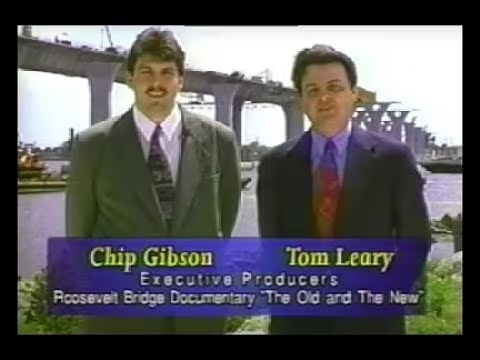
has become necessary to work on time how's that bridge being supported up there what are they going to do with the old bridge when the new bridge is done how am I going to be able to get into downtown when are you going to be able to drive over it wondering when the bridge is far I'm Tom Leary and I'm chip Gibson these questions and many more will be answered during tonight's program you'll learn many interesting facts about both the Old and the new Roosevelt Bridges you'll also be meeting some of the people responsible for building the new Roosevelt Bridge the first person we'll be meeting this evening is Betty Hardy public information officer and
D.O.T spokesperson for the new Roosevelt Bridge Betty that's an interesting model of the new Roosevelt Bridge could you please tell us about it I'll be very happy to Tom I'm very proud of my model this was built by Tom Andrus of the Florida Department of Transportation who worked on the design for the bridge he built it exactly to scale my little man here represents six feet so we begin to see something of the magnitude of the bridge but I'd like to briefly tell you about some of the components of the bridge if I turn my model over and we look underneath here we see these pegs and these are called piling their this particular group
is in a group of 16 we actually have some most of them in groups of 20 a few at 25. now what these are uh the 16 would be closer to land the 20 groups of 20 would be out in the shipping Lane for greater strength and should a shipper barge actually hit the bridge it would not do any damage we turn this over and we this Square thing that we see here this is called a footer now the way that we get this we would put a call for Dam around this I explained that simply like a metal fencing goes around that the water is pumped out the concrete trucks come out and they
pump the concrete and this forms the footer now this is out of a special mix it's called a micro silica mix this has to be pumped in at a special temperature they start like after lunch go late in the evening sometimes finish in 12 1 o'clock at night once it's completed they put potable water on it to keep it because it's a slow cure this is a special curing compound for the micro silica mix this is a very special mix in the concrete that comes up 12 feet here of what we call a splash line so we come on up and we begin to look at our column we have our first lift our second
lip but one thing Tom look at the uh these lines in here this is called the rustification now this doesn't give us any strength or anything special other than simply it is for beautification note the flare to the column then we come to our cast in place segment now what that simply means Tom is that they put forms around here and then the trucks come out and they pour this into place now this is called a segment as I said but this is also a segment now this is the one that you're more familiar with because this is the one that's casting up at White City brought down on the big red trucks and then
is stored there on the site until it's needed once it is ready they're ready to install it it is picked up by the gantra holla it's taken over to these uh Gantry which is now sitting on top of this pure table the Gantry picks it up and it takes it into in this position as it begins to take it to be installed on the bridge it comes out in this position and is um comes across and then as it's swung into place it fits exactly onto the segment that's right next to it so now we have this in place time and we know that it's going to fit because this is process is called match
casting everything that comes out to the bridge is going to match exactly and this is all taken care of with the camera geometry up at the rinka plant in Fort Pierce as it comes out to the bridge it's numbered and so it has a particular place everything fits exactly so this is placed here next to our Pier table now we're out of balance one segment time remember this is a balanced cantilever bridge so we're going to do the same thing all over again and we're going to place this one on the other side we're going to hold it temporarily with our post tension and bar now we can go in and make this a permanent
installation remember there are holes all in the top of our segments here this is a high steel seven strand cable we put these in groups through here it runs all through here and then is locked into place with this wedge it is pulled with a jack that puts 350 tons of pressure on it this is kind of like the old Chinese finger puzzle that we played with as children the more pressure the tighter it locks it into place so we have this locked into place now now we can take out our temporary bar and we can begin to do the same thing all over again we're going to place one on the other side we're
going to hold it temporarily we're going to place one on the other side we're going to hold it temporarily and then we're going to go in and post tension all of these in another hole here with our cable once again now we have installed all those segments time from the pier table out to the center we'll pretend that we have brought these from the other Pier table out to the center and we end up with a small opening here the question becomes then okay we know that a segment will not fit into this small opening how are we going to what are we going to do so we form this and we are pour what
we call a closure pour we now have all of this cantilever completed we can now in turn move the Gantry to the next Pier table here and just begin the process all over again one thing I would like to mention we've talked about the cables of the tendons in the top we also have what we call the transverse cable going this way that is placed in there at the casting yard and we also have them in the bottom they're coming and they're connecting the two spans our imaginary span over here in this span so we have a lot of cable in our Bridge that was an interesting model I hope that answered some of the
questions you have on the new Roosevelt Bridge later on in the program we'll be taking you inside the bridge for an up close look at some of the components Betty spoke about stay tuned up next is George Dente D.O.T project manager for the new Roosevelt Bridge George why did dot decide that a new bridge was needed for our area well we took into account we did traffic studies that took counts to see if our capacities were adequate we studied accident data we looked at the bridge maintenance logs and weighed those maintenance costs to determine if a replacement was warranted and just how important and how quick it needed to be what types of bridges were
discussed and what was decided Well we certainly during our PD e phase our project development and environment phase we look at all options we brainstorm to the point where we don't rule anything out and weigh those as far as practicality cost Effectiveness effect on community Etc and the net result is the new Roosevelt Bridge which is a Precast segmental 65 foot high fixed span was a tunnel ever seriously considered George sure in our process of evaluation a tunnel was one of those viable alternatives it fell out of favor during the analysis that the long-term maintenance costs would outweigh any advantages that it might have over a fixed span could you break down the cost of
the new bridge sure our estimated construction costs are 48 million dollars are engineering and inspection costs I estimated at seven million dollars our right-of-way costs were approximately 14 million dollars and our design costs were about four million dollars George how will the new bridge affect our travel plans here in Stuart well The Travelers are going to have the opportunity to take the new bridge and bypass uh the existing draw span and any problem they might occur as a result of openings or they'll have the opportunity to use old U.S ones which will become State Road 707 and access the Rio Jensen Beach area as well as the downtown area so they'll be adequate access for
the existing facilities as well as an opportunity to bypass any of that if the Travelers wish George how has the bridge construction affected local businesses well it's been kind of a mixed bag some of those have suffered as a result of people's fear of barricades and the like and uh not want to get caught in any sort of traffic jam but for the same uh reason some people have visited the site out of curiosity and we've actually had increases in business as a result of some of the workers using the local facilities does the new bridge have room for expansion yes it certainly does as a matter of fact during the next phase of our
traffic control we'll be utilizing four lanes of traffic on the Northbound bridge but that's at the expense of using our eight foot emergency lanes on either side of the bridge thank you George sure one of the interesting facts about the new bridge is that it'll be maintenance free for the next 75 years with over 50 000 cars traveling over the old bridge each day and in 20 years an estimated 70 000 cars we can begin to see the need for a new bridge up next is Betty Hardy public information officer for the new bridge answering some of the commonly asked questions what is the height of the new bridge and how does it compare to
other Bridges Tom it's actually 65 feet above high tide and what that means is if the water level is at the bottom of our footer from that point to the bottom of our segment here would be 65 feet then our segment is 11 feet so we would add our 65 to our 11 which means then we're in turn driving at 76 feet in the air now our other Bridges our Palm City Bridge for instance is 55 feet in height which again is above mean high tide just to give you some idea of the older Bridges our Northbound bridge is 18 feet above mean high water and our southbound bridge is 15 feet now the minimum
standard is 21 feet so we begin to see how out of date these Bridges indeed are and what is the length of the new bridge and how many total segments does it have our bridge is 4565 feet in length or three quarters of a mile and we have 1127 segments and what are the plans for the old bridges the Northbound bridge is scheduled to be taken out below mud line be taken out seven miles offshore and dumped become an offshore Reef dot plans to totally renovate these southbound Bridge it will get two lanes of traffic one North and one southbound the roadway will be completely redone and we will be redoing the bridged into his
house making it more in keeping with Downtown Stuart in fact the city of Stuart right now is working on some plans for that building so there are a lot of plans for that building this will in turn allow local traffic to use that or have an option either the new bridge or the old bridge are people going to be able to fish on or near the new Roosevelt Bridge Tom we will continue to have fishing from our southbound Bridge we have many Ardent fishes fishermen here we would no way prohibit them from fishing there we think it'll be a much safer but we have something that we're very very excited about and that is our
new fishing pier if you just look at the rendering that I have here to my back we have a rendering artist rendering of our new bridge connecting with the park in Downtown Stuart will be our new fishing pier this is approximately 550 feet in length will be completely lighted we'll have a railing around it we'll be five feet above water and will be a completely safe area for people both adults and children to fish and now the most important question is the new bridge on schedule yes we are Tom in fact we're ahead of schedule right now our officials scheduled opening is for mid-December however because we are ahead of schedule we're looking to sometime
in the fall what we would like to do is be able to open the bridge before our winter visitors return of course this all depends on the weather this summer we could have we hope we will not have bad weather but we never know how many rain days or bad winds or whatever so this this is all dependent upon that but right now we think it we are comfortable that we will be able to open sometime in the fall most viewers probably do not realize the amount of time involved to construct the segments required to build the new Roosevelt bridge in this next section of our documentary we will show you the journey taken by
one of the over 1100 segments needed to construct the bridge but before we tell you about the segments let's look at some historical videotape of the first piling of this project being pounded into the ground in July 1994. thank you the segments are poured in White City with the cooperation of Rinker materials Corporation and recce America Incorporated a total of three segments are made each day that's over 100 yards of concrete poured each day the segments are carefully poured in a framework connected to the segment it will be next to over the river a lot of work goes into this phase of the bridge construction and many of the segments for the southbound Bridge are
already made the concrete segments are given more strength on top by having transverse tendons placed inside the concrete this will help support the over fifty thousand Vehicles traveling across the bridge daily each segment is Match cast against its mate in White City and then separated a total of four segments a day travel to the project site in Stuart with a Florida Highway Patrol escort the segments are sent to Stuart and the order in which they are needed they are then picked up by the segment hauler and make their way to the gantry here's a look at some of the earlier segments that originated the beginning portion of the new bridge thank you the Gantry then
moves the segment to its final destination everyone is working together preparing for the segment to come off the gantry epoxy is applied to its mating segment and the new segment is turned into place temporary bars are locked down and will be removed once the permanent post tensioning cables anchor the segment into position foreign welcome back to Roosevelt Bridge the old in the new I'm chip Gibson up next is Charlie cross the project manager for recce America Incorporated the prime contractor on the bridge Tom and I went on top of the bridge and talked to Charlie about the operation of the gantry Charlie could you please explain to us how this big piece of yellow machine
called the Gantry works well this Gantry you see behind us is uh the machine that sets the segments in place on the bridge and a lot of the legs you can see here move with the bridge as we complete a span and it's Unique in the way we have to erect the segments due to the fact that it's uh we cannot do it from the water so the Gantry was designed specifically for this job and it's adapted to it and once we complete a span well then we it'll walk forward to the next band and we just keep going until we get to the end of the bread and turn around and come back and
start the southbound side what's the approximate cost of the Gantry and can it be used again in further projects well the approximate cost is several million dollars and this is it's an expensive fishing Machinery you have to have it in order to build a bridge like this so as far as using it again we always hope that we could find a job that would be compatible for it could be that if we're not 100 compatible we can revamp it and do a little bit of remodeling on it to make it work on the other one sometimes it works but other times you have to forget it because it's not compatible so we hope for the
best on that Charlie it doesn't seem like there's that many workers out here to complete a project of this magnitude everyone pulling together as a team to complete this job they it is a teamwork this type of a bridge is unique it's a very high-tech bridge and you have to have people trained in order to know when to fall in to a certain place when to do a certain thing at the right time and these people at the beginning very few of them had ever been on a project like this so if you would see how they worked at the beginning compared to now you would notice that they would be like a football team
in the summertime and spring they practice they look pretty sloppy by the Time season opens up in the fall of the Year why they're all together as one unit 11 people making one playwork and this is basically the same way if you have everybody pulling together it makes a lot easier to achieve your schedule Charlie your firm Ricky America Incorporated operates out of Italy and Miami is it pretty competitive to get a job in the State of Florida to build a bridge of this nature we're basically the company originates from Italy and they set up headquarters in Miami and when they came to America where they hired American engineers and technicians that were acquainted with
this type of a bridge and they have built bridges in different states utilizing the same people from one job to another and with all the background that these people have it makes us very competitive the same as some of the other contractors that build the same type of bridge so basically the company has American people even though it is a foreign company Charlie this is a concrete segmental bridge and please tell us a little bit more about how the Gantry helps getting the segments in place well basically without the gantry the water at this area is so shallow that there's a lot of areas you cannot get a barge and a crane that would be
large enough to handle each one of these segments we're looking at here weighs approximately 75 tons and when you run the barge across the river it's only anywhere from a foot to three to four foot deep wide and you'd have difficulties setting segments in that area so the Gantry becomes very unique in a way that it can work from the top and it won't interfere with the boat traffic on the bottom and you can Advance it and if your Bridge was eight miles long while the Gantry would go eight miles so it makes it very unique have we encountered any problems so far with building this bridge Charlie well nothing major except for the weather
we've had several days we have lost to the Clement weather rain and wind when the wind reaches certain speed while we're not allowed to operate this and the safety reasons but other than that no major problems that that we haven't solved it's going pretty smooth how's the overall Bridge Project progressing as far as schedule we're well pleased with it we're ahead of schedule everything is coming out good and we're well pleased with the way things are looking right now well thank you Charlie for your time we appreciate it thank you very much the new Roosevelt bridge is the first concrete segmental bridge Chris I understand your firm designed the new Roosevelt Bridge that's correct Tom
we were selected by the Florida Department's transportation to design the concrete alternate for this bridge any project of this size they generally go with two alternates one of them is usually a steel and one of them a concrete alternate and we were selected to design this type of bridge which is a segmental box Burger bridge and why was this particular design chosen well this type of bridge was chosen largely because of the the size of the bridge and the length of the spans we were going to have the fact that this bridge crosses over a ridge River that's fairly shallow and doesn't allow a lot of barge traffic and being able to bring your equipment
in on barges meant that we had to come up with something that could be erected pretty much overhead as you can see with the Gantry on this type of structure Chris I understand that each segment is designed to go in a specific location is that correct that's correct each of these segments on a job is is different each one is actually cast against its its mating segment in the the casting yard and so each one has a specific location each segment is marked and it has to go in that location when it's erected on the structure and Chris uh how's this exactly support some of these segments on this new Roosevelt Bridge okay this is
what's known as a post tensioning bar and it's actually used as kind of a temporary bar what this does is when they first lift the segment into place on the cantilever they go ahead and and put two of these in the top corner of the segment and one of them in the bottom corner and they stress this segment up against the next segment too and that's what holds it into place temporarily and Chris this particular type of Steel will help hold 70 plus tons of concrete in the air yes it will Tom it's a it's a very special steel it's a very high strength steel made specifically for this purpose Chris I want you to
explain a little more about how the bridge is being built a lot of people drive by and they see the concrete segments hanging in the air and they don't understand how they're being held together explain the mystery okay it's probably easiest if I show you a little bit about the segment and the different parts of it and how it's all held together first thing if you look at the top slab of this segment you've got what's known as the deck and that's actually the portion of the bridge where the traffic rides on now the width of the deck is set by the roadway width and how many lanes of traffic you need and that type
of thing what you can see in the top slab is you can see some holes that's where the post tensioning goes it will ultimately hold together the bridge you can also look down what's known as the web and on the web you see what we call Shear Keys now what the shear keys do is you actually have a set of mail keys and female keys so as each segment fits together you have a perfect fit between the two segments if you look inside the segment you'll notice a couple of blocks one at the top of the segment one at the bottom of the segment that's where the temporary post tensioning bars that we talked about
earlier go through the segment and actually hold this segment to the next segment there'll be two of them positioned at the top and one of them positioned at the bottom these are just held here temporarily until your permanent post tensioning is put in at the top of the segment okay I know one of the questions that often comes up is about the top slab and how thin it is what's important on these segments is in lifting them in place in that is to keep the weight of them as low as possible and so you use relatively thin members now the top slab here actually has a transverse post tensioning tendon that runs all the way
through it the same type of tendons that that run this way and hold the bridge segments together also runs through the top slab and that actually compresses the top slab and gives it a little extra strength in that a lot of people feel that the bridge is being held together by Glue could you please clarify that for us uh yes I could the between each segment they use a special epoxy and it's really better not to think of it as a glue the epoxy really doesn't serve any purpose for strength it has three primary purposes first of all as tightly as these segments fit together the fact that they're all cast against each other and
they fit specifically in a location they act to lubricate the shear keys in that when you're pulling them together and that keeps you from breaking any of the shear keys a second reason they use epoxy is to particularly in the top deck is to prevent water from leaking into the bridge it acts as a sealant and then finally the epoxy just serves to fill out any little imperfections between the segments so when the bridge is completed we'll have two separate Bridges correct that's correct the structure here will end up carrying six Lanes three lanes in each Direction with a five foot sidewalk on each side and that's really getting too wide to do with a
single box what's happened is by building two separate boxes you're able to go ahead and build one and put traffic over on it and then go ahead and construct the other one now the two bridges are about five inches apart and generally what you try to do is since you're going to have a barrier to the inside anyway a crash barrier in that is you generally try to minimize your right away and so you want to put the bridges as close together as possible well Chris thank you for educating us on the segments oh you're welcome Tom welcome back to our documentary Roosevelt Bridge the old and the new I'm chip Gibson and I'm Tom
Leary and Chip next we'll take a look at some interesting footage from inside the new Roosevelt Bridge we sure do have some great footage up next is Betty Hardy will take us on a tour of the inside of the new Roosevelt Bridge what we're actually looking at here is a segment that was set last evening on the back wall we see some letters and numbers in Orange and what these mean are P meaning Pier 9 N meaning nine North 16 D meaning 16 down so we have pure Table 9 North 16 down with U.S with the arrow pointing to my over my shoulder this tells the operator exactly what segment and where it is to
be placed in the bridge also looking at this we also see above my head we see some bars these are the temporary bars now that we also saw last evening these are called do a dag bars these are were placed in temporarily last night to hold the segment into place this these will be taken out later once this segment is post tension with the tendons we also have the check how the bar in the bottom so we're holding in the bottom and also in the top temporarily and this keeps them in place also note that there is something that you see that has squeezed out this is the epoxy that's placed in the um between
the segments we say work as placing this and this is what is on the inside now of this segment what this is doing is sealing any water any oils or any gasoline any type of thing that would be spilled on the bridge from coming down inside the bridge what we have here the workers are building the forms for the closure Port this will join the cantilever together now as we look at it we see that they're placing the duck and all the steel inside the actual pour will take place Saturday morning at five o'clock as you know concrete expands and contracts so we have to have a certain temperature of when the pour is made
either early in the morning or very late in the evening this particular one is scheduled for very early in the morning what we have here are the tendons that have been post tensioned this is a group of 15 strand these will be cut and then grout is pumped in there and then this will have a cap over it and totally seal it all from the elements here's one that's already been cut ready for the cap as you know there is a hole right here this would be will be where the grout is pumped in there then they will cap it and then it becomes totally waterproof what we're looking at is the actual hole for
the drainage system for the bridge this is what we call an environmentally friendly Bridge both how it's built because we have less columns due to the Box skirt a type of construction but also for the Mediterranean system all of the rain water all of the oils gasoline anything that's spilled on the road bed up on the top side goes into Scupper holes flows down into fiberglass pipes then divides about Midway of the bridge and flows into Retention Ponds where it settles before it goes back into our groundwater so we're very pleased about this aspect of our Bridge what we have here is the lighting for the interior of the bridge you see the electrical conduit
we have lighting both inside and outside on the bridge we also have lighting for the columns that the up lighting for The Columns of the bridge but this happens to be strictly for the workers of dot the maintenance people as they come in to make an inspection of the bridge so they will have light be able to move freely on the inside Tom what was the thing you enjoyed most about the inside of the bridge chip I still can't believe I stood on one of the segments that was just put in place 24 hours before the thing I enjoyed the most was the jack that puts 350 pounds of pressure on the tendons pulling those
segments together well stay tuned because coming up next is Betty Hardy taking a look at the full-scale model of the bridge Tom this is our scale bottle which is built on one inch to 50 feet scale we are presently located here in the old raised restaurant at the southwest corner of the present southbound Bridge you'll note that we do have some major changes in this area the only scale model the Northbound Bridge has been taken out these are the fenders the old fenders from the bridge but you come underneath the new bridge and in right into Downtown Stuart our new bridge in turn lines up perfectly with US-1 and then on carrying you on South
on US-1 now to get back to our re our area here you would take a right on Atlanta Avenue and come back into the raised restaurant area coming over to the bridge area here this is where my pointer is this is the present Northbound bridge that we'll be driving on toward the end of the year in late fall of this year as we come on across and out into the uh Channel area this is where the bridge actually goes up to 65 feet above high tide this exactly lines up with the present Channel area for the old bridge and the railroad as you come across now you note something very strange out here we do
have some clear lucite columns out here this is simply holding up the glass for our model which we have taken off for the purposes of this demonstration we are now in the channel area of our bridge in the on the south looking North as we move along to the north side of the bridge just follow my pointer as we move on our Northbound Bridge we coming on a cross note that we have the train which is running directly underneath our bridge this is one of the reasons Tom that our bridge is so high we must be 28 feet to clear the train we're actually about 35 feet in this area then we're slowly coming down
and over to Wright Boulevard and coming back to grade now one of the interesting things that this allows are people from Jensen Rao if they want to go on the new new bridge from as they come in on 707 Dixie Highway they will make a right on Wright Boulevard go down and make a left onto the U.S one which will carry them across on the new bridge however if they want to go the old way they still can once the bridge work is completed they will stay on 707 Dixie Highway and this will go directly under our new bridge and then in turn take you into Downtown Stuart or any of the businesses on the
north side if you live on Fork Road there has been one major change in this area no longer will you be allowed to make a left turn off u.s-1 and cross to come into Fork Road what will happen is you will go down to Wright Boulevard make a U-turn and come back and then a right into Fork Road we will have a brand new light on at this intersection which will allow for that U-turn so if you're coming out of Fork Road you will make a right and go on to the new bridge however suppose you want to go to some of the shops there on the North side over there some of the marinas
you will get in the far right side far right lane come down underneath the bridge and either make a right or a left and go underneath the bridge and that takes you back to 707 Dixie Highway there are a number of options Tom that you will have if you live in this area either you will drive on the new bridge which is will be become US-1 or you will have the option of coming into Downtown Stuart or to the businesses on State Road 707 Dixie Highway I hope we've answered some of your questions with our scale model we are located in the old raised restaurant 32 South Federal Highway this is at the southwest corner
of our present southbound Bridge our office is located is open eight to five five days a week close weekends and holidays or if you have any questions please feel free to call me at 286-6825 before concluding tonight's documentary Tom and I wish to thank some of the different people that helped make this program possible George Dente at the Florida D.O.T Christopher white Charlie cross and Betty Hardy thank you very much your help was invaluable with this program they were very helpful from beginning to end one of the things I found most interesting was that the first Bridge was built in 1918 then we had improvements in the 30s the 60s and here we are in
the 90s really improving things one of the things I enjoyed most about the project is that Tom and I were learning something new every single day when we were filming doing the interviews the entire project we were learning something new every single day chip you're going to be able to ride bicycles over the new bridge walk across the new bridge it's going to be very well lit at night it's very exciting we really appreciate everyone watching our documentary tonight Roosevelt Bridge the old and new I'm Tom Leary and I'm chip Gibson good night everyone thank you thank you foreign