The story in brief
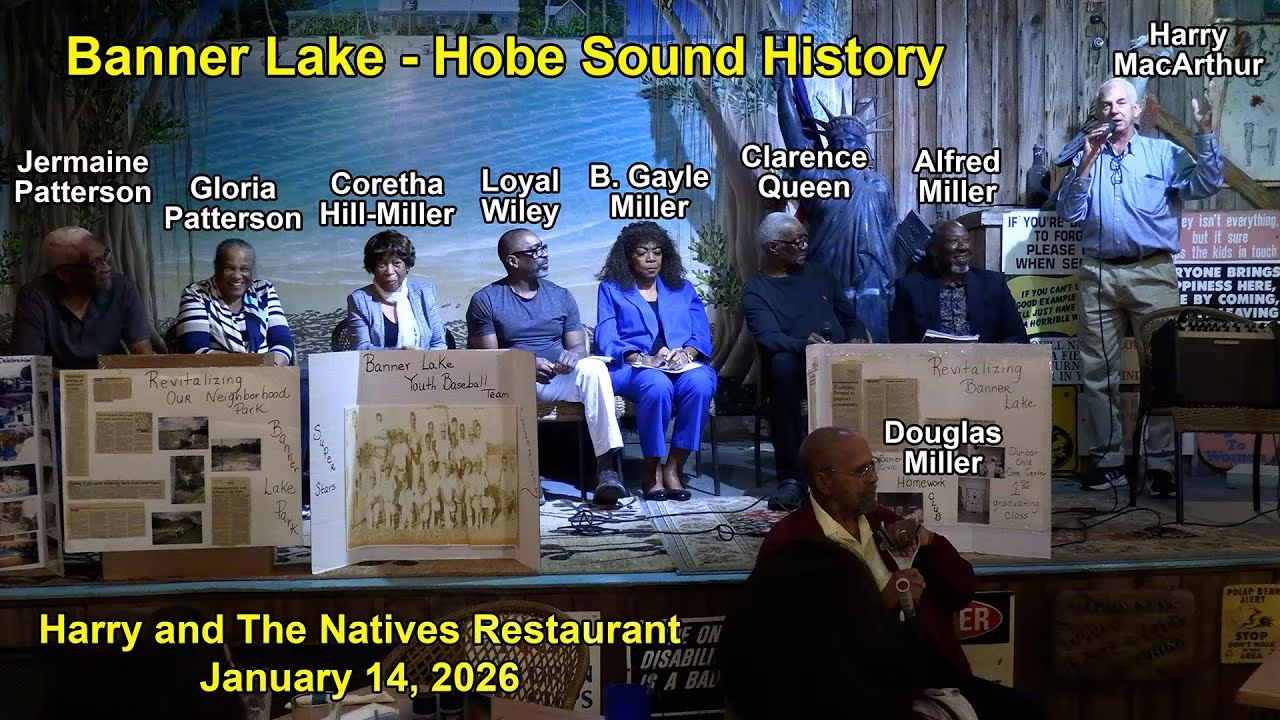
Ultimately, the gathering serves as an oral history preservation project designed to ensure that future generations understand the resilience, tight-knit family structures, and vibrant culture that defined these early Florida communities.
Full transcript
for coming out I just uh can't appreciate it enough I'm going to tell you what this is Um just a little thing with growing up here This Banner Lake is a very very special place and and you know to me you know what it's it's my neighborhood Well um I'm just saying from a kid and on up…
Read full transcript
for coming out I just uh can't appreciate it enough I'm going to tell you what this is Um just a little thing with growing up here This Banner Lake is a very very special place and and you know to me you know what it's it's my neighborhood Well um I'm just saying from a kid and on up it's just was a a very special place and and all the things that went on whether it's athletically or what it might have been we had so many incredible people out of Banner Lake and I just hate to lose this history And so thank you Alfred and everybody getting together to make this happen cuz I just thank
you so much cuz this is too important because you know what state championship team everybody else And if we need two or three of these we're going to get them going cuz this is too important to the community And Banner Lake is a special special place you know and uh that's you can tell I love the community can't you Yeah Anyway thank you Alfred Here we go Let Let's make this happen Everybody start telling some stories Thank you I want to thank everyone who came out to support us today uh in this event Like Harry said uh it's important that we begin to just capture some of the history that we have Unfortunately one thing
that we know for sure nobody's going to live forever And as a result what we need to do is to just go ahead and get that information and get it captured now And that's what we've uh we're here tonight That's what we intend to do Um I just want to give a lot of accolades to Harry Um last year was the 100th anniversary of Martin County Um prior to 1925 we were actually Palm Beach County and some of you probably know that And so last year was a year it's where we we got together and some of the smaller communities came uh and they met at the Steuart Heritage Museum and we were recorded to
capture that history And I'd like to say before we get started that this is not the first time that we've met to capture history So if you were to go to Hope Sound Pioneers you will see about 14 interviews that's has been done And then if you go to Steuart Heritage on YouTube you'll see the recordings that were done last year that I just referenced Now having said that uh what Harry and I have decided to do uh was tonight we will be focusing mostly on Banner Lake for truth Let the truth be told you can't totally focus on Banner Lake without also mentioning some of the other locations of here such as Gomez and
Fra Hammock I'm going to say that again Fruta Hammock And the reason that I want to say Fra Hammock is because it no longer exists And so we didn't get a chance to get any of those people on record other than maybe Gilbert Miller But we do have Douglas Miller here And Douglas Miller is a veteran He was the first African-Amean from Martin County to enter into the Air Force and And one thing that I certainly must say that he's one of the sharpest 93 year olds that you're ever going to meet So certainly he comes in handy uh and he has all of this information So what I'd like to do uh to use
some analogies since we're in a restaurant I'd like to say that I'm going to just set the table if you will And so what I want to say is that I don't want to jump right into Hopetown I want to say how it is that a lot of people ended up actually coming into Banner Lake and Hope Sound and Fruit and Gomez So we know that Florida became a state in 1845 and shortly after that there was a guy by the name of Henry Flagler and Henry Flaggler felt that with all the beauty of Florida and what we have to remember is from about central Florida all the way into South Florida It was nothing
here but a bunch of woods And he had this idea that if he could run a railroad track all the way through to Miami then he could help develop Florida Uh he was a smart man because the railroad track would later be known as the 18th the eighth wonder of the world And so what Mr Flaggler did uh he started his railroad track and a lot of the people that didn't have jobs um they got work with the railroad track and we know that in 1894 I'll say it again in 1894 he took the railroad track all the way into Palm Beach and I'm going to put a pin in it right there I'm going
to ask the f the folks who was on the panel with me just to introduce themselves Uh I'd like them to introduce to talk about uh their spouse and maybe their parents because again uh this recording is something that's going to be around a lot longer than us And I'd like for one of their kids or grandkids to see this recording one day and say "Hey he just mentioned my grandfather." So uh Mr Clans Queen who is near and dear to me you're up next Yes My name is Clarence Queen and um I'm from Oldtown State Avenue Uh my wife is Lisa Hast She's from Go Florida Oh my parents My father owned the landscape
company in Pope His name is Harold Queen S He worked on juvenile for years with uh Jenkins Bington all of the companies the landscaping company the mother also worked on juvenile also but I don't can't remember her who she worked for my name is Gail Miller married to Alfred Miller my parents are James and Bessie Roars Theodore and Hannah Pippen and they came from Arkansas and then also Ida and William Bryan And I even though I was born in New Britain Connecticut I grew up in the Bet community Um growing up in the Ballet community as now I realize was a great place to be And we'll get into details a little later Thank you
My name is Loyal Wy Jr from Hope Sound Born and raised uh lived on Anton Way Uh my nickname is Bo Bo Bo Bo Bo Bo Bo Bo Bo Bo Bo Bo Bo Bo Bo Bo Bo Bo Bo Bo Bo W We W Uh my dad name was Cester Wally He uh originally out of West Palm Beach My mother name is Carrie Lou Wy She's originally a Harris One of the biggest families in Hopetown Amen And I'm also a veteran And uh I have I have two sisters three brothers Uh my two smaller brothers they play with uh Martin County High School They were uh state champions or twotime state champion of basketball Uh they
were very uh active in the community Uh my best friend would be here but he didn't make it Uh he had passed away Uh Donnie St An's was my best friend which uh from St An's market which was a a very prominent store And I'd like to say to Harry that uh Anthony Jackson one of his friends uh would have been here but he sent his greatest host My name is Kartha Moment Miller and my parents are Elizabeth Moment came from West Florida and my dad's name is Elizabeth Johnson moment and my dad came from Georgia and he came he bought this house that we were all born in the early 30s maybe 30 four
something like that So we were all from that little area and it was the house that Mrs Bosto bought for the well the employees whoever worked over there She tried to provide as best she could housing food and whatever it was And he had a lot of children So she was always saying "Take these leftovers to your family Joe." So she was very good to us So so much about his employer of Bosco She did so much for the community So much So I just want to put that out on her My husband name is Douglas Mills uh sitting down there Good evening My name is Gloria Johnson Patterson I am married to this man
right here Germaine Patterson And we've been married for 60 years Well my father's name was Washington James Johnson My mother's name was Willie Lee Johnson And there were 13 kids I'm not going to name them all but there were 13 of us eight boys and five girls And I just want to say I'm be here tonight I'm not a very good speaker I don't really My name is Germaine I live on Alabama Got to hear your mouth Dad I was raised at Alamana Way the little blue house that's still standing today And I work at Grman Aircraft for 38 years My father was Henry Blue Everybody called him Blue Mr Blue And he was Mr
Blue everybody running He worked on juvenile at Juvenile Club for till he retired driving trucks Uh he was like a supervisor on the truck and nobody drove that truck with him and me at time to get it home Uh my mother anime she worked on she for years she worked on uh the lady was Sally Johnson nobody probably know that they move out moved out of the state at early age and he finished up with I'm call legend that's the only name I ever tell the lady work we always fished on the island because he always was on the river front and we free to go over there whenever we wanted to That's when fishing
was catching fish and my grandmother was less Bentley better known Mama Lee and I believe just about everybody here was whipped by Mama Le and she she was blind and she didn't miss nothing but she was whipping I got I got My name is child I'm both a man child of Jill and uncle Paige Miller My mother was born in Lawway Florida and they moved to Hope Sound in 1922 And my dad was born in Nass Oklahoma So he was born he came to Florida in 1912 And so we lived in a when I was born but the other three lived out on Qu Street We had 10 acres down there And uh it didn't
rain that year My dad lost the 10 acres because uh all the lines were filled the plants didn't grow to produce a a crop and he lost the 10 acres on the one of lines he did So then we move up to Frera and then I was born in in 1933 and uh I mean 1931 and then u 1939 you move up here to go and I've been here ever since except time I spent in the outs working different places I had um one brother and two sisters They all passed away Uh I'm the only one left So um here you go sir I worked the wood with aircraft as a test mechanic after I
got out service and worked on retired from the island as a bail captain So I've been real busy most of my life until now So I can't think of anything else but anybody has any questions I can probably tell this thing that happened in the 300 Thank you I know you in the airport How long we in the airport If you can hold those we'll come back to them And uh again I'm just going to I'll pass this mic And as you pass it just make sure everybody keep the volume up as high as you can Thank you Test it Test it Yeah So what I'd like to do from this point I put a
pin in it when I said that Flaggler was coming south He would eventually build on Palm Beach And we know that a lot of workers came to this area to work on Palm Beach where he was going to build the Royal Poniana and the Breakers Hotel However we also know that some of his workers were called section men And the reason that they were called section men was that they were kind of left behind in different strategic locations to make sure that if anything ever happened to the railroad that they could get there quickly So we believe that some of the first black people that came to this area actually came as section men Then
we know that by around 19 20 1919 there were other blacks that were moving into this area Again I'm going to get into Banner Lake but I want to set the the table again because Banner Lake was not really maybe the first populated place Uh we we did have again I want to mention Fruit of Hammock and Fruit of Hammock was about 70 acres uh that was nestled right against the river where La Li is It was on the eastern most shore of the river and those people eventually were bought out and uh the land was conserved So uh from that point uh what I'd like you to know that some of the earliest black
pioneers to this area were actually like Doug was saying that his father had 10 acres but that was on Gomez Avenue And so there was a large concentration of black people that was living on Gomez Avenue Uh they all had lots Uh Mrs Roseir uh Mr Johnson Davis uh the Hollands uh all of these people had and and Douglas can elaborate on some of this a little bit later but your your first largest concentration of black pioneers were living near and on Gomez Avenue My father was born on the Spicer Flower Farm on Gomez Avenue in 1928 where his father was the supervisor there Uh from that point people started to move into Gomez Gomez
as we know it There was not a lot of people there but there was scantly populated around 1919 1918 Uh my former president of the Band Lake Club Lisa Dames is here and we know that her relatives the Hasslams uh that they were living uh in the Gomez area in addition to the Fruta area they farmed up there as well But what may be a little known fact is that some of the earliest black people to move to this area actually live west of town and they lived on large plots of land there I think the Preston's lived there All total they probably owned about 140 acres Uh we had Mr Sam Glover Uh he
lived there He was a farmer and he would sell a lot of his produce to the to the St Orange family and uh we had several other uh people that lived there and so my relatives came here with Mr Preston from Center Hill Florida and they actually lived uh out on the the uh the farming area of Wester Town as did the whites And so we know that by 1924 uh someone took a notice to this area and they realized the same thing that we realize today that this is a beautiful wonderful area to live in pretty full of lush green acreage and this would be a wonderful place to make movies That's what they
wanted to do here This town was indeed supposed to be known as Pitcher City and some of you are probably aware of that That was around 1924 Uh but around around 1928 29 a couple of things happened that kind of blew blew that idea away One was the fact that there was a hurricane of 28 that came through here and it just devastated things And after that the people from uh Picture City said "We better find another location." And who knows maybe it was somewhere out in California called Hollywood May maybe that's where they went But they left here And we know that by 1929 October 1929 there was something that devastated the whole country
And it was called the Great Depression And as a result the persons that normally that had previously owned the property for Jupiter Island and Jupiter Island proper and the Hope Sound Company They wanted to sell uh their land was not worth very much However there was an industrious man and I think his name was mentioned earlier by Mrs Miller Mr Barto Um Mr Barto was a man who had amassed a great fortune He worked along with a guy by the name of Thomas Edison to bring the electric lights into New York and other places He was apparently a very intelligent guy because by the time that the stock market crashed some say about 6 months
before he divested 30 companies and he may I think it was one of those rappers Jay-Z that said he may have had 99 problems but money wasn't one and he agreed along with Mr Reed and and Mr Prior who was Mr Reed brother-in-law to buy the holdings for Jupiter Island And this would have taken place in 1933 However it took them a while to get rolling Again Jupiter Island itself down to the fork of the road was really nothing but a lot of dense brush But these guys got to work right away and they started clearing it and they started building houses and and eventually the the people in Banner Lake they were seasonal They
did not most of the people did not live in Banner Lake year round It was just like today the snowbirds come here during the winter and they leave after Easter And so after Easter the people a lot of the people that at Banner Lake they would leave here and they would go north But however as Jupiter Island continued to flourish and get larger the people found more work and then they could continue to stay in the community year round From this point I'm going to move right into the Dumbar Elementary School that was started in 1934 and uh the panel the question for the panel will be did you attend the Dumbar elementary school tell
us anything about it that you wish about your experiences there and I know we have Diana Orens here so she's not going to be surprised with some of these answers because I want to know maybe who your favorite teacher was um okay before we went to Dumbar now we had to go to go mass to Miss Pway uh kindergarten rather than the park right next to kindergarten then after kindergarten we went to Dumbar for I think two years two maybe three then they segregated so we was allowed to go to Han Elementary but we didn't have a bus so we had to walk And uh it was I mean it was a fun walking talking
but we had to be aware because there was dogs that were running out of us and everything but uh we managed to make it though and we enjoyed it I went to Dumbar Elementary School in the Battle Lake community My first grade teacher was Miss Ary Bell Parker and I truly believe that Miss Parker probably taught first grade to 100% of the residents that was in the Bandake community My second grade and the thing that Miss Parker was teaching us about was Alice Jerry and Jip And even though we didn't have like on some you know the listings today the children do like their things they need to bring to school supplies like the Elma
glue and and whatever but we didn't have glue Miss Parker came up and I can't really remember exactly what was the ingredients for the glue She made it and then we would use newspaper and we would make Alice Jerry and Jeff My second grade teacher was Mrs Oliver And Mrs Oliver she was indeed a very strict teacher but at the end of the day her her greatest concerns was to make sure that all of the students got a better education My third grade teacher at Dumbar Elementary was Miss Gocha And Miss Gocha she was young and she was vibrant and she was a good teacher For a short period of time I lived in Port
Salerno So I enjoyed the campus of as you call it Murray today I went to that school three times I went there in the fourth grade and Miss Costella Williams she was our principal and um I was there fourth grade and then eventually and and you all know this is during segregation and we were like bus from Port Salerno and after the fourth grade we went to East Stewart Elementary and that was a part of Stewart training school and in the fifth grade I had Miss Dolly Square Miller her and she was my fifth grade teacher And at Eastwood Elementary we had so many students in the fifth grade that we had fifth grade A
and we had fifth fifth grade B So I was with Mrs Miller and then Mrs Pway which is not Gertude Pway she had fifth grade B And in the sixth grade I had Miss Odin sixth grade Ath grade B that was Miss U Mrs Williams who was Felix Williams wife cuz he was the principal of the school Seventh grade I get to go back to Murray because that was Murray Junior Senior High School and at that school we were I had Mr Rice as my home room teacher and then we changed classes and one of the things that Quilly Mari really instilled in us was current event and he knew if you read the newspaper
or if you didn't read the newspaper By the time I got to the eighth grade that's when integration happened Integration for myself and others going over to Steuart Middle School it was really it was really really hard The teachers not only the students treated the black students really bad some of the teachers did too So it was really rough for my class when we changed and went to integration Then they take all the ninth graders and I go back to Murray and we end up at the ninth grade Murray became an all ninth grade school And then I graduated 10th 11th and 12th from Murray County High School the class of 72 which was one
of the state championships Yeah Loyal Wally nickname Bo Wally Uh I went to Dumbar Elementary and my first grade teacher was Miss Parker And uh Miss Parker always brought an apple and I was the one that got it Uh I went to Donar for only three years and uh we started going over to the Hopetown Elementary School and uh I was one of the first of our class to uh enter into that school and uh it wasn't a pretty picture when we went over there you know Uh it wasn't the kids it was the parents you know you know you had you know every parent the parents was there Oh my kid this my kid
that and that you know and it was on both sides you know and um I had uh my principal I don't remember the principal but I remember Mr Ars Barn and Miss Ars was uh was one of was the teachers that was over at the Hopetown Elementary and they was very kind to people uh to us and uh I didn't uh I didn't really get involved too much in the in in the Hopetown Elementary uh I want to say I know the principles but but I I had an incident over there that I wanted to share uh and uh which really made my mother I'm proud of my mother but I uh they put me
in the in the special class I don't know if y'all know what a special plan is right You know the short bus and uh so I I was more of a a sports guy I didn't want you know you know uh that school work wasn't I wasn't about So they put me in this class And so when I came home I told my mom I said you know they got me in the special class Boy she hit the city She said you going to school with me today in the morning So she went over there and man I mean uh she we she told the principal so the principal and the teacher said well if
he can do the work you know we'll give him this test if he can do the work then he can you know he could uh attend with everybody else So when I got home I got a you know I got the right understanding of what I needed to do So I started attending with everybody else but uh we had uh a lot of good teachers over there you know and from there I went to the Murray Middle which uh I can recall uh Mr Motti uh Coach Mlan and uh a couple of more But um today my my memory it goes and comes you know but uh this was the the most prominent area for
uh kids being uh just uh naturally good in sports you know Uh we start coach here Coach uh Patterson was the first one of the first to start a community football league over uh here in uh Zeus Park That was a park Uh it was baseball and it was uh you had football over there for community and we was the first football team to exist in Hopetown the Hope Sound Red Raiders Uh Mr Terry Keithley uh Tom Keithley's father owned it Uh the Ridgeway Ridgeway trailer park up there or whatever they called it And uh and Mr Tom Kenny which was the mayor of Martin County at one time and uh he was a coach
and they came down from Arkansas I think it was Arkansas They went to Costco and they decided they was going to help the community out and start some uh activities going on And uh I remember that those first years because uh our first year I had 13 12 13 touchdowns Uh Tom uh Keith Lewis he was the first he was the he was uh he was like more like the head coach So I used to run so fast they said we going to put bells on your shoes Okay But uh it was a team effort all the guys that that that played football in in the community became very good friends and that and uh
when we went to like to the to Murray Middle we all stuck together you know when we went to Mar County High we all stuck together the community uh kids came real close and I'll share one more thing uh Donnie St was uh uh he was the the son of the older St An's and uh he was a real good friend of mine but they would not let us uh visit each other So I don't know a lot of people may know where Harvey Bar was right down the street there Uh it was a path that came across and down through there to to where we lived And so uh we used to sneak he
used to sneak on down through that little path and come and visit and uh so he would be in our room and we've been there playing and my my daddy would come and say boy what the you know what I'm saying you know what's going on here you know you know he don't supposed to be over here you know but all in all you know uh it was the same way with me I would go to his house too and uh so it didn't really matter you know and he he he became a permanent uh figure in in this area and uh the St honest they were they were very good people It's just that
uh sometimes um you know we what we taught you know it it wasn't really in our blood It was just what we was taught So I'm going to leave it at that All right I enjoyed everybody's experience in school So now I want to say something about the school that I attend Okay Dumbar Dumbar Okay Gilbert Miller was the principal at that time We did not really have a secretary So he did just about everything He disciplined but we always got lots of love but he did everything because he really didn't have somebody to collect the money or whatever We didn't have a lunch room but they did somehow manage to give us milk later
on which was good Which was good But we had to get our own lunches And some of the children would go over to Turner's store and get some crackers and baloney I won't give them any names And some of us will walk home like little kids I don't recommend that now did but everything turned out very well So I don't have any complaints about my background any complaints about Dumbar Elementary School And Mr Gilbert was fifth and sixth grade at that time Mrs Parker was first and second A shout out to Diane She was marvelous She was was always teaching us how to be the best that we could be But one day she had
us to write our name early on Everybody write your name I'm going to get you I'm going to give you a spank if you cannot write your name I sit there and I went to crying because once in a while they would let us bring our sibling to school and I had my little brother there William two years younger than I am and all I'm thinking she's going to hit my brother and that that bothered me so much So she asked why are you crying You can do this I said "Because he can write his name." He said "Yes I can." Our mother taught us all of that before we went to school We were
not privileged to go to kindergarten here at Ber Lake but I did go when I was in New Jersey And you spoke of integration Well we didn't quite have that at Ber at that point but I had it in New Jersey And that's where I was able to go to kindergarten But then in what second and third No third and fourth I had Emma Jackson Yes And I was kind of maturing at that time But then she taught us if there is a disturbance in the neighborhood you walk home And one day I didn't walk home I wanted to see the fight that everybody who stayed to see the fight got a spanking So but
anyway I appreciate that because I learned my lesson and I learned my lesson and then from the what the uh but that was it Fifth and sixth was get me So we didn't have lunches We had free milk We could pick we could go to the store as I said We had to walk home if we wanted more lunch but we did have a nurse coming I don't know if y'all can remember Gail All right So we had vaccination whatever it was medically that we needed and our parents could not do for us because we didn't have we were privileged to that to to the medical side of it So the school would make sure
that we had whatever we need if had an open wound Any one student did have an open wound and it took forever the whole year for that thing to heal But the nurse came faithfully and attended to that lady until she was healed And on Mayday we would decorate the maple Anybody remember the maple around here Religiously we did the maple We had Bible study I don't know if that was the weekly or something like that The that we did have that and I'm thankful for that little bit introduction to whatever I had to go through later on So oh we didn't have an office either The principal did all of that But there was
lots of discipline in the school and there was lots of love in the school Banana Lake Yay Dumbar Elementary School Well that was a lot and very informative Well I went to Dumbar and um really Miss Parker uh was our first and second grade teacher at the time And then um she went home um to have Diane So we had a sub and that sub was um Dolly Miller She came and then we went to um Mrs U Jackson She had the third and fourth grade classes and there we had uh spelling beads Oh my goodness We had to stand in front of the class and do our spelling And um we we did pretty
good We we really did She didn't have to spank anybody Um and then from there we went to Mr Mr Miller Gilbert Miller and that was the fifth and sixth grade And we had a nice time Like um Miss Miller said um the lady that came and did our Bible study she had a felt board Yes Oh my gosh She had every lesson that to was to be taught and um the one I really love was about Joseph I I love that story But anyways I went on to uh Steuart training school after the sixth grade and there um that was an experience We had to change classes and learn all the teachers and we
did good Don't you think I think we did good We did good Um the teachers were nice I I can say we had um Mrs Wallace who was our home room teacher and then we had Mr Dansancy he was our math teacher and then Mr Mike Hartic Quilly Mike Hartley he was our social studies teacher and Mr Howell Eli Howell was our science teacher and Mrs Murray uh she was our English teacher and then there was Mr Rice who was our civic teacher and then we had band instructors and uh I was in the chorus my husband was in the band But anyways um they were nice They treated us nice Um I didn't uh
get in trouble but if one did come home and tell my mom and dad that I did get in trouble I would get it again And so I tried very hard not to get in trouble while I was in school But I did have one sister her teacher came to the house and told mother uh about her attitude in school and then after the teacher left of course it was on and that taught us a lesson I think by that time she was in the 10th grade So she really um gave us the uh experience of don't do stuff bad in school And then um after I graduated from high school I was approached by
Mr Miller Gibble Miller and he asked me to be the secretary of uh Dumbar And of course uh he gave me my we didn't have an application There were no application He just came by and asked mother um what she thought about me coming up to the school and helping out So I went and of course I'm in this fifth and sixth grade classroom and I'm typing you know he giving me stuff to type and I had to wait until he said "Okay Gloria you can type now because it would disturb the class." So I had to wait on him I f you know get all the uh information on on the paper and then
we had to run it as an office and then you have a Xerox machine I I take that back It was not a Xerox machine It was a memor one that you had to turn put the staw on the barrel and turn it and it will put the print on the paper So I had to do that It was it was really nice And then he taught me how to drive a Volkswagen a stick shift I had to learn it because I had to start going to the bank in Stewart So he came back with his Volkswagen and was teaching me how to drive until I got up on that hill the hill And I
rolled all the way back to the other street of well halfway down the street and I just about cried He said "You can do it Gloria You can do it Just clutch let out and you know get on up there." So I finally learned how to do that without choking um the car So anyways I got the experience and um I started going up to store to make the deposits and then I got to the the um the crossing um confusion corner crossing I got to confusion uh corner and uh a train was coming So I'm still in this Volkswagen and it's a incline a little incline And I'm sitting there and I'm saying "Oh
Lord what am I going to do Oh Lord what should I do?" So by that time I said "You got it Gloria You got it." So I started clutching and breaking and holding on I think I wore a brakes out But anyways I got it and uh made it on to the bank and and u made it up So anyways I had a nice experience in school Uh like I said so I really enjoyed it I told you we didn't have a secretary Didn't have a office That was that was in 1963 You were gone Well well I don't have too much to say cuz I know all these guys up here girls and I'm
older than all of them and they teach you my teachers We would they was my teachers and they was my mom and dad I did something wrong I got a whip in there and I got a whip when I got home this this disease that kids got now the one that can't keep still can't keep still always moving take a pill I was the same way our conduct was bad the teachers whipped me my daddy and mama whipped me that same they broke me out of that that moving around but that's where I I I learn not to talk back not to bring home a car with bad conduct and everything Every kid up here
I even had him in football baseball but most said he did something football touchdown He probably did He was a little rough He ain't even half the big now He's the little thing on the team but he had more heart than all of them out there We learned basketball I'm not going to stay here with with Dumbar because they explained dumb just like I would have to play Our athlete physically was out in the softball field We built our own basketball team put in moral moral hard that's just hard as rock and they had cross ties that we laid it out and that's where I learned to play basketball at on a as co and
not as clay co and that's for the rough and like I say I can't remember all the names of the kids Because I talk football baseball that high to as big as he is taller I probably chastise him some too But he grew up got grown and I can't chastise him You know all I had to do out there on that football field when one of Miss Aloo kids come up is threaten to tell Miss Aloo that what they did and they can straighten up just like that cuz she believe in not not talking back to a grown person or not doing what you're supposed to do and she will whoop you in in a
minute Every one of them they know they know y'all want to speak Thank you What I would like to do though I don't think that we could ever two things I want to bring out First thing is that there is a lady and I really don't remember her name but the the historical oral park in Rich Park goes like this Uh there were some that wanted a school in Banner Lake and some people didn't And so on the school board that there was one lady who held out and she wanted a school in Better Lake and there there was an organization some of you may have heard of it It's called the Julius Rosenwall Foundation
and Mr Rosenwald I believe was a um a president uh out of Chicago and he made a commitment that he would put schools in black neighborhoods and black areas So they knew they had the money to build the schools but they needed to land the land And while the majority of the school board did not want to build a school this lady held fast and she she insisted that they build a school Then she was joined by a gentleman that I believe his name was Arbor Gas And eventually what he did was he secured the money and he bought the 4 acres And so that 4 acre property where we see what was the remnants
of the Dumbar Elementary School uh that also holds the the current lift program Uh after he was able to secure the the land the school board relented and that's how we eventually got to Dumbar Elementary School Some of you who have the packets you can see the two room building that's actually the the the the Dumbar uh the first the first school and then it was extended They brought in trailers and they bought in in other things Um but I just want to rest for a second with Gilbert with Miller because all of the teachers that were were named here uh they did an exceptional job with almost anything that when you look at what
I'm just going to say the roll call is of students that graduated through the Dumbar Center like Mrs Miller said "A lot of the families including mine we didn't wait for kindergarten you had to start on your education before you ever left home." And it made an advantage And eventually uh we had some astounding people that came out of the neighborhood And I've got to say this one gentleman was a part of the Banner Lake and Gomez and that was Lorenza Ferguson and he would eventually become a a a heart surgeon in Detroit and uh I'm not going to blow my own horn but uh you know we had some help with some people off
of uh Jupiter Island uh their name were was the Ridgeways and they helped me and they helped my family and my sister was able to graduate from Bthoon Cooker College uh in Daytona Beach Uh she became a chemist and then she eventually became a very successful attorney in u Harrisburg Pennsylvania with the EPA Uh but Gibber Miller will never ever if we had another three hours we wouldn't have enough to say about him This was a military veteran who came back to his community and he gave all that he had He was like a a a one-man wrecking machine like Gloria said he uh Mr Patterson said he uh he he told her that she
was able to be a secretary and that's what he developed her into Uh there was a period whereby like they said we did not have a cafeteria and so there was this old these old box crates that somebody had put together and we would go over to Hopetown Elementary They had a cafeteria and we'd slide the lunch trays in there and just imagine maybe it was hot when they put it in the box trays but by the time they got it back over to the school a lot of times it was really uh not that hot But this guy was the chief cook and bottle watcher washer He was the disciplinarian He was the coach
He was the advocator for the entire community And of course I'm not sure if I said he was a military veteran I know we're getting close to uh the cut off hour but what I want to do is get in two more subjects Uh one will be the amount of veterans that we had in the community and then uh I want to talk about maybe the the families and the persons from uh Juvid Island uh where some of the families work But Douglas I want to come back to you I didn't forget about you And uh if you want to talk about your school and about Gilbert Miller it's all yours Yeah Gilbert Miller He
was my first cousin His dad and my daddy were brothers And uh I went to school in Gomez first five years in New Zealand and sixth grade I went and uh we had a one room school and uh I graduated from there on to training school in 1943 Uh and then after maybe seven eight years they tore the school down and and um and the property just stayed there for years and years And by that time I was working over with the juvenile club and uh my mother told me to ask Mr Reed to make a playground out of it And I drove him over there and he took a look at it and that's
what it is right now a playground We got the uh basketball court and all that stuff for the children to play on So we we saved that But I left high school STS in 1949 and went to Florida&M for short time graduated and uh left there and went in the Air Force served lots of places Alaska Japan Canada for a short time and all over the United States and then I came up with a a medical after 10 years So I didn't I could have went to the army but I didn't want to start with the army after that That's a time foot soldier I was a mechanic airplane mechanic So I did get a
job at Brett Whitney for a while and uh they lost a big contract and left there and went to Jupiter Island That's where I retired from in 1993 So yeah Gilbert was a school bus driver too while he was teaching school Just like you say he did almost everything Didn't have to be all retired me and Bill and all us We uh had a golf team We played golf for quite a few years until they all died out A matter of fact I'm the last one We had about about 16 of us with retired So I enjoyed that But uh now I don't play anymore I use this That's all I have Again due to
the lateness of the hour what I'd like the panel to do is to cover uh any relationship that you have with the Battle Club and your memories of any activities there Certainly Mr Patterson when we get to you I know you talked a lot about the boxing and other things that took place there if you could give us a word on that And then if you look in the packets that you have um Banner Lake had one of the best baseball programs around and it started with uh a men's kind of a major league program and it also had a little league program that was one of the best in in the southeast of Florida
and Qu I'll turn that over to you Yes Uh our base team our baseball team was one of the best We went years without losing Everybody was scared to play us I mean we ain't have nothing to do but go to the baseball field every day practice So all of us was real good I mean the World Series there they couldn't beat us back then They definitely couldn't beat us But I want to mention one thing I went to school with Harry and John and uh we we used to have to walk home So this was my role my grandmother stayed on I went to high school and I played basketball and my number one
supporter was Har was Har One of the fondest memories that I know about growing up in the B lake community was the B lake club and we referenced that as the club The club was a multifunctioning center We would like when we were at Hope Dumbar Elementary we would utilize the club for um like plays and we would also utilize the club like she was mentioning earlier as a runoff of the Martin County Health Department because this is all during segregation and we weren't allowed to go to the um the health department in Stewart So the nurse her name was Miss Tishack she would come to the Banana Lake Club and she would take care
of all of our needs And also at the Banana Lake Club there was social events and that was adult social events There were senior social events There was even once upon a time like when my grandmother was alive they had a senior upholstery class that was done there and that was enjoyable too the Banner Lake Club We started out with the director and his name was Benny Williams But Mr Williams which I think it was from um Atlanta but coming here to the Hopetown area with his tons and tons of woods he eventually left And then we had ML Hurst And when Mr Hurst came to the club he turned around everything that we had
going And just like Mr Queen side He ended up with a baseball team that was just incredible And one of the coaches was also his name was Mr Benedict Mr Hersy Jackson ML Hurst and then any other volunteers that was available And we had a baseball uh part uh field too And that was at the end of Komas and you can guarantee when it was like a Sunday afternoon everybody in the Bander Lake community was right down there And at that at that field it was known it was really a professional field to be totally honest And they had some really good players And this one older gentleman his name was Mr Buckle Mr Bucker
did not play when it came to refereeing And when you was out you had to get out or get cursed out One of the two But it was so enjoyable And then we also had concession stand And the chief cook in the concession stand was Miss Analoo Harris And she didn't play the radio When you came over there and you ordered I think at that time people did a lot of fish sandwiches and and then there was like peanuts and everything You put your order in and you waited patiently until your order was done And then right beyond that um baseball um area there were these white sands and hills and that's where the pine
is Some of that now we used to roll off of those hills forever and a day because that was a part of our enjoyment as far as being kids And in there we also had hickory nuts We would do that and then we in the B lake um which is the B lake which is right beyond the B lake park that's where the churches that's in the neighborhood they use that baptism and then also a lot of kids they went into that lake but I never did that because my my dad was a fivestar general and he didn't play the radio but we just got I just look at Banana Lake it was a lighthouse
that set up on a beacon that beacon that was setting up on a hill and when we were growing up too coming from over Jupiter Island would be like a fire engine with a Santa Claus on it and all the kids in the neighborhood would run up to the center and that's where we got our gifts and that went on for years and then eventually Harry MacArthur and we thank him so much for what he's done as far as Christmas and bringing in gifts to our neighborhood So the last thing that I want to say when I was growing up in Banner Lake I really was not missing anything you guys because at the end
of the day it was surregation and we was just within those walls But we did eventually and we had to get something from the store It was like two of us or more We would walk out There was two stories St Orange and then there was Miss Coins and Miss Coins she would let us run a tab to get what we needed because at that time my grandmother she worked on Spicer's Farm and eventually she got a job on Juvenile Island and she was working for is Miss Westelt but eventually she became De Mano and then my grandfather he worked for the Frasers But when the week was over she would send us back out
there and we would just square up the money that we owed And the greatest thing that I remember about Miss Miss um her was that Miss Coins that no matter what was going on and you needed something from her store it was granted because she was taking more of the kids So B lake is still is near and dear to my heart because I have so many fond memories being there Thank you Yeah I have a lot of great memories in uh Oldtown Uh I used to be the bad boy of the uh the Negro League professional baseball team They had a u a bus that they go all these different towns you know like
uh they would go West Palm Beach uh Oki Chobi uh they call it Wasa Vero the team would go all over the southern state of Florida and play And uh let me tell you they were good you know uh they had a few players from the Hopetown team to go to uh to play professional ball You know uh all the communities wanted to come and play for the Hopetown Red Sox And uh when I was a little boy though this it was all uh dirt roads and then they had uh the park the football field was white sand It was a pile of white sand out there and that's where everybody go to play After
school you end up out there on the on the in in the white sand and um it was it was a lot of fun and then the lake was right down there too Uh I remember when we played in the played one morning and so all the the guys said "Oh let's go and let's go swimming." And uh so we went down there and went swimming and uh this man I ain't going to even mention his name he got grabbed all our clothes He grabbed all our clothes and took them to my grandma Miss Idal Harris So and uh so we we got we got a whooping then and and every one of us got
a whooping when we went home But uh Pope sound for me was our family was the Queens the Jacksons the Preston's you know uh it was uh all Hope sound was connected in one way or another So I was raised by the community you know the community raised me Uh like coach B said I I was I you know I had a lot of heart but but you know I I wasn't I wasn't no saint either You know what I'm saying You know hey and uh a lot of things we did as kids it was for fun you know Uh I I I remember uh my mom working for Mr Na Nelson Double Day He
was a big book publisher out of New York And uh she she used to tell us "Well we ain't going to never have to worry about uh going hungry because Mr Double Day said that when you go buy grocery for us you go buy grocery for your family too." Yes And uh I remember that So I I end up my dad end up having a landscaping company also So I used to work my dad worked for the town of Jud And so when I came from school before I went to football practice I had to go over there and and uh and do the arts you know which was something I didn't like but I
did you know Um my dad Cesy Wild he was a pretty big uh uh part of the whole town community I think we uh he was uh uh he was a he worked he was like carpenter I was I bet you I've been on every roof in Hope Sound Uh uh you know most of the the houses was made of wood So he he did a lot of uh helping people in the community when the houses need repairing or remodeling put windows in uh fix leaks uh you know he was uh you know and and to say this to say that uh because he gone he dead and gone now he was my dad was
like a rolling stone you know what I'm saying my dad had 21 kids but but uh my family my family from Hope Sound though uh he he lived prominently basically in Hopetown uh he was my hero you know uh during the time of uh uh us growing up a lot of families you know I'm I'm I'm a straight shooter call straight had a lot of uh dysfunction within the family growing up you know and kids had it tough Oh yeah You know what I'm saying You still respect your mother and father or the elderlys but it wasn't easy But do it wasn't easy you know uh you know that's why I'm here today You know
I'm an ex-military veteran and uh I did uh a lot of time over Europe today I work with a lot of veterans and uh a lot of the veterans that don't have benefits or or or need benefits or just need help getting medical care That's what me and my wife do And uh my wife is a very uh pertinent part of my life We've been married 45 years and uh we help veterans and uh and we work with uh in other organizations also you know so thanks for letting me share guys live living in the Ber Lake community I didn't need anything because the neighbors the employers they were always helpful And you mentioned that
lake back then I was baptized in that lake Right It's a part of our community That's right But the ballpark I never had a chance to go My my dad said "You don't do sports on Sunday." So but the brothers of course slipped off anyway They got to do things and go places And my mom I'll just throw this in for the ban lake area She was doing shirts for M for Nathaniel Reed and she religiously ironed and they look like they were brand new when she finished and the underwear everything she just pressing everything So I said "I'm never doing shirts and I don't You could take them over to the laundry with pretty
white shirts on No." So that was something I just didn't want to do cuz I saw her standing there just But anyway and then my sister lived at Bon Lake Club They would clean up after the dances that you mentioned that we had dances and everything up there So they they had an apartment there Vivian and Jackie Grant and that's what they did and that covered their rent at that particular time So and then our high school had a play and we did it down at the Ber Lake Club So it was very useful for the community and also for the high school It just played a part in our lives that we will never
forget And to this day they blessed me this Christmas They bought me a beautiful basket but that was under the present day Harris Hariel So I'm thankful for for what's going on then and what's going on now at the Ballet Club home And then my father's employer would come every year and for whatever she came for but there was always a program Mrs Bosto and we would always give her flowers And she knew my dad's name of course So it had to always be one of the little moment children There was nine of us to present her with the flowers and to make a little presentation because that's a name that she knew So we
just came up that way And I love that I'm back home after so many years Oh and I want to say this about the husband that I was blessed to have as a veteran When he went down to get his to take his test he made the highest score He won't tell it He made the highest score he had to go to West Palm Beach that they had ever had Davis Miller Well my fondest uh memory of uh growing up in the Battle Lake area was like Gail had said all the plays that we participated in at the club when we were growing up And I had to have the longest speech You couldn't give
me a short speech when I was on program I learned that speech and I got up there so proudly and gave it all I had and that that's just just me And to this day um my husband say he doesn't like to talk but he he does I I might talk more but he does But anyways um also um going to the park we didn't have nothing but like I said a clean um basketball court and all the swings and just having a a a good time in the woods That was where we spent most of our time in the woods and going looking for Christmas trees and who got who's going to chop it
down It was just fun It it it was just the nice memories of growing up and having fun And I think that's that's about it Oh my daddy was also an umpire but a baseball And the Harris family gave him heckles all the time Oh my god They were hollow Watch Do you need glasses That was not a strike That was a fall So me being in the in the crowd I had to like leave my daddy alone But it was so much fun growing up in the Battle Lake area Battle Lake is is and still is one of my favorite place I play baseball with him I played football which I'm not a football
coach but I played with I played softball with Mr Anderson for years And he he's a baby still to me And and he older than everybody up here and I learned how to box at the down club They used to have a boxing team And only reason I went up there my classmate which is a Harris got into a fight and I took it over and the coach called us and he put me on 16 gloves I believe Anybody ever put in the box of gloves on you cannot pick a six pound a 12B glove up too long for it go down in it and wouldn't come up But my classmate he he practiced he
practiced up at the club and I think he he whipped me I gave up and I gave up And then I promised myself I was going up to the club and learn how to do the glove Nobody never beat me again Like he didn't beat me but he beat me So there were many many many things that whole time that I did like you know baseball I played baseball with his daddy He was his daddy was a good baseball player He played he played with Buddy Preston which is deceased but he was a good baseball player So it's in the was in the blood for him them him to be good I would consider myself
good but I would I wasn't as good as buddy or none of other older guys which were 15 years older than me and I was probably 15 to 20 years older than them too They played softball with me I made them cry a lot you know they wanted to know how come you how come you play softball with that team there and don't play with the family team That family team was depressed and but I made him suffer at Tony Tony over there is my friend We used to whoop them so bad till they learn to play softball Then we had to we had to accept what they they learned So baseball they can say
Dean back there Mr Aroo back there or they had a cheer squad wherever they play sports That's one thing I knew about that family That family was if it was in Martin County anywhere out of the state and they took the basketball team somewhere believe it The family was there somewhere and they they were together and I felt I feel good because I coached most of them in little league baseball football softball basketball So I'm I'm I'm still around They still remember the they remember everything good They know the state We played around the state too Okay And at my age I started playing baseball with his uncle at 15 And they would tell me
nothing nothing how to play baseball or nothing I learned from playing with my three two brothers and I I believe I could and my brothers could have kept up with most of them I'm just letting you know Harris and Person they was after me and I'm after their dad after I'm after their daddy cuz they didn't help me They laughed at me for striking out Oh here come another strike out Give him a K before he get to the B But they I love him Bo said he run 100 foot I guess he said 30 13 So I love Hope and I still love Hope Harry why don't you come on up Harry We're going
to wrap it up but I just want to close by saying again that I thank each and every one of you that you know came out to support this effort There's uh a lot of history that will remain uh unsaid We couldn't cover it all tonight but uh certainly Hope Sound is a wonderful place We didn't talk a lot about the relationship with Jupiter Island but certainly uh Jupiter Island was you know they were a godsend They did a lot of things to benefit the community Uh I met Mr Mrs Basset here tonight Uh the Bassets that name is probably over 50 years or more on Jupiter Island Yeah Yeah 19 24 24 1924 that's
100 years Yeah Well we just want to say we thank you for your support uh for coming out tonight and and Harry uh it's got an incredible uh they were talking about when Santa used to come to town All the kids in the community used to gather up at the clubhouse and maybe from uh by the time he was five or six minutes away you could just hear the sirens But now that's been placed by Harry MacArthur and Erin Dames Bo Dames is the Santa now days And Harry we'll give you that final word Thank I I have those same memories You know what That's the only reason I do it is the memories that
we had as a kid is for for the toys at Christmas cuz I mean that was the biggest time of the year I I mean it was everything to us I mean and you hear that fire truck coming and you're like it was everything And a couple of stories there You know what Me over at Hopetown Elementary a school teacher I had her in second grade She was a Hawaiian woman Her name was Mrs Ho And I I didn't remember the story till about 10 years later And uh I got that was the end of my hometown Elementary cuz I would come home and I would jump on the trampoline and everything Ho ho ho
Everything was My dad said "Get him out of that damn school." And we moved to our hometown Christian school All cuz I could I was I should have been on a short bus I was I I was a slow learner I I am You know what And but for some reason when I get a name in my head I just couldn't stop saying it My dad just went "Oh this boy there's something wrong with him." Oh you know what I said I used to say that all the time Yeah Oh yeah Yeah Listen Diane been saying it for for 60 years and she was right you know You know but always half naked Yeah No
clothes No clothes And another thing about Banner Lake this is my brother and Donnie St An was mentioned here earlier that you know what Love Donnie was dear friend And so I don't know we're around I don't know 12 13 14 We're talking about girls in Hope Sound And you know what they said Girls in Hope Sound all the pretty girls in Baylor Lake Donnie Donnie said they have blond blonde hair He goes "I never leave that place." And and that's just cuz we It was a common thing I mean if the white boys are talking about it we're not saying but you know what We always said the ones in our town are ugly
and mean The white So and anyway just just a funny thing but you know ju just I love these memories but uh we have to talk and and figure out whether we need another one on uh Banner Lake or we'll try to do this in two weeks or three weeks and let's get together and you know let's talk about it now or later and see what happens cuz I think we need more of this history out there and so we'll go from there Thank you for um the Steuart Heritage for for filming this Thank you Thank you Thank you I'm I'm sorry that you know what I didn't get the word out that you got
the word late It's just one more thing I'm bad at You know it goes back to my second grade teacher You know what But no but I just couldn't get one word out of my head and I still can't get a word out of my head So um here it is Let's talk about it and see about coming back And we need to do one on on um on Gomez on Petway and and Fruda or combine those two Everybody get together and tell me what you think because we need this history preserved Thank you And again a final thank you to our cameraman Mr Greg Gardner And again you can go to Hopetown Pioneers or
you can go to YouTube at the Steuart Heritage and you'll be able to find uh some of these recordings and just pass the word Thank you again