The story in brief
Furthermore, the participants reflect on the region's dramatic environmental and infrastructural changes, lamenting the loss of pristine water quality and traditional livelihoods due to modern development and regulatory shifts.
About this story
Ultimately, the gathering serves as both an oral history project and a call to preserve local heritage, capturing the enduring resilience and shared identity of a historic fishing village.
Full transcript
good evening and and welcome uh I am Absolut I'm I'm blown away every time we have one of these to see how many people turn out and believe me tonight I was watching the weather reports and I was saying oh will they will they will they Brave the weather and you you've amazed me thank you all for…
Read full transcript
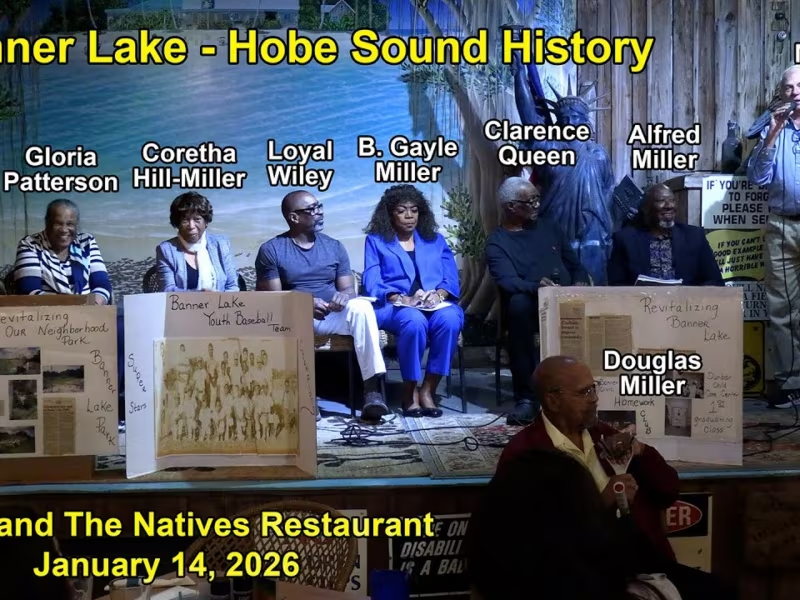
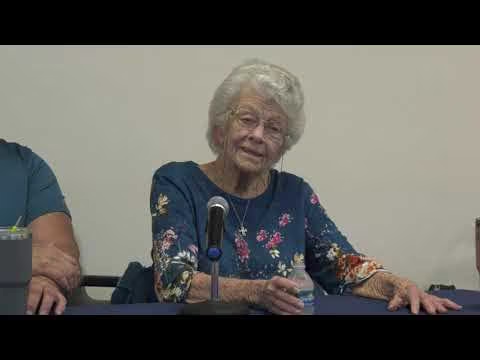
good evening and and welcome uh I am Absolut I'm I'm blown away every time we have one of these to see how many people turn out and believe me tonight I was watching the weather reports and I was saying oh will they will they will they Brave the weather and you you've amazed me thank you all for turning now oh what we have going on tonight and it's sort of an informal process uh I've got a number of old to you know you're right yeah I got a number of oldtime Port serno folks and I'm going to ask them to share stories of their time in portelo and time here in Stewart uh they'll be available for your questions if you got if you hear him telling a lie call him out on it you know it that's that's all part of the game again thank you all for being here I'm going to start by giving wnny wnny Thompson who is our senior our senior attendee at our Wednesday morning coffees and donut at the Museum uh when he's been here in and I'm not going to do this for all of you guys by the way you're going to have to introduce yourself but but whenn he is uh uh been a fixture over at the museum for by some time she and as I understand she was here before she was I think she was here before Port CNO was hello everybody glad you're here um Winford Thompson I was born in serno before it was Port CA and I'm 96 years old I was born in 1926 7even during the Depression and we lived down by the river we moved up uh up town across the railroad track and we lived in a two-story house it's right there by the blinker light on Commercial Street and my first brother was born there then we moved to where we live the rest of our growing up it wasn't even named a street it was just a dirt road through the woods at the time but it was 6 Street or flounder now I'm going to start by going out to the country and I going to mention a lady's name Mrs Meritt I'll talk about her a little later and Hardwick's had a a sawmill out there and I met Betty Hardwick suing by that she's and I've been friends for all these years I come on in uh there was no hospital out there it was just Woods that's what we called it country when we walked out there it was country I'm talking through the the years during World War II when we when I grew up that was a long time ago but anyway we uh there was no uh hibiscus Park we come on in and Mr tolbertson had an airplane and a landing strip and a hanger out there by US1 I thought that was kind of strange come across us one and Mr Smith had a filling station over there and he like rattlesnake everybody people caught them and brought them to him and he built those things and got the venom out of them and sold them to some someone but he had the walls were covered with rattlesnake hides hanging from the ceiling he had a old gas tank and it had a glass jug up on the top of it and you had to use a handle and pump the gas up into that gas thing if you wanted a gallon of gas or five gallons of gas you pumped it up there and then it you put the hose in in your car and I guess it just run in there we come on into where we lived on flounder The Little Schoolhouse is still there where it's a penuin the church across the road was the first school house and they moved it over there when they started to build the pink Schoolhouse and that became the Southern Methodist Church that's where I went to school Sunday school and church with my mother and Miss Meritt was the superintendent of the little children's Sunday school and while I was in in school in serno they started a marching band at Stewart and I joined the band and M Meritt played the frorn and they a County band I guess or a city band she let me play her French horn I learned to play it she took her son and me to bed practice at night we had B practice every day cuz we were marching B went to the Super Bowl we was in the Super Bowl Parade in Miami in 1939 Thee the orange ball the what did I say super Super Bowl it was the Orange Bowl I'm sorry sry afraid Min Louise Wells was in it with me she was in the class with me don't matter when we went to Miami for that we stayed in a hotel and that was the first time I saw escalator stairs and they were probably as long as this table or maybe and they all rolled we had a lot of fun running down that up one and up the down one until they stopped us we were 11 and 12 years old so we also got to go to all the football games and we performed with them it turned out to be a pretty good B I think Mr Bernard Coker I don't know if any of you remember him he was our band director in the seventh grade well I was in the sth grade I know it makes hard work right pass the away I guess this is all on recall so thank you we stayed on on our side of the railroad truck pretty much so I didn't know much of what was going on down around the Red Dog or the coconut place of I didn't know until I grew up a lot of things that happened down there we had a lot of parties from Sunday School and church and we have made ice cream thank you we had a lot of things to eat like fruits we had fish guavas we had gu guavas and mangoes and different kind of mangoes oranges and grapefruit cherries grapes once in a while huckleberries we go out in the woods and hun huckleberries and we thought we were way off of home come to find out we was probably a couple blocks away in the woods we had a a tomato packing house that was on the property of the railroad track on the property on the East Side downtown water and we who were left at home from the war worked in the packing house we worked on the Tomato belt turning in the way it was Ro both sides had women working all the way down the belt they' put the tomatoes in the water and they' come up on the belt and we' he off the bad ones and throw them underneath somewhere this Gerson would send her her Fish House truck out and take people out to the fields after they had picked all the good tomatoes and we could we threw out and pick the rest mom and I pan Tomatoes we also made a lot of catchup for Miss Gunnerson on has the different families would get on the TR we all go out there then on Saturday the truck could go down town and sit there and everybody wanted to go toart would get on the Fish House truck and go to Stewart and all those kids that go the movies while mama was shopping 12:00 we had to get on that truck to go back home downtown Mr Earl had a an old store she's going to be talking and he had small barrels of food the beans the be beans and sugar and rice thank you they were in these barrels and with a scoop you scoop them up in a bag and get what you wanted to take home and cook cuz we didn't have a refrigerator at the time we had an ice box and the ice man would come around every few days and and sell you a little piece of ice you didn't have extra food either like like we have today you know people have a pantry today we just had what we were going to eat that day anyway he was a man that took the mail down to the to the depot and and he would go the post office with a little card he pushed and he'd push it down there they throw the mail off the train it would stop there and they also put fish on the train when they stopped they were in barrels of barrels and Ice the man on the train would give him mail that we were going to get so he'd bring it back to the post office in the afternoon there was a post out by ditch on the other side of the railroad track and it had a hanger and he had hang a bag of mail on that and the train had come by in the afternoon and it would put out some kind of a arm that would grab that bag of mail and someone on the the tray would throw out a bag of mail into the ditch there Mr Earl would get that tiet to we had a lot of fisherman in Solo Mr Mr totally had four Mr Eng mson he had four Charter bootes he ran one and totally ran one Edward ran one and Ted Preston ran the other one for Mr toy then the rest of them were commercial fisherman and some of them are sit beside me back then though we had net racks Nets were cut cotton and they tore up I think easier than the Nets that these boys fish that uh the net racks were built from the shore down over the water and there was two racks for each one and a place to walk on each side and they had to pull those Nets up on that rack no matter what time they came in in the evening but at 4:00 in the morning they had to pull them back on on the boat then they come out with was it nlon n didn't what nylon and then monofilament the nylon net and then they came out with the monofilament and that's what they fishing today I believe yeah what what fishermen are fishing I believe most of the fishermen they fishing now are the ones that put us out of business that's them weren born I wasn't one of them I know her old Depot was the I think Mr Miss Terry bought that or they gave it to him or something CU he worked on the railroad with three black men they lived in section houses right across the railroad from the depot and they was right across from the fire department pretty much and they moved that Depot down on Front Street to the South and closed it in and made their home there and they moveed the Terry home out on grer Street the mcken live there the McKenzie live there the McKenzie live there in the section Ken yes are you done I'm trying to think that's something told everything about being a guarded for the war oh during the war they built a tower that was a couple uh couple stories high and they sent us to a school to learn to recognize airplanes we were awful close to that war we had ships hit right off our coast and one burnt down off a h s for days and days we also had a torpeda hit the reef out there and that kind of shook everybody up my uncle was a a shark fisherman and he fish way offshore and the one of the German boats was on the fire out there and one of the boys the German Bo soldiers got Burt real bad so he picked him up and brought him into the fish house and they took him into the hospital I don't know what they did with him after that anyway we we had a big uh army camp down south of Hope out we had a lot of soldiers in the sail and also with them field was activated so we had Sailors there and that base was among was down at Jonathan Dickinson park and the trees were so pretty and green that you couldn't see that camp at all from from Highway if you didn't know it was there you wouldn't have seen it we had a lot of Soldiers and Sailors and in school in home our teacher had us make cookies and she says we're going to put your name in the box and send them overseas I did but mine went to Camp Murphy first thing I there was a soldier come up to see me I guess to tell me thank you in what a kid I was and then I got on the train to go to Georgia one summer I got to Jacksonville and they bumped me off and filled it up with service people I was on a on a troop training and I guess I stood there and cried for a while cuz nobody I could call nobody had phones and I was 14 years years old so a black one of the service ladies she helped me she come and ask me what was wrong I told her I was going just about 50 miles on past Jacksonville so she asked the conductor I could get on a sleeper to go that far and he said yes otherwise I'd probably still be in Jackson call Mama I couldn't call anybody I think I'm going to wind this up I'm but I had a good life you ain't done with it yet no I'm not you do anything with shark house no we did have a shark house Mrs Mar do work down there and a colored man and they skinned those sharks and cut them up and took the livers out F fins off and hung them out in the sunshine from to dry then they'd shift them over to Japan H us somewhere and that place smells so bad let go yeah when the wind blow The Rock way I have a hard time remembering what I did last week here she's going back yeah 96 96 years it's amazing it's it's ver that verbal history is what we need to preserve because we're losing too many of our uh old time res old old time res the way it works a it a that normal it it is but but you know there resource that we in the museum appreciate and I know a lot of you appreciate but you know it hurts us to see some of our uh some of our Elder States people yeah go on um do appreciate your Insight and everything now having heard a little bit about what when he went through anybody want to go back to the good old days you know uh where you know you got to work the conveyor belt to get the Rotten Tomatoes off and uh yeah I'm kind of I'm kind of soft I kind of like we didn't was some ma scine for a long time rub board Y and then you put them in the Rin water and run them and put them in another WR water and then you hang them up or starch them back then you had to starch and iron and the irons were those old irons that you put on the stove to heat yeah that's that's that's that's the good old days that we don't want to see any more of you'll see that in the museum right no ice cream in theater yeah could you introduce us to the panel please probably couldn't I'm going to let them introduce themselves because I would get I'd be pointing to one person and nameing another you gentlemen let me ask you to introduce yourself to to the crowd and just start opening up to General conversations whatever you have have to share we're interested in hearing but you have to tell us who you are we're not me meyy I'm Ronnie Hal I'm a third generation commercial fisherman here I was born here in stort um my grandfather was a f commercial fisherman my grandfather come from up North my other grandfather and come here and story commercial fishing it's been a great way of life uh Port serno I don't I don't remember how many red lights that was in portno one one one red light I didn't remember that one first it was a blanker yeah what yeah where was it at right okay all right but the roads were we had very few hard roads most of the roads were bumpy and uh uh r on the car we didn't have any air condition we used to wait till probably 10:00 at night to go to sleep because it was so hot in the summertime um the stores we had one grocery store and that was bies Bucky's grocery store it was beside the coconut bar or the Red Dog Saloon or what what you call it Wendy that was before red dog red dogs but anyway that was the only well there was po Smith that was another grocery store where Lan Lan I don't remember Lan they were C con oh okay all right and there was uh there was uh herb and Maryland's or Maryland and herbs crab plant they pick crabs and they sold the crabs they canned them and sold them all over the store into the restaurants uh let's see what else was going on then it was uh it was there was a gas stations remember Butch and but but Warden yeah Warden yeah and then there was lson with the golf station and uh mosquitoes were terrible uh I can remember one time we were up the river and uh we were fishing we were up by Betsy Creek Bar and we had kerosene lanters we used to put the net out to Mark the net and uh we were up there and it was a quiet night and the mosquitoes were terrible I mean they were terrible and my job was to watch the net go out while my dad rode the net out and the mosquito were eating me up there and I was swatting them he turns around stops rowing and he says boy don't you kill another mosquito and I hope this doesn't offend anyone here he says he says that's the only I said they're eating me up he says that's the only thing going to stop them damn Yankees from coming I said oh I went back and I started brushing them off and that was one rough night but uh it was it was a tough place to live but it was a good place to live when I'd walk down to the store uh or wherever there was always a mango or avocado or like when he said glavas all over the place and lot of citrus and now you don't see that anymore and the fishing was phenomenal I can remember in the pocket uh I could throw a cast net and it would fill up with juvenile fish you had to be really careful because if you got too small of a match the net would fill up and it take you 15 20 minutes to get it cleared up so you had to be really careful one day I was my dad had a fish company that went across the pocket about 300 yards and uh there the bathroom they had a room there and it was a bathroom and it was a little box with a hole cut in it and that was the bathroom back then I went into the bathroom and I was looking down at the hole and I seen about a 15 pound snook swim by so my dad always had a live bait well and I said man I'm going to grab my handline and I'm going to go I'm going to get one of them pogies out of that bait well and I'm going to catch that snook and short enough I threw it right down in the toilet and he come right up and he just inhaled that bait but he but I only had 15lb Tes line and he just kept right on going so I can I can honestly say I had a snook on in the toilet I'm going to turn the mic over to somebody else anybody want to make a comment my name is Peter Gran I grew up on mie pocket about three doors north of Pirates Cove Marina there uh my dad Henry gr came down to Sno in 1949 he uh bought the coconut bar King Neptunes that strip center there which we still own so I spent a lot of time my youth in the coconut bar he would go in there after work it was a thing where all the workers would get off construction jobs or fishing or working down at the fish house was right behind it they go in the Goen up bar and drink uh I remember a lot of things uh there wasn't much I remember Jack saunderson he had the golf station downtown slno and he was also the head of they had a volunteer fire department right next door and they were mostly all old military Jeeps and trucks they converted to make fire trucks and he was a head of the fire department there and they had a fire he'd close up the golf gas station run over the fire ring the bell the siren and everyone would come jump on the trucks when he was talking about the uh tomato packing plant which was right across the street from uh the coconut bar there I don't remember it was before my time but my dad always told me about it one night it was a windy night it caught fire it was a big wooden building and my dad there right next to the coconut bar there was a slno hotel a small little building there called the slno hotel well the Flames Sparks flew over caught the hotel on fire that burned down fire department they came they had a hose they went down to where uh the little cek there right where uh I can't think of uh what that little restaurant used to be Pandora man and uh anyway they took the hose threw it in the creek which was Muddy Bottom Of course you know you sink up to your waist there through it the creek started pumping pump full them upud there was no water coming out of any of the hoses so it burned down and then after that that was it but uh uh I didn't do much fishing but uh when I was small young me and Ronnie I hung out down his dad's fish house there and was the old wooden structure like he said it went out over the water and uh we had a little flatty and we go uh fish the pocket there and mainly looking for Coker I remember 25 cent a pound that was probably about the most expensive fish you could catch in the pocket there mullet would be 5 cents if they would take them Snappers maybe 10 cents so that was uh very interesting doing that I remember the old fish house they would a truck the ice truck would come around they had no ice machines back there and the ice truck would back up there they had these 300 lb blocks of ice and they would have these big ice tongs and they to drag them across the wood floor and when they needed ice they would take a hatchet or a axe and they break it up they had this machine it was belt driven electric motor but it had teeth in it and they throw the trunks in the top it made a heck of a racket there and the ice would come out and they would uh put it in the fish boxes but uh yeah it's grown up a lot uh since then uh I'll let Bruce tell you a little bit we had a nice house in before then it was a nice house in Stewart yeah yeah yeah right right down the street there was too far away I'm Bruce Stiller and um I'm part of the history of port serno and I I agree with everything that's been said here so far fishing used to be a lot of work and uh it didn't make me love it less cuz I loved it a lot my family homesteaded 80 acres from A1A to the manatee pocket that's where I grew up and those canals you see in there we dug those to put our boats in for the Hurricanes that they would come all we had was the front of the manate to protect us there's a lot of stories been told here tonight I don't want to step on anybody with my stories but Port cerno was off limits for me I was only allowed in Stiller which was the land between Golden Gate in Port Sero that was our area to Ram that's where I grew up and all of the stories about cotton Nets and linen Nets I I did all of that when I was a kid and you had to pull pull those Nets out and you had to dry them or they would rot and you had to Lime them lime them yeah to get the the Slime from the fish out of them to keep them from rotting they were just like cloth you linen and your cotton cloth it was a lot of work a lot of worky all of the bring you up the date just a little bit a step forward if you will my father traded his property for the Corinthian club today as you know it by the by the uh Rocky Point horseshoe Point bridge and we had a fish facility there and there was a lot of production going on it in increased and the the families were financially supported by that and I have young guys walk up to me nowadays and say to me I used to work for you when you ran to Fish House and and uh so did I we used to take the inals the guts out of every fish that we caught yeah because of the spoilage and we took the we took the uh you talked about the train going by we used to take the fish and put them in barrels and Ice the barrels and put a lid on it put them on the train for New York hello that's a long time ago and I'm testifying here today that that my family um the book written about my family right here by my grandmother and by my uncle how we came down here on a covered wagon stopped in Meritt Island Homestead at 80 acres there my grandmother was AR R preneur girl she she did the business for the family and came down here because where freshwat goes in the salt water it's a fish Haven if it's not polluted just like the Mississippi River used to be we had that same thing here with the St Lucy the lake okachobee with the fresh water coming out of there was not polluted and it made a fish Haven for St Lucy Inlet and that's why my family came to Port solerno my grandmother was had something to do with a male I'm not sure where she was the postmaster but anybody that was somebody lived on flounder because they had a house on flounder right next to ours right next that was the first house they own here and my grandfather this is the way my father told me my grandfather was spending too much time at the coconut and my grandmother sending down and they bought the homestead rides for that land for $263 and my uncle and my dad would row my grandfather out in the river and he would fish all night and they would row back in the next morning and they would catch the bus at Sans sprit Park to go to school okay and there's a a lot more history in my family than just me my grandmother on the Arnold Family side there's an island out there named after their family they had a house boat tied up to it that Arnold Arnold Island Arnold's Island yeah and so the history just doesn't stop here and all of this landed in Port serno doesn't seem like it doesn't seem like Port Sero was big enough to handle all that but it has been and I'm going to leave with this what I've always told myself no matter how much concrete they pour up on top of it it's still my home Hallelujah woo um I'm John Crane and uh yeah I grew up here I was born here and everything and uh my father was born in Fort Pierce my mother uh she was born in a little place called Lulu but that she moved IND in town in the it was in the 30s and uh my father they they had a farm in Fort Pierce and uh from what understand one of the largest farms in the area they were very prosperous did very well and then uh my grandfather in his 30s died of a brain aneurysm and uh they my my grandmother lost the farm and all that and they came down and they're one of the first people to live on Sand spread and um so so they lived there it was my grandmother the two sons and two daughters they grew up fishing uh my father went into the service um learned to become an electrition came out in the ' 50s and started a family business in Stuart uh air conditioning and electric CR and crane and uh that was started in the 50s after he got out of the service however he never could get out of the fishing my uncle stayed in it he never got out of it and at one time br's family I had my uncle James my Uncle Bobby um and my grandfather all had fishes in right in here and in the pocket area hous yeah they were all uh just that's what they did and uh my father he he would work at night or during the day up at the shop and he had a little boat and we'd go out and run a couple 100 yards of net out and catch a few fish and come in and that's how I kind of got into it and then I uh I fished with my uncle which never got out of it and uh it was just a wonderful life I just I could could imagine have a better life I I grew up loving to fish and dive back in those days the water was really clear fish everywhere uh probably 10 years old had my first boat that had an engine and uh could run around a little bit and get out and go and we used to go out and get around the uh Channel markers and jump over with spear gun and we could shoot sheep head all over the place you'd see a whole school of sheep head just start shooting sheep head and bringing them in and uh and it was just one no nobody out there U if if you broke down you had to worry about somebody finding you cuz it was it's not like today if you break down now you got to get out of the way you get run over back then you could literally go all day and not see somebody it just be out there and it's just you so you had to be prepared it was a lot of fun but you had to be prepared and uh I don't know and then we come all the way up to you know we all most of us went to school together you know we ended up Martin County and I remember going up watching Bruce play football you know he was my hero for a while he I know he doesn't look it but he's older than me quite a quite quite a bit too uh so anyway uh and I grew up we used to I guess call it tag team my Uncle Bobby and his father we'd all get together and go out beat s them yeah they would do a double pull a double and a Beat sing you go up there you throw the net out on the beach this is out in the ocean on the beach and then a half moon in it I a th000 yards of net or whatever pull it down it was a blast you just in the water all day fish swimming diving it was work but it was it was fun and uh we all knew each other we all got along we played together and just a wonderful time and it it's just hard to believe what it is now and how they've destroyed the water quality and it's hard to look back on all that and her her husband taught me how to play baseball or pitch a little bit yeah out there he was always out at the Ballpark Hot Shots playing yeah we play I played baseball football all that and her husband helped uh coach and uh your dad was my coach yeah my father coached the lane she she played softball with my sisters so it's like one big family we all knew each other other than that I'll pass it on to somebody I'm David Lao um my parents moved to Port Sno in late 1954 and started what was then David LA's boaty yard on the east side of the manate pocket it's now inkle um mom taught school at Port slno Elementary um she was my first grade teacher and um I grew up at we literally lived at the Boatyard I grew up there when uh when Mom and Dad started the uh like I said they moved down Lake 1954 the oldtimers told them that the mosquitoes would carry them off and pretty close uh that's pretty accurate as uh uh Ronnie was saying earlier they were they were bad I mean on all of Rocky Point at that point there were uh commer commercial fishermen next door to us the ericon uh there was a Hermit that lived way over on Williams way if you know where that is if you're familiar with Rocky Point that was it for all of Rocky Point which now has probably couple of thousand or more people living there um but yeah I grew up in bort CNO it was uh it was wonderful I knew everybody sitting at this table um John sold himself short a little bit down there John was a starting quarterback for Martin County High and was starting quarterback for the Auburn Tigers wow um few years ago John yeah it was yesterday Bruce uh was my cousin who was also David laau that created some confusion and still does uh he he played with you didn't he that's what I thought that's what I thought and uh Peter remember your family very well and Ronnie and I were in first grade together and uh I've known each other all this time of course but um what am I forgetting guys but anyway um lots of changes obviously I remember pretty much everything that everybody has talked about um what was the name of the grocery store that was cator cornered to Smith's leechman big old fat guy I had completely forgotten about that and um and uh Jack saunderson got mentioned earlier was also if I recall correctly wasn't he the county commissioner yes he was yeah okay you st fish BR but before he got in charge of the party my mom used to get the phone calls and she'd run down there and push the siren yeah if if um if you're down in Port CNO if you know where District Table Restaurant is which used to be serno National Bank Florida National Bank the vault is still in there by the way the vault door is still in there but anyway that building that's now uh what is it now like a fish and bait and tackle shop or something that was the that was the golf station y um with the volun distri there was a barber shop and a beauty shop there that's right Buzz Buzz's beauty shop yeah north of a district table y yeah Buzz of Barber yep he went out fishing one day and never came back never came back anyway I got one little thing I wanted to throw in there yeah when he was talking about some of that um there was one time and I don't know how it affected all these people but for us and our family one of the biggest highlights are growing up I don't even remember what grade I was in but we used to go to elementary school right at CA Elementary we'd get out of school we'd walk get to the fish house as fast as we could my grandfather would give us I want say it was a dime a quarter for one of them steel baskets get it fill it full of blue fish or mackerel and you he'd give you something for every basket you did and that's something we did every day we we just worked and did all that but one year all of a sudden it came man and there's a film crew and they actually made a motion picture in Salerno it was in the 60s G General Ben G General giant General Ben and it was it was really cool they they set up right across the road from my grandfather's fish house so we got to go to the fish house and we could watch stuff and the little boy I can't I can see his face and I can't remember his name my brother my young younger brother Sam got in a fight with him we we had a pet raccoon and he was walking around with the pet we was walk H my brother was walking around with a pet raccoon and this guy come over started uh they started getting into but anyway they they got in the fight so he got threw off the set and but almost literally every fisherman in CA was in the in that movie and it was on the big screen it was pretty cool I add a little to that I have uh strong memor of that tours he did The Flipper y thing and he they came to town and they had it set up down on Sea from the post office down SE where they had these big generators CU they had used a lot of light filming then and they had all these cables strung all down up and down the roads on laying on the ground I remember that but I had a friend from Jensen uh Michael langberg which was a wellknown family up in Jess in they own Riverside Trailer Park anyway he was down and he was somewhat a fluent family and they had a couple walkie-talkies he brought two walkie-talkies I had one and Michael had one walkie-talkie so we're walking around you know the set not on the set but up and down the street and with the walkie-talkies and couple deputies come over to us and they said what are you doing I said no we just have these walkie talkies we're talking and they said well you're interfering with the communications of the set so put them away that's my recollection general b you you remember scratch Glennon you remember him who scratch Glennon Walder Glennon yeah yeah just my they as he was an old ragged looking yeah that's what I was going to say something about and they asked him to be in the movie so we went home and shaved cleaned up went said we don't want you anymore we don't need you anymore he was quite upset how do you how do you turn this thing on anybody know it's on I'm he okay yeah it's all but uh yeah old waler he was upset about that that was going to be the highlight of his life but it wasn't it wasn't always everybody happy and jolly around there either there was sometimes that got a little carried away down at coconut bar all the fishermen get to fight and then oh I had a cousin bik gangs come in there fight with them Larry he was shot dead in there Larry I had I had a a cousin a cousin that went to Vietnam he went to Vietnam and uh got a purple heart he was wounded in Vietnam and uh he came home everybody else has got a coconut story I think but uh anyway he he got in a fight with somebody and some guy pulled a gun out and shot him right in the heart and killed him and uh that's my only Story the coconut I've never had a beer in there so I don't you don't know know nothing else about it they were talking about mosquitoes being bad you don't know what mosquitoes were when when I grew up Daddy had made us a mosquito brush that you had to brush them off of you to keep them meetting you up I believe and at night before we'd go to bed they were so bad he'd make a smudge in a bucket and go through the house and smoke them out they'd go to the windows then he'd come along with a spray can and didn't kill them and that's the only way we could sleep back in and there's another story I was going to tell about was two men bought a boat together down there and they they had some problems and what up wanted the boat this is the biggest problem so what they did they cut that boat in half that was Roger Bale do you remember him you remember U the guy that was the artist what was his name Peter something Fisher Lea Fraser Lea Frazer Le Fraser it was him Roger I got lots of stories I can tell you about SAR but most of them I can't repeat uh I was born in Martin Memorial well I was born in Stewart hospital when there was 12 rooms back in 1948 I remember when there was one red light in Martin County we grew up there and us kids run our town that slur was our town and we had a deputy Jack Curry that allowed it to be our town he got us all together and he he called me freckles cuz I was blessed with freckles when I was a kid but he said freckles you better get your gang together cuz I hung with all the boys cuz Daddy was a ball coach get your gang together and tell them if you get in trouble if I get a call you bet you got 30 minutes to get home in bed so so your mom can say you're hum and that's the way we grew up we did as we pleased we ran that town but it was a blast growing up there but there was one right one red lightning Stewart it was a us one in Colorado at the Texico truck stop do you remember that Gloria yep the Dairy Queen yep then we finally got a blinking light in SAR and we thought we were living High we had a blinking light but watching the changes go from volunteer fire department everybody in town being involved So Paid firefighters the schools changed so much just everything I remember when they paved the streets because the county had a road grader that used to park at our house and he would grade all the dirt roads everan Watson wats but he would park on our street and they would come across the railroad and go as fast as they could go and hit that dirt and make it maybe a half a block before they got stuck get stuck and then on the weekend on you know that would go on all weekend Monday he'd come back and have eight or 10 cars that you had to pull out but growing up was a real hoot in Sao and working in the fish house was my dream when I was a kid I begged to go to work there and I still work there still run a dock I work for John's family for 29 years 29 years we had A6 million pound a year order at Simonson's restaurant we never failed to fill the order 6 million pounds of Spanish mackerel but fishing's still good but it's not good like it was before they took our Nets they ruined us they ruined us it wasn't anything easy on the Destro destroy the war the shark I don't remember the shark well I asked her if she knew it that's before us I asked her and she didn't work there well I was in my time yeah did you at the End of the Street past Pirates Cod my father had an opportunity to buy that point I went to school with two boys their dad was the supervisor there his last name name was Springer well my uncle Jabo worked there and my uncle Owen worked there but I don't remember anything Owen fist it it was mainly oil that fist the oil and then whenever the synthetic oil came out it put them out of business right my my father used to fish for the shark oh okay cuz we have some pictures over here on a table of the the shark picture of uh some of the people they would skin the Sharks and hang the Skins out to dry and sold them to leather companies and we have a picture of Winnie repairing a net a great picture in color so when you all get up please look at those pictures there's some great shots yeah we did hanging in this so in the leads and car so I built I we had to get a question out I just remember the fish when the fisherman would Supply so many fish for the men's Garden Club and they'd have a huge crowd here you all did you give fish for that can you remember organized Fisher of Florida well when did that okay we would it was a big campaign on for the lake oobe pollution that we were getting here and we held hands with a recreational fisherman with a Garden Club and and the Autobon society and we gave them fish for their fish fries but we didn't do two Hoots with the deal with the with the pollution problem but we tried thank for trying we tried we gave fish to the schools to the far Department to anybody that needed fish yeah that was the way we raised money yeah not only we give them to them we cleaned them I was just going to say um my great uncle Ben Mulford founded Salerno and we have a lot of history Ino there's a lot of there's a lot of folks still around good your daddy could me school every morning on school bus George yeah anyone call any guys out on lies anything they've exaggerated on have any other questions is anyone still working out in the water or is everybody retired working in the water still I out at the group out the group oh in the well you're in the group yeah yeah I'm I'm still working I'm still working but they got me working with a fish hook and a a piece of line that's what I'm working with now compared to what I used to work with uh we used to have spotter Pilots here matter of fact I tell a little story about Bruce and and I uh let me see the mic I don't know if they can all hear me but uh we were off we we were off Vero Beach and uh we had spotter Pilots Bruce had his spotter pilot I don't I don't want to offend you or anything no it's okay anyway the spotter pilot called me on the radio and he says uh cuz it quite competitive back then he says Ronnie yeah it was very competitive he says Ronnie I got two bunches of fish north of you he says but the only problem that is is Bruce Stiller's in between you and the fish I said that's not a good situation I I said let me think about this a minute I said if I move any he's going to know something's up so I said Lord I got an idea I said I'm going to call him and see if he's got a loaf of bread because I know I can outrun him if I can get over there where he's at so sure enough I call him and he says I says you got a loaf of bread Bruce and Bruce said yeah I've got a loaf of bread generous nice as he could be I says I'm would come up that way and get that loaf of bread from from you knowing I could out run him because the fish were north of him and once I got to him I was going to beat him and uh he did finish the rest of it here anyway uh I got up to him and uh I just I had a 50 foot boat and I just poured the power to it threw a big wake on him and I says come on but what the problem was is there was a big bunch of fish and there was a little bunch of fish and I said Lloyd PL spot pilot I says you make sure you put me around the big bunch of fish and uh he did he got me up here out Run Bruce and Bruce got the little bunch of fish but what happened to me is the Sharks come down and eat my net up destroyed it and he got the fish and I got the scraps and the mor the moral of this story is when you pour shanigan there's consequences I thought he tell that a happying for me that's TR it's okay there's put it in a stand there okay I uh thinking back we have the earliest fish fries was uh porcel volunteer fire department they would cook them behind there there was a little park there it's still there Chandler park I think I'm not sure what the name of that Park is but anyk anyway they would uh as a fundraiser for a fire department that would cook up the mackerel and that's my earliest recollection of Porcello seafood fish fries I want to say that I'm retired and I have had all of my childhood dreams come true everything in my mind that I wanted to do as a young boy and a young man came true for me and I am so happy that I don't have to work anymore thank you guys for being yeah part of your question earlier is there still someone fishing no I just out of the group well out of the group elain runs the docks down there at ports right I run one one of them run of them one of them okay so there there are there we still have fishermen they're still out there just different technique well back then we we had we had large Nets we had a quota there was a I think a 2 million pound quot is what we had to catch and they shut us off soon as we caught that quota and uh when they put it put it on the ballot uh I don't think people realize that we were on a quota these are migratory fish and they come down here and we catch what the fish can sustain and maintain their themselves and then we can they shut us off soon as we catch that cloer so they knocked us down to cast Nets and that's 500 square feet and that's not very big and the guys have got good enough where they can make a living now with it and it's been a struggle and the guys with the rotten reels are using live bait and they're making a living with that now but it was uh a lot easier far as I'm concerned with a gilet yeah and catching them and getting the clo off of getting it filled then the fish weren't bothered anymore I think for the fish uh for the fish to be healthy I think that if you took some of those boats off and let the fish alone for a while it make it healthier stock of fish but it's changed and they put whether it was about 15 or 20 of us with the big boats of course there's a lot of small gilet fisherman around the river but uh it put a lot more boats into it probably now there's probably a 100 boats in a cast fishery so instead of a few boats making a lot of money I guess you could say they split it up among the all the a bunch of people so a lot of the people in Port cero now are making a living with a rod and reil and a cast net but it's a it's tough too it's hard Bruce you did cast net and it's it's a when you pull a net in 30 ft of water it's 18 20 lbs all day long at we on and one shark messes you up yeah and we also had another shark fishery before that uh we used to catch a lot of sharks with with Nets and then uh they Bann that human consumption they do yeah and we they showed where we were thin in these shars and throwing the carcass overboard but it was really out of a different country where that picture come from yeah and it made us look like the bad guys but we sold every shark that we caught the the meat and the fins never threw any back I was getting 60 Cent a pound for the sharks for the carcass and the fins we were selling across but we sell them down in Miami and they ship them over I think to Japan and uh we did good but now since they' B the sharks the sharks have multiplied the way I see it the way I see it is like a bunch of Timberwolves and if you protect the Timberwolves and you let the people hunt the deer and the Timberwolves hunt the deer you're not going to have any more deer so so you've got to manage everything and and the people we got working for us are not managing it right you can't take from one and not the other one but uh there's a lot of things that with gfish same thing with the gfish same thing I'm going to turn this over to somebody else who would like to have it you all talked out yeah unless they want to ask some questions first and foremost I want to thank you all for coming out tonight you know uh this was a what sounded like a good idea and we're start okay who are we gonna call who and Ronnie reached out to today they just they just all came together all I did open the door he youday uh but that's that's part of what I think Fort LNO was always about you say hey we need something we come together and we do it that's sort of what the museum is about we need something we come together would do it um speaking of doing it I want to get the raffle drawn over there help I want to say something else before we leave H I said I want to say something else before we leave absolutely we've got a heck of a fight going on right now trying to keep for s for serno keep keep the mic we have developers down there that want to take everything that is Port CNO and put condos this and this and this we formed organization called SOS and we're here to fight to the better end to the end I try not to get too involved in politics but we all are facing it you know whether it's portz Alero and the development they want to do down there whether it's the uh growth within the city of Stewart Jensen Beach Jensen Beach know all the Martin County and if you've got an opinion to what should or shouldn't be done I encourage you to express it to your City commissioners County Commissioners you know make your opinion known I don't know can't say it'll do any good but it's up up to the residents to keep the right people in office uh to protect what we have and yeah I know I moved up here 40 years ago so I'm I'm an interloper but uh yeah we got to protect what we have whether it be the water the fish the Waterfront the whole community and our history ah Stuart Heritage Museum coming up this November we anticipate being on the ballot to for with a resolution authorizing the City commissioners to lease that building to us on a long-term lease uh I will you will heal more about this going forward I we need all the support we can get because right now we're are in the old Feed Store at the gracious gift of the City commissioners but that doesn't mean next year we'll be there we want to get a 10-year lease to ensure that we can continue to represent the history of our community now the raffle includes items from SEO Bank it includes wine includes chocolate you know crackers cookies and you did not have to be present to win so if I can get this young lady with an honest face she is oh it's mine Helen where's Helen Helen oh Helen Helen you want to get it on your way youall are so quiet and peaceful I'll keep you that's what I'll keep you you'll be here next month yeah yeah yeah so quiet any questions on any subject that I can sort of fumble through next month next month Tony Anderson will be our speaker uh I presume he's talking about schools and school board and education I think that's what he knows most about it will be on February the second Tuesday in February which is the 13th I think he's another one that can tell you about going absolutely we thought we thought about need for next he one of eight or children and thank you all for coming out tonight thank you for your support to the museum keep we are come by