The story in brief
Furthermore, the narrative highlights the evolution of the organization's mission, emphasizing its ongoing dedication to coastal ecosystem conservation, scientific research, and active public advocacy for clean water and habitat restoration.
Full transcript
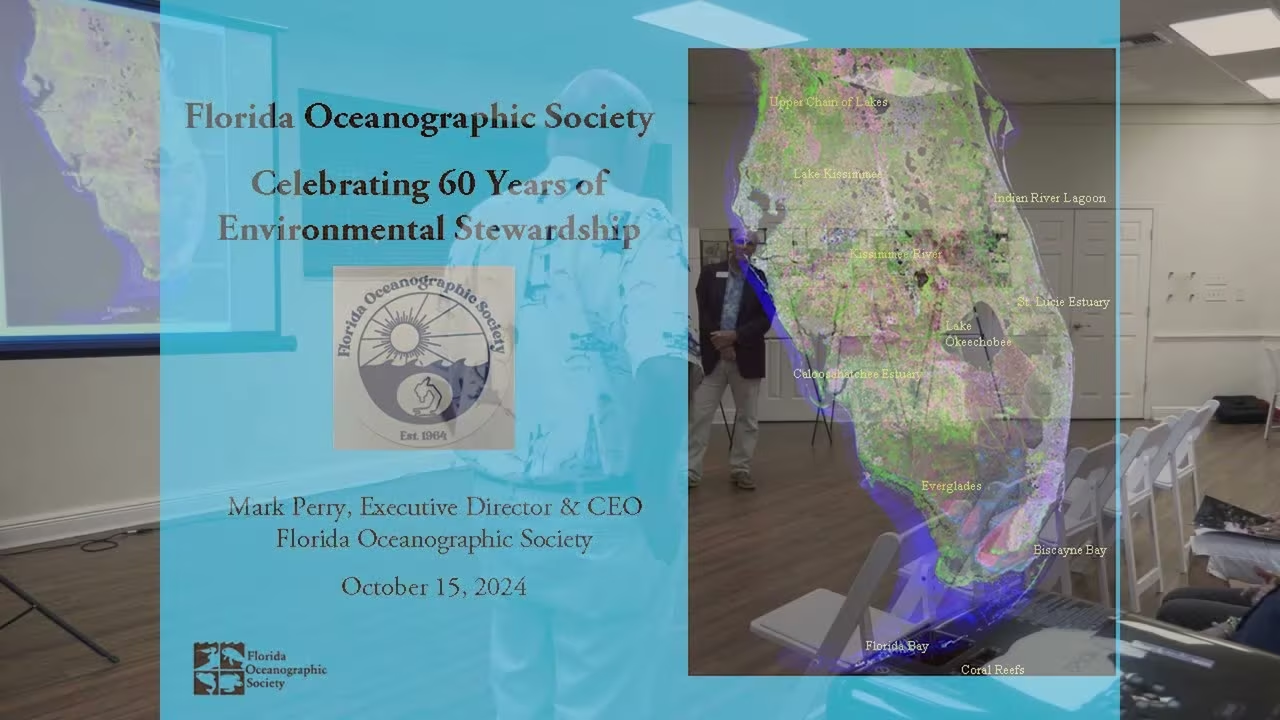
I want to welcome everyone to the Flagler Center and the Stewart Heritage Museum monthly presentation we're pleased today we're a little un disappointed that we had to postpone it because of the storm last week and I feel that may have impacted a little bit of our attendance but we're pleased to have all of you here Mark Perry…
Read full transcript
I want to welcome everyone to the Flagler Center and the Stewart Heritage Museum monthly presentation we're pleased today we're a little un disappointed that we had to postpone it because of the storm last week and I feel that may have impacted a little bit of our attendance but we're pleased to have all of you here Mark Perry director of the Florida oceanographic Society uh long long time local resident been the a lot of the driving force behind uh the environmental adjustments and concerns that we have in the community and proving I'm not the fault of it so I'm thank you I feel so honored to be here with Sandra Gloria and all of you folks
that that work on the history of this of this place and uh as as Gary said I grew up here since 1957 I spent a lot of time here and then went away to college Merchant and came back in 78 and I came back because I wanted to know what was going on with this Florida oceanographic Society because my father had kind of helped found it back in the 60s and I said you know there was something going on there I was working with the University of Miami off the yukatan peninsula and it came to me it says you know God said you got to go back there and figure this out what's going on
with the sociographic so I said okay and I came back and I'm going to tell you a little bit about the history but it kind of how it ties in to our town of Stuart Florida and a lot of the images you see up here and things kind of go back to those early 60s days when 1964 with the very Beginnings in h June of that year and I'll talk about how we kind of got formed and organized but it has to start with a person and and it starts with people and it's people like you who make the history of this of this place you know there are there are places we celebrated this
week on Monday indigenous people's day so we think about the aiz Indians and the jagas and teesta the people who inhabited this area long before the Spanish ever got here right and we go to tuckaho and we go to places like Indian mountains and shell mittens out on the island and we kind of recognize that hey there were people here a long time before we got here so we're kind of all these migrants got here we celebrate our our fact that we grew up in this great history and Gloria and I still up here we could talk for hours that we do as we visit at the Museum and everything so thank you for Sandra
and thank you for Gloria and everybody who helps preserve this history I I really want to say that so what is florid oceanographic let me um let me kind of just start with this guy this is James Rand Jr of Remington Rand uh bar ran all the ran corporations he took over kind of for his father's Legacy back in the early 40s and 50s and he basically uh was a Harvard graduate he took over for the corporation he began putting together corporations like Remington you know all the the office supply equipment and things like that but he had an inkling to move down here to this area and why he did is he wanted to
uh develop this property this is at the end of Hutchinson Island it's now known as Sailfish Point but in 1957 5657 he bought this property and what was then looking like this down at the St Lucy Inland just north of the St Lucy Inland at Sailfish Point and he he had this idea of developing it into a development called seol Shores and some of us who've been around a while remember this development that started to take place and then stopped and then it was repurchased back in the 70s 77 by mobile uh Land Development who ref furthered it to Sailfish Point but this is what it looked like back then and what I'll point out
too is there are a lot of mosquito ditches here and these were ditches that were dug by the local Martin County Mosquito Control to kind of control for mosquitoes they would put water into these ditches and run them up and down into these areas but I want you to notice this little Lake right here that was a a lake that U had a shack out there by the front and they the McCoy brothers who bought this property was back in 1915 I believe the McCoy brothers used to import uh rum from the Bahamas during the prohibition period particularly and they would bottle it up for The Real McCoy and The Real McCoy was the name
given to Rum that wasn't cut it wasn't cut with water or anything else it was The Real McCoy and my brother and I when we first got on this property found a lot of rumb old kind of rum bottles and my brother Chris has a collection of those down there so I just thought I'd point that out as a little more history so back in the 1950s 57 they hired my father up in the left corner my father Cliff Perry to come down uh from Massachusetts we're in provinc toown Mass moov down here and be the construction manager for what's going to be seminal Shores and they built this fishing pier that you can see
on the bottom left uh it goes right out over the reef they built the Marine Mara that enclosed up in the top area there they took that natural Shoreline bulkheaded it built the marina and this is the bathtub Reef area right in front of Sailfish Point which goes from there down to the inlet and that's a little hookah rig and my father and my brother Chris and I are underwater we're looking at all the interesting stuff underwater uh but it was a great place to uh kind of understand and grow up on so this seol Shores was a kind of a place that brand had this idea to build he put the streets in he
put the fire hydrants in he he began to put a couple of houses up in the front area right as you come inside the gate but then he got disappointed he says well I'm done with this development I'm going to go to the Bahamas and give it up and uh he just kind of gave up on it before he left though he had a he had turned over part of the the chairman of the corporation was Doug general Douglas MacArthur and he retired as a general and became kind of the the chairman of the board of of the Rand corporations and he was very close friends with James ran and when he would come to
visit they had to build this road from East Ocean Boulevard down through uh the Indian River Plantation out to their and they got together with the the town and the county and said you know let's name that MacArthur bullar so that's how MacArthur boulard got his name but James Rand also bought this house on about two acres that's the mouth of Krueger Creek in the St Luccia River and it's right right here down the river from us uh right on the location here and that was an old house owned by some German couple German family he bought the house and added on to it tremendously made about 8,000 square ft it was on about 2
Acres he dredged the uh the in the part of the mouth of the canal in order to put his yacht and other boats in there and spoil the area up on Valor point which is just to the north of this mouth of krer Creek so if you look at an aiel you'll see the mouth of ker Creek and the shoreline going east but you'll see this jutting out place called Valor point and again just like Sailfish Point you put bulkheads out dredged out the mouth of the creek put it in there and made Valor point out so there homes on there across the way this artist U Back Then um llo he took this uh
painting back looking back across the mouth of ker Creek at the docks in in the Riverside Drive property and that's one of rand's Yachts he had a couple of them I think he had two of them this one the Galaxy was the one where MacArthur used to come and stay on this shot and I know because my my grandfather on my mother's side Raymond hacket was uh Cummings Lockwood and hacket and he would his attorney and he would stay in this Cottage next to here and as kids we would run around here and play around and I sometime probably met General MacArthur but didn't know about that but that's my namesake actually you know my
middle name is Douglas and my parents when I was born in 52 they said we're g to name him Mark Douglas Perry and in honor of Douglas MacArthur so now you know another little tidbit of history but but anyway James R yeah so Ram's yacht was uh it it kind of got destroyed over in the Bahamas uh eventually when he ran the ground much but it was much like Francis Langford yacht the shanaclear it's a burger kind of yacht it's a similar size about 100 ft long and it was interesting to to watch as it as it grew so this was the property on 1212 Riverside Drive and when he moved to the Bahamas in
1962 he said you know let's you know my father and other community members said let's establish this Florida oceanographic Society a nonprofit organization that will help bring scientists in and do Marine studies and increase our knowledge and understanding about the marine environment and he agreed to that and said I'm living to the Bahamas now I gave up on the seminal Shores development youall can have that as your headquarter so here was this big 8,000 foot old place and um that's where it stood so this is a some photos and articles from the paper the local paper of our original board of directors so these articles are from um particularly that one in the upper left
from uh juli uh June June 18th of 1964 so they were talking about the visitation of U Governor Bryant Ferris Bryant at the time but they were also announcing that this Florida ocean graphic Society being formed here in Stewart so the attorney at the time was uh Jim Litman Litman was a a long-standing attorney I think his father was an attorney um litman's um but I remember Jim Litman being the attorney in this picture you can see some of the board members my father Cliff Perry uh there's U Paul Rogers who us Congressman at the time Dave irons who was uh the president of Stuart First National Bank which is now SEO Bank uh next
to him is Steve Schmidt who was uh the director at the House of Refuge and Elliot Museum who was at the Martin County Historical Society Rossville brick um I mean Bernie rickenbach Ross fil brck and then Ray Roberts I know it's cut off a little Ray Roberts was also on our board later on and Ry is a school teacher here in Martin County so but the original founding members U Were um Dave irons from the bank Steve Schmidt from the museum um Cliff Perry Bill Todd and her Bruner now her Bruner you might remember a lot of names uh her son his sons are still around uh Jim and Jeff Bruner who are realtors in
the area but U they had other sons and daughters and stuff and we moved into Hilder park right down the road here just past the old hospital the North Hospital was called Hilder Park and my parents actually bought the Bruner house and they moved two doors down and built and lived down there so we grew up kind of together as families and a lot of that happened around here during that time in the 50s 60s we all grew up as families around these different areas playing run around no locking no doors you know run around till dark I mean it was it was an interesting time back then but anyway back in ' 64 this
was being formed and um we said okay and Ferris Bryant um the governor Bryant at the time came to visit and talked to the quanas club and made an announcement he's given $88,000 from the Florida conservation uh uh Department which was then later on DNR and Department of Natural Resources and a matching Grant from the uh Colonial Research Institute which was a laboratory with James ran and would use that so 8,000 and 8,000 matched to 16,000 to um work through the public health Foundation Laboratory that James Rand had established here in steart for a scientist who was working at the time with them named Ross Witham anybody remember Ross with the turtl man right so
he was working at the time for the colonial Research Institute and wanted to do work on spiny Lobster as well as sea tur so Ferris Bryant the governor came to visit Stuart that was mayor Ray Cook at the time this guy right here the mayor of Stewart mayor Ray Cook um so a lot of history here so anyway here is what Florida oceanographic said well hey let's start talking about what we can do here as an oceanographic society and have visiting scientists using up in the upper left the House of Refuge the lower left is the 1212 Riverside Drive on Krueger Creek here in the middle is the area of the What's called the East
7th Street this is where the old police station is now Stuart police station on East 7th Street um it was where the the public health laboratory was and they had microscopes and different things in that and then out at Sailfish Point or what's now Sailfish Point right inside the gate at seal Shores they established uh the Marine Biological Station and because we had uh water we could get from the pier remember the fishing pier that was there they brought water in saltwater and could do a lot of research in there so we kind of They promoted at the time we have all these great areas and things we could do and U we could do
this science around here so of course as I mentioned the turtl man Ross with them who we all know and love we uh in fact as kids that we were out there scrubbing these sea turtles as he would um take the eggs and hatchlings and grow them out about six or eight months weigh them tag them and release them about 28,000 I think or more got released and he had several returns that came back uh to understand more about the migration and nesting of turtles but the House of Refuge took this on there Steve Schmidt was the director at the time took that on so they built turtle tanks inside the House of Refuge and
they're still remnants of that there the old sisters and things they used to house the hatchlings and the turtles well Ross also wanted to do spiny Lobster research right so he you know Incorporated this and I remember helping him build these uh Lobster habitats with these tubes and things of different sizes and put them out at the dock there at the House of Refuge and measure how many you know lobsters were coming in The larva Lobster are real small and they need a hiding place from predators and also food source so later on as the oceanographic was established began to in July 64 they began to attract scientists and this gentleman Dr Lloyd claf from
Woods Hole oceanographic came down into that marine biology laboratory I talked about at Sailfish Point and my brother and Chris and I would catch sharks for out in the parking lot in front of there building above ground pool about 25t in diameter about 4T deep and we catch sharks for them put them in the pool keep them alive and they were doing artificial Gill and kidney research on sharks uh right there in the laboratory so uh Lloyd claf from Woods Hole and Arnold land from Cornell Medical was with him too now you might remember Arnold land developed open heart research open heart surgery techniques that were later on used as the technique for open heart
surgeries and he was doing it right here on sharks in our laboratory so it was pretty kind of cool at the time I'm only 14 15 years old I'm go like oh yeah okay this is cool whatever you know so you know we go away so what happened was in 1970 to 1980 the the oceanographic kind of leased the place to a group called The American Academy of ocean sciences and they were doing shrimp research on shrimp for aquaculture they did the first three years to about 7374 and they moved everything to Costa Rica they didn't have any plans for the rest of this uh site so we were trying to say let's end your
lease let's get out and I came back in 77 and said what's going on and they said well we're getting ready to dissolve the organization give the money away for scholarships I said you can't do that we got to write some grants we got to get something going I was with unity Miami and all excited and passionate about let's get some ocean signs going here so of course we wrote some grants got some things going my parents thought it was crazy you you had a good job you should go back you know that anyway so here I come I took the laboratory equipment the microscopes and different stuff we setup shop in um in our
u in in the Riverside Drive offices and we started to do some work and we did a lot of studies I had a small staff I wrote a couple of Grants uh two grants for 7879 to keep us going and we did were I was doing crab research on Blue Crabs here or U I hired this guy um mace Walden who's now a really famous architect up in New York area he was just studying architecture and he designed reason I show him he designed that logo with the with the circle and the SP and the microscope in the middle Maurice Walden he a really really interesting guy uh but I had a small staff really
interesting folks we did some work uh we set up a a library the library was already kind of reorganized a little laboratory down in the indoor outdoor pool he also had a candle pin bowling lane by the way over there at 1212 rear side dve no candle pin or small pins with small balls throw them and uh it's pretty interesting but the microscope uh Dr Harvey asterita was doing deep sea research what he's doing there is looking at Hyperbaric research down in a in the depth so he can pressurize these cells down to depths of you know 10,000 ft or more and uh what that does is to tell them how they react under these
high pressures uh we had aquariums and my mother actually mean Perry is right here and she's doing the the library she volunteered to say well we got to reorganize the library so many books that have been out and come back so we got to do that so anyway so we had a lot of research activities can read about them uh different things one of the things we did was this Source book of Marine Sciences and Ray Roberts who I mentioned earlier and others scientists got together and um published this back in the 1968 and republished it in 70 but when I said you know we've got to update it and republish it to 19 uh
80 and which we did and it became an adopted textbook in Duval County and many other counties around there were 38 lab units of how to do different science projects and things like that so we're proud of that uh thing the other thing we're proud of is doing an estuary conference uh when I first got back there were all these jurisdictions the cor of Engineers the water district all these other people doing these things and they had no clue about how it affects this Estuary this beautiful North South Fork and the Beautiful Estuary here in St Lucy so I pull together the St Lucy Estuary conference we had five different consecutive conferences this is right
here in the library got all these leaders together and said look we got to look at this thing holistically what you do in your jurisdiction your jurisdiction every has to come together and protect this valuable ecosystem we have and that was successful the other thing one of the things we did we established this Coastal weather station read the date October 1984 in November a couple months later November 84 was the Thanksgiving Day storm had about five or six foot storm surge huge winds and it survived so the weather station survive and it's actually still in operation today the gentleman in the photograph up there is uh Dave Delk he was The Keeper at the House
of Refuge at the time and he would enter in the wave height data for us and the bottom picture is uh is George gross he and his father ran the first Radio Shack here in Stewart over where the windexi shopping center is and that's a TRS 180 and an old realistic phone recorder we got 200 calls a day of people coming into this it was it was amazing um and people wanted to know what the weather is and so it was real important to establish a weather station at the Al refug and it's still in operation so Riverside Drive um you know we looked at a place where we're surrounded by residential area and the
City of steart said you're fine as long as you don't do anything but what you're doing exactly right there you can't have school groups or aquariums or anything so we looked around South Florida and we ended up with this uh location here right across from the laot museum and House of Refuge uh which Martin County owned so it's a 40 acre property um the county bought from Ocean to River here at Stewart Beach and three miles north at Jensen Beach and they bought those way back in the 60s for uh just for public use so they had no plan for the West Side uh they had already leased this area for the Elliot Museum and
of course Stuart public beach but they had no plans to the West Side so we proposed a coastal center which would have Regional aquariums nature trails open to the public and they approved that so they approved of our concept plan for the coastal center and Regional aquariums and the lease in 19 U 85 in November 5th uh was 99 year lease so I've got to leave a dollar in an envelope for somebody in what 19284 for somebody to renew the lease Okay so I would be 130 something years old so I I can't do that right but it was a beautiful property and little did I know that my father Cliff Perry and Steve Schmidt
had talked about oh wouldn't it be nice if across the street at the Elliot you could have some sort of Marine Museum so here we are so we went out there on trailers we kind of set up with a you know I did trail walks through the bushes um on these little thin Trails couldn't do that nowadays the liability is too high people would never go for that but anyway it was exciting times we we had a lot of great times and I had a visit with u Jean Michelle custo I don't know if you you all probably remember ja custo right he was my kind of inspiration back in the day and his son
John Michelle custo was down here boa we wanted them to come up and speak so he came up here to Club Med what's now Club Med brought some raw real footage no man you know no narration or anything he narrated it put it on the 16 mm reel and he narrated this beautiful footage and stuff but I got to show him our coastal center and what we're doing about it and uh he was excited about you know supporting he he couldn't believe how undeveloped this all was we left Moka and I drove him up here and he's going I can't believe where was all the this is so undeveloped it was great so over the
years even through the the trailers that we had on site we had great great opportunities to have a dive team we had a volunteer dive team team we have Dave kurtley we had the library going um one of the great things we did is uh Dr Dave kurtley uh used to be here many years ago and down he studied the warm Reef back then but he was at Harbor Branch then we went out west and did his uh geology work and stuff in the industry and then came back to Tass out of the blue I got a call one day are you Mark Perry the son of Clifton Perry who still has the oceanographic thing
and I go oh yeah here the worm Reef down here oh yeah and he came down and he he did his taxonomy review millions of species all over the world came to our place he rified all of those it was a fantastic study of the time period there's actually put a plaque on a bench out there at the bathtub re in honor of him and U and these Sabal worms only exist from Cape Canal to Brazil and the Sabal AED worm Reef that comes ashore at low tide forms that Cal shallow area inside the reef the bathtub Reef that is such a valuable important resource for this community I tell the County Commission that every
time I see them they say you got to protect this resource it's a it's a very unique re so we have an exhibit in the new coastal center there uh about that so in 19 uh 94 in December we opened up the first Visitor Center and we you know we had the trailers and everything like that and I would do walks and stuff but this was the first time we had an actual Visitor Center and we needed to to open up something to the public and here we are at the opening day cutting the ribbon and everything on the front rails and my wife Nancy who's here we were inside we were getting ready to
open the risher stuff and get people in and the she said don't let people touch the handrails cuz they're still wet with white pain cuz we were literally still just opening up right so it was pretty exciting but Francis Langford had donated her beach house which was just up the road from the bu graphic Society about a mile or so up the road she lived of course on on Jensen Beach over on pisca hill over here and wanted to donate that to fos we eventually sold that and of course used the proceeds to be able to open the The Visitor Center so the first Visitor Center building is this one here uh it's still standing
today we've added on to it we remodeled it and opened up uh but we used to have visitors come through about 6,000 people that first year grew to 9,000 to 12,000 and now today we have about 62,000 visitors every year so here's some examples that we'd have programs inside we did t-shirts we had a little gift shop um we built the outside aquariums the outside Pavilions the ray tank and Ray Pavilion and children's Pavilion and then we had some master planning done to figure out what's the best plan for all of the ARR of the site and how can we build it and one things we came up with was a game Fish Lagoon a
big large Lagoon in the middle so today we look at what we have at the center across from the Elliot Museum and our mission is still good to inspire the conservation of Florida's Coastal ecosystems through education research and advocacy and we work real hard to try to get people to get inspired and I see kids out there holding a little hermit crap for the first time and they get over that oh my gosh it's it's going to bite me it's going to hurt me I shouldn't touch it no no it's okay and they oh wow that's so cool where does it live what does it eat how can I protect it and now that we
got them you know we've inspired them to say you got to protect this environment it's so important so we do a lot of different programs here obviously we have a nature center with Hands-On learning experiences we have a lot of aquariums and displays out there we have this large 750,000 gallon gang fish Lagoon fed from saltwater underneath St Beach we have wells that take in about four 500 U you know gallons per minute bring it over sand filtered sea water ideal and we put it through these aquariums we have sea turtles and sharks and over 300 species of different animals in there we've built different Pavilions and obviously have a great uh different programs we
do summer camp programs nighttime Turtle walks during the summer months uh we have Hands-On we go out to the snorkel to the bathtub Beach and we also do research and research efforts and restoration we're trying to restor two important habitats here in the Estuary oyster reefs and seagrass beds they are two great habitats not only for protection and food source for a lot of little fish and crabs but also they filter water they sequester carbon it's an ideal habitat but we lost a lot of this because of the freshwater discharges and a lot of things so we're trying to restore these habitats on one hand and we're trying to protect the water quality on the
other at the same time and we work of course to try to monitor the water quality we go to meetings to the district the core we advocate for clean up the water so we can protect these habitats because growing up here I know and many of you have seen how beautiful it can be when it's uh no discharges it's cleaned up you can see that pretty blue water coming into the St Lucy and exchanging with the the tanon water from the river it's just ideal beautiful and we want it to be better and more like it was so we Advocate we are out there at these meetings we are out there voicing and we get
people to raise their voices to um call for no discharges which we got just recently in August they signed a new record of decision for the new uh schedule for Lake o Kobi which will have zero discharges to the St Lucy and only minimum to the CL sahe on the west coast and put all that water South to the Everglades so we're successful in some areas and we' still got a lot of work to do in the other areas but uh we try to keep our beaches dark flat and clean for our nesting sea turtles we get about 7,000 uh nests a year of mostly loggerhead Turles along our nesting beaches so keep them dark
flat and clean especially in the summer months for the nesting um and so we Advocate and so we we talk about what's our future going to look like what do we what do we want to invest in we we need to invest our time and effort to try to protect these resources so we can pass them moment to people like this and kind of that's where we end yay all good I guess we had time for questions anything you like to answer any kind of History that's uh there's a lot of history here and we go way back and uh thank you again for all the thank you for coming it's probably good not to
be interrupting you cuz that's going to make a wonderful film oh wow and for and they put it on YouTube so be ideal but I I think we should talk about how we have that property that you're on and it was Mr argast who went he was a county commissioner and when there were no bridges over there and it was cheap he just made us buy it yes the Jensen and the store and it was at the same time we got the House of Refuge but think if we didn't have have that big track of that's absolutely right he even financed he was the first owner he was the first owner no he was the
salesman he was a real estate salesman real estate did he buy um IRP Indian River Plantation was oh he had that he had that too and sold it to madx he kind put it together you know he gets it from the individual CV uhuh old Charlie Charlie your neighbor neighbor again this history goes way back and the people that were here those Pioneers that were here had some Vision to say hey let's protect these beaches and let's protect these habitats right so they bought those lands like with the county funds for those big tracks at State Stewart and Jensen Beach but later on we also as a high school I remember we raised money to
buy land up in 100 foot strips up and down the island and tiger Shores is named after Mark County tigers there's another 100 foot strip for Dr Stokes Walter Stokes and different strips but at the time all we could think about was all it's going to all be developed and nobody will have any access to the beach so at minimum we need to buy these 100 foot access strips up and down the beach and of course like at Joe's point they were expanded on with Bob Graham money the Savar Coast money expanded that one not just 100 ft now it's a much larger access so a lot of the public property all up and down
the Island was raised by kids selling coat bottles and you know turning in coat bottles for 5 cents and getting matching money from the county to buy that property it was a it was a great time to we didn't know well how is this really going to affect the future but I'm glad we did yeah because we have access I have been married to you for 32 years and I heard more stuff today I learned more tonight about all of this and all of the history and hearing your passion and if we don't preserve this and pass this on to our children how are they going to know yeah and we have a cliff Parry
Beach and a a Ross with touching each right each other right Mark let me ask you something has this have has this presentation ever been given to the Residence at selfish Point not have they ever inquired they have and they've you know we've talked to about ants many the Empire The Ants movie many of them were on our board and we've talked about the sage point but you're right you are the first ones to see this presentation of it needs to be we said this was a great opportunity for us to put our our thoughts together for 60 60 years here you know 2024 1964 60 years and we've been open at The Visitor Center
for 30 years in December so this is our kind of a big anniversary so we're planning to show this around a couple of times Don Armstrong designed your little C Center and he was founded stage so how about that he did yeah so so when what sy's talking about is he he built that designed this first U First little building here the VIS Center that we got that y the Francis oh yeah so this is Don Armstrong and his it's the son the senior Don Armstrong senior was on Palm Beach Road and he was an architect and he was one of the first architects around this area but his son Junior Was An Architect and
he designed it buil we built this building but he went on to be um an architect teacher over in tus tuscal uh tusk Alabama and his wife Jessica who was with the steuart news at the time taught in alurn at the time but Don has moved back here was on U over on Martin Avenue or one of the Avenues over here but interesting place um to to be and you know I so encourage everybody to visit the museum when I get people visiting like it we just had Grant Gilmore come down and do the rivers Coalition I bring him over to steuart Heritage and I said come on you got to see all these great
photos and and look at sy's books and all these great books that she's done and uh it's just fantastic that we preserve this history of all these people because I I mean I can go in there and look at Jack Hartman who I who I remember as an adult and he was there as a kid in this yearbook and in the in the Heritage Museum so preserving that history is great we're so blessed to have Sandra and her family the thorlos indana and Todd are here tonight but also Jackie who just got a book published as the Palm City I got a peak a preview of it today it's the Palm City book and it's
just wonderful we have the first coffee in the well they had the second so look out for that it's coming out soon and and she has just with each Community whether it's steuart or Jensen Beach or the Hutchinson Island House of Refuge I mean all of these things that Sanders's done and Todd to bring together and Jackie everybody to bring together this history in that format it's just great I mean I sit at my coffee tea well you know we look at these books go wow look at that remember those them hunting bears out on Hutson Island and doing all these crazy things it the coastal center where is it located the our coastal center
the one that keeps the record that's been going all those years you're talking the weather sa weather didn't you have it didn't you have it at the House of Refuge it was it still is at the house of ref okay yes remember putting that in the House of Refuge book and in 1984 remember 1984 we put that up at the House of Refuge with that George gross the first Radio Shack guy and it evolved the the computers evolved and things evolved and now it's digital and you can go on Weather Underground and you can click on coastal center weather and House of Refuge or coastal center we have one at the coastal center one House
of Refuge okay so it's still oper still recording weather we still recorded the storm that came through with 65 mph winds and you know heavy rains and everything so it's an important information so not just for me as a scientist but us as a boers fishermen people who live in the community say well I'm going to go out in my boat today let me check the weather well if you look at how you know you're down there Palm City it might be pretty calm winds but you check the house of ruge might be blowing 20 30 m an hour out of the East and Todd knows well I'm going to take my boat out today
it's probably Caesar probably four to six feet so but thank you for that I mean that's um it's just you know those like Ross with them and Ray Roberts and Steve Schmidt people who were there before me were starting this whole thing way back in the 60s thinking about it then you know and this is when you know First National Bank was still getting out from downtown and and you know the Ashley gang and all that and was moving you know it was like Wow We Were kind of growing as a community and the video in fact you remember that one I showed you a ferris Bryant coming down the article in in June of
18 of 1964 when Ferris Bryant the governor came down and gave us a grant well in the middle of that article they're also recognizing ew Dutton and ew Dutton he gave him a plaque the governor did at that day gave him a plaque to recognize him for that celebration of Stewart so the city of Stuart was celebrating what year 50th year in 1964 wow so the 50th year of 1964 which you have on your website is actually that film that short film it got L and found done by EF Dutton was there and he did my parents used to call him duddy dudy yeah that was name EF Dutton was here down kind a little
Ecentric guy and he did all these filming in 16 mm stuff and and ended up kind of moving around all these short films about the fishing about this and that and sailfish all this and it moved around and ended up in in um the what St Edwards school but not St Edward St Michael School and they didn't know what to do with them so we got them and I I actually videotaped some of them transferred to VHS tape if you remember that and then also showed them and then they ended up at the Elliot and then I don't know what happened to them actually because they were made a silver haly actual film which is
very dangerous it could be volatile if you don't take care of it properly so it was hopefully archived or preserved in someplace but that film the one of celebrating he got an award a plaque from the governor Ferris Bryant at the time wasn't that cool I mean he was giving them the award it's in the middle of that news article there's the train oh let me tell you about the train just off the side okay my school teacher in second grade was Mrs Lowry okay of course everybody's SCH everybody goes yes Miss Lowry so what did Mrs Lowry do with all her second grade to we C us over here to the train station in
Stewart we all got our quarter we gave the quarter to the conductor we rode the train from Stuart to hop sound got off the train and then we waited for the train to come back and we got from the train came back I'll never forget that she was like a dear Soul took us I went north you went North went really interesting that's what you did they went years they went North that's what Gloria said they went North we went South so see Todd's too young to remember that but thank you anytime have