The story in brief
Furthermore, the discussion highlighted the vital bond between the publication and the local community, illustrating how staff resilience during severe natural disasters ultimately secured the enduring legacy of the historic institution.
Full transcript
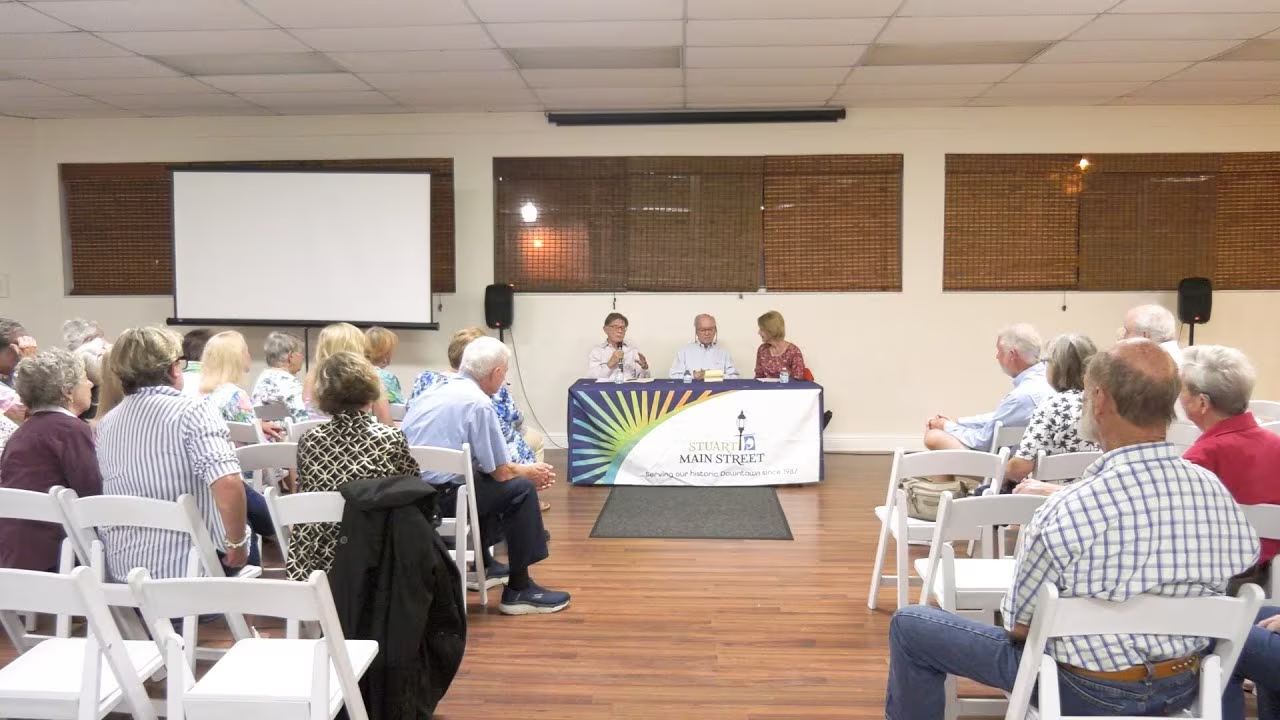
I want to welcome everyone to the Stewart Heritage Museum speakers program tonight uh I promised folks that we would all get out of here in time to go home and listen to and particip or not participate with but listen to and judge how the uh debate goes this evening so I am going to try and keep things…
Read full transcript
I want to welcome everyone to the Stewart Heritage Museum speakers program tonight uh I promised folks that we would all get out of here in time to go home and listen to and particip or not participate with but listen to and judge how the uh debate goes this evening so I am going to try and keep things moving forward I have very little to share with you that's a good thing uh I do want to take just a moment thank the residents of Stewart for approving our referendum to get a lease with the city of Steward thank you very much and all the board members who helped bring that about uh while I've got the
microphone for just a moment Tish and I'm looking the wrong way Tish is behind the scenes she's the one she's the one who gets her newsletter out on on a regular basis I want to thank her in front of everybody without that without her help I'm afraid you guys get about half as many newsletters um tonight we're very fortunate to have Tom Weber from Stuart news a longtime editor a fabulous resource on information still you also have uh Jim Overton who was the business manager at the newspaper for many years and I'll come you in the mall yeah the thing about any business and I don't know I don't know newspapers yeah I'm I'm an
old Undertaker but you've got a business side and you got a sales side and neither one of them can be effective without the other and between Jim and Tom they they were driving for us and making the St news the paper that it was during our heydays so thank you than you Sandy Sandy is a great friend of the museum a fabulous historian and an author with a new book coming out shortly and very modest I'm not going to try and entertain folks tonight I'm going to leave it up to you all to share your stories uh if you have questions they will respond to them if they feel like it but let me turn
it over to them I am just so pleased that Tom and Jim are willing to do the program tonight and I was worried when I realized it was the night of the the debate and uh but we're just going to be talking and I I'm asking them first to tell about themselves and then we'll get into the history and their involvement and here we'll start with Jim well first of all I mean this room in full history Zach sailor's over here Jack keeper Charlie Martin had a corner office in Jack's office and that's where he designed short yach Country Club right came from parkburg West Virginia down here in 63 um I was 29 so
you can just do ma why I am today so yeah really so anyway I came down here can I just tell them where I mve to down here everything anyway I moved to Ed Miller's Boat House people know that it was on the St L North work of St Lucy River it's where he kept oodles a Gigan fishing boat I on the second floor it was the um full of bruss state was next door but anyway I was two days late for work because he was County Commissioner and somebody had a problem with something he did and they burn the bridge so I two days late getting to work I was U the third salesperson
at St news there two other people I got out there um $100 a week was commission so that was a big deal thank but I'll care the rest of it after a while okay I was um uh I finished high school in bond Beach County went to Florida State I met Judy who many of you know Judy Jackson that thought and U came down here with her met her mother we weren't quite sure what we were going to do when we were in school but her mom got sick Benny Jackson when many of you know Banny and uh she was the U head of the English Department at the high school and we needed to
she had ovarian cancer and uh so we needed to stay and so we got out of school we settled in here and the summer we got married I needed a job and I went into the Stewart News because my father had sent me the mic really close because we were old old and okay excuse me I don't know about old so so where was I so I uh we we came down here and I had to get a job and I got a classified ad from editor and publisher from my dad that said Stuart was looking for somebody I went in met Ernie he spent some time with me he Harden so always say summer
intern which is a real piece of luck on my part spot was there and uh I loved it I led working there I got to know Jim and uh a small group we had so much fun I can't uh I can't tell you all the laughs we've had but I will tell you a few when we had time is that good yeah well go on about going back to school and then coming well so I finished uh the summer and I came back and went to uh went to work full-time and U worked there for 42 years 42 years and I loved it I really love the work love the people love the town and
uh you know while we talking about it well I got the uh the mic I I would like to say something that I haven't had a chance to say and that is uh I think I could say this on behalf of all of us we might take a minute to recognize Sandy and all the work that she has done we all appreciate it but uh I think I can speak in this one case for generations to come they're they're going to appreciate it you're going to be remembered okay um Jim got something you want to add well um about four pages giving what about uh Ernie and his uh his sense of humor and working
for him yeah well the only thing is uh he taught me the difference between business and editorial which Alliance did I can remember having a fit that he read a story on wig a wig business was downtown and I had been trying to sell them advertising and they wouldn't come across so Mr Lions ran a story about wigs well I went in and said my piece and he uh set me straight on the difference between advertising and editoral so you know if if you knew him he had very man of very few words and if he do want to talk to you he would turn his hearing a off and he was also stopped smoking
at that time and chewed cigars and by the time the evening was over he has SPS all over his way white shirt some people knew remember that and he used two he typed with two fingers on his Royal typewriter yep anyway so a little bit more and then all that Tom out a back I was the 17th employee can you imagine that 17th employee it um was at 111 East oan Boulevard they had two rooms the main room and and uh advertising office editorial and that was about Mr Lions had his own room and then there was another room that we weren't allowed to use remember that that was and because the paper was owned
by Mr Lockwood yeah when I came there and uh actually his desk was in um M Lion's room yeah but anyway um so the paper had about 3,000 circulation if you can imagine that too 3 to 4,000 circulation um so I was interested that they had the plant right behind that building not not until okay we uh that was that was the second room back then we had a duplex what you call a duplex flat bed press and would print about 2,000 papers an hour was that there when you were there yeah so anyway um Gordon Lockwood owned a paper and when Mr Lockwood would come in we didn't know exactly who we were going
to have when he walked in the door he he W he liked his spirits so um came in one day had ice cream cone and he didn't like what a report and I'm going to be brief Sandy told me to be nice anyway um so he had ice cream cone he didn't like what what the reporter was doing so he just damed the ice cream cone on he's Cy that was one thing another thing came in the other day obviously didn't like what the Border doing and knock his typ right on the floor the third day or the third time I was thir day involved me he came in and told the ad man next
to me which was ad recor said you're fire Jim you're the ad manager now that me I ad manager at one person anyway it seemed like uh the ad manager the other AD manager prior to that one that day started a Sunday paper and this ad man was helping and that was his his doing so and then for me it just went on from there and all all that used pick up some more well when I got there that publisher had uh had some health problems and I didn't see him and uh but his daughter worked at the plan Mary Mary Foster and you know you might think public daughter you know and how does
everything I all work but uh they just don't come any nicer than Mary and uh any more able she taught me how to do the dark room work and all kinds of other things very which is wonderful thing did you say that so she made up somewhat for her father would you say she was librarian she was she was a librarian too Jan fol telling me and Jan was there Y and um but in Ernie's case he just the way uh Jim described but every once in a while now this is after those dark times and when I was there he'd come out of his office and he'd have something funny to say he'd have
a little story he never really told the truth joke but it was a story that would be funny or interesting or something that happened and didn't happen often but he did it often enough people really look forward to it I hoping he do it again and um the thing that happened there I think is that if the big boss comes out and makes her makes it funny it it kind of gives everybody permission to laugh you know when it's funny and we had a lot of funny things happen um there was a period of time I was a reporter in the beginning very beginning reporter and uh I was dealing with the pastors of churches
and having some trouble it was the small churches that were a problem and the pastors were incredibly competitive you know they're got a small organization they're really you know just scraping by and they need more parishioners and they would call in and want a story but I would have to ask them you know was what would the story be about you know we need a a guest speaker uh a new uh new uh whatever in the in the place of new himal no I just need a story and that doesn't work because what about all the other pastors you know if you do that and uh and this one was really really obnoxious say is
Pastor Brown and he's he's chewing me out and uh I got questioning my relationship with Jesus you know un likee that and I mean whatever so we we sign off a few days later with three or four of us there in The Newsroom and we're talking about the problem and uh I said and that Pastor Brown good grief I mean he is the most self-righteous anxious person that I've ever known and U about that time Laura Stucky who ran the front office where there six or seven people was right over partition and uh right in front of her was the front desk she says over the over partition Tom the Rend Brown's here to see
you so I I'm a wholeway I'm going to have to take my medicine you know and walk around the Partition and and deal so I get up and I walk around the corner and they all burst out laughing laa Stucky of course made it up but taught me a lesson in the process so uh that kind of funny stuff went on a lot didn't it and I remember you coming out of the office one day and you've got you had a regimental tie no and we all wore shorts of ties then and uh I as many to remember those days the uh he he has this regimental tie in two pieces here the bottom B
here's the top B still connected to his neck well he was working with a big paper cutter that we have and somehow his TI got flipped up there when P got you go laugh yeah so we had a lot of stories like that oh uh Ed mener Jr and so I'm coming in here I'm 22 just got out of school with dick Grant and uh you know we've been cutting up for four years and we're in a serious serious place now though I find out that the cutting up doesn't stop when you get out of school and uh Ed Miner Jr was such a smart guy we always had a funny qup and I can
remember sitting there trying to catch up you know I wasn't quite sure what was serious and what was funny and one day he says uh you know down at Port SLE SLE I'm trying to learn all the towns you know for oh you know work to learn of oh go so he liked that so much few days later he said and and you know you might need to go up to Port sink sinkhole anyway every one one of those after another Jim well U mention adminer I used to cover the local football games take pictures locally and U and was uh the our sports writer and other other things but I cover the local games
Friday night go in develop the pictures and make a put and then give him put them on his desk and he would write the caption and then also another lesson Mr Lions gave me um I just happened to be up around just Beach Boulevard an airplane landed on J the Beach Boulevard so that was my chance I took a picture of it and Mr lion said well you Jimmy you're right to C so you know I wrode like a four or five line caption now the wh was just right and all this but when it came out in the paper it two lines aircraft does virtual anyland just of these Boulevard so so many times
you know you he was so uh sincere and you really had to KN him if you're run for office you had to come in and meet m allons i mean we had we met Governors and four years and it was just interesting then talk about Laura Stucky Laura probably ran the good news uh when I went there she had a Boston what they call Boston leer system some of y'all know what the Boston Leger system is it was a book that not that big all of our accounts was in that book so I can jump ahead here a little bit we own three houses eventally three houses on the street next door the first house
cie odap no cie okay she ran our Burrows of accounts we had her in that building then the second building was circulation third building was conference room and I had office in there in Secretary but we had I'm really jumping ahead here but I'll just we bought the building next door which was a title building knocked a hole in the wall and and office moved over there in that building also on next to the building on East but a parking lot held by eight cars Tom designed in aoral office for that space in 1975 thank you 1975 Jackie odad built that I'm pretty sure but anyway we had a rotanda into the dark room which
was really cool and Tom ran carpet up halfway up the wall so you know I mean just I mean we were a family in there you know and one weekend we even came in and painted the office that's right you know so uh then the circulation was all gray everything else they they I'm I'm sorry compos was all gray so they wanted to do something too so I said we have that we'll byy the bank so they put a they pay the light guard and then a away through you remember that yeah the uh you know I always asked to Glory Pik asked me to talk a little bit about how we got into the
production build should I do that now I I understood you were going to tell kind of the whole history and you can just start with what you want to start with well what uh so so we're working away I think one really important thing that happened Jim talks about going daily which generally made that happen closer was going daily and Jim really made that happen because I mean the key was bringing the advertising with you and U you didn't really know until until you did it but U it was a huge success that's the advertising sales I think um but we could see in those years we were had some some growth in store but
you know it doesn't grow more than a 2% points a year even when you've got big growth in fact you know lately our our growth despite all the other talk has been around 0.9% a year just so we got to work much bigger than we once were and uh if you run a business and that's you're depending on that growth and you've already got a high penetration really how what do you do to do better than that and the answer for us and for many businesses is to reach out and expand your market and we started that uh probably late very late 70s with aition in Fort St Lu and it was uh then and
it wasn't really uh well staffed but over over a few time over a few uh years Nancy really uh staffed it and our idea was to put strong people up there we had watched all these bureaus to come in to Stuart uh and they often used beginners they were good but they were beginners not all some of them were were her experience and she built a real staff up there and over the years it started to grow and then early 80s I think uh I went down to the Jupiter perer and talked to IES KY who was um the publisher of an owner just in case he was getting older and I told him if
he wanted to sell some day you know the scripts would be interesting you know just to get an ore in the water well he called a couple weeks later he was interested you know three or four months we bought the paper took the press out because we get printed to Stewart but in that case and in all these cases we really worked to keep what we had as far as news went you know the local news and uh then let me think what that was followed with Port St Lucy and um let's see I can't keep up with oh one of the things that happened was uh at at some point I think it's in
the early 80s the for Pierce Tribune who was here along with Palm Beach Post Palm Beach times uh what else am I forgetting Miami hero and Mi harell had a great hero here for a long time so we were you know how many ways can you cut up the PT but uh the Tribune pulled out of Maron County and uh that that was helpful to us and then as the years passed we had an opportunity to buy the gr Beach Press Journal and uh we put our heads together and got a price corporate bumped it up a little bit because we we wanted it and we got it and we paid a premium but look
at the situation now we've expanded our market we've got more than half by the interport St Lucy and the Tribune has left with Fort Pierce and a little bit of Fort St Lucy and uh Greg Anderson our great advertising director uh created a free distribution newspaper in Fort Pierce so we could sell again against the Tribune well you know you take 5% out of the revenue here 5% there things start to start to cave and they um they brought in a new publisher marine salzer and she was good she a real smart lady and did did a great job but you know you know what it's like when when things start to turn another another
Direction and it took about four years and I was at a Publishers uh uh annual Southern newspaper Publishers meeting a green buyer and two the the head of Freedom that owned the Tribune and one of the financial guys came up to me at the opening cocktail party and wanted to talk they they never wanted to talk to me and we uh we had a great chat you know and um about the market and about this and that and I came home and called a boss Bill Burley and told him they were going to I suspect they were going to make an offer uh for us and u and well they did before they did that
they invited all the other big newspaper groups in and uh asked them if they would would bid on the paper no one would bid see look at the situation you know that they were in we we pretty well had it boxed in and U so we uh bought the Tribune about 80% less and what we pay for b beach so that's how it worked out and u you know long story but but kind of brought brought us uh to building the plant and uh we closed all the presses Consolidated everything in s ly West it was uh 125,000 ft I think about $50 million almost half maybe more than half was the Press itself it
it print 70,000 papers an hour lots of color in it so you can print more than one paper at the same time and then us to keep our deadline in in emergency situ or in special situations as late as 12:00 so we could get the a lot of the late games which in those days you're really working to do that you know that's you're talking about Fort St Lucy right that for St Lucy West okay yeah okay so you'll have to come back and talk about Monteray Road and US1 because that's what so big okay Jim you want you want to add anything I we interrup I'll go way back to the when we were
sting type on line type that was led and the most operator could type was 13 lines a minute so we were into a newspaper Revolution production wise so because we were looking at off step and uh we need to do press we were growing so fast so we got a computer we got the offset in a six un Community God's Community remember that Y and U we got a computer in that did 70 lines a minute I mean can you imagine that I mean it's about the size of a small refrigerator no I mean that's unbelievable that was unbelievable but we did we were able to to use our operators um for something in the
work that work there then Tom mentions Jupiter and that's some of that is a sour note with me The Courier I was put in charge of the business side of uh The Courier at the time and scrips Howard told me to eliminate the pr compion room which were 12 people well Jim Crawford sold the commerci Printing fors and we were very successful matter of fact we were second to Evansville as far as volume and Commercial so we had budgeted St news to almost a million dollars that year and so we came up with a plan where we could save the composing room do commercial printing there and save the 12 jobs well that's when I
realized that you know I was I was working for a big company cuz they refused it and we were able to sorb a couple of the operators in the dir news and we had let 10 go so that was hard um the Jupiter Curry just had to close down the office didn't close but the pris room did anyway uh we bought uh the uh Lo flower farm we be St news loose flower farm we paid U $895,000 located on the corner of Monteray and US1 and had the FCC tracks in the back so the reason I'm I encouraged buying that was because of the rail sighting and and because we put in a rail sting
and bring news Sprint in that way so we built that and I think it was green Associates was the architect you remember that remember you're talking about just the production plant well the whole office down there oh that was uh CER you know from Colorado Okay anyway I had recommended maybe they put in a daycare center well scri didn't like that so needs to say that didn't happen um well you can imagine what it was like when waiting and we had three advertisers three main advertisers first ice bank which was the main Advertiser with us uh kred Supermarket some of you laugh some of you remember paper Howard M Mr uh not lies Lockwood actually
a man a retired man from scrip lived on S Point Mark Mark he he got a place out on the island I don't know he was the just a general manager of the whole company for a while so he recommended scrips come in and look at uh St news and l Wilson two of that's right anyway they suggested that take a look at this dur news and um Mr G never mentioned Martin K and his letters but anyway U the rumor is think they paid 350,000 vs um we paid 895,000 for loose flower part which was a good deal time they they leased the farm back for a while so you know that's about all
I have right now you thank here you know I want to mention uh a couple of people if I can uh we've got Mark toask in the back of the room and Mark is Nancy Smith of course everything 28 years I think uh I meant to say Mark was with script for 39 years 16 years here long after I I left and uh we got the Dennis Jacobs over here who was in sports for many years and he is a stone expert in sports and it was a great help for us High School sports is often get short Shi and yet you know what are people in a small town really interested in when it
comes to sports and he just did a marvelous job and just for the example is we had a coach you all remember Don wallet I mean an incredible basketball coach and U he in denti school like that and Dennis followed them through every all of their Adventures they got the State title from Stewart three times and uh Dennis really made us proud because he gave them the coverage they deserved and and a lot of others Bo too I didn't know Jan F was going to be here but but she was a star for a long time long time and covered a lot of things actually though I think you're probably be known best for outdoors
is that right yeah did you have a good time at the St news I did I L it I love it it's my first job in journalism Priceless I can sit here and remember everything well you did a wonderful job if I got somebody else from scripts that I'm I'm leaving out it's here John where is Mike we move back there that's all right back for I miss mik we can never findly Mike that was the problem no Mike Mike was uh the guy that kept all the trains going on time in the advertising department number of advertising directors depended completely on him we all depended on him and U it was a lot of
fun I work with the story about the eggs was so good are you going to tell it about cooking breakfast Nancy and oh Nancy uh I I don't really know that but this is when they uh unplugged something well I I can tell you that um I before the steart news I worked in at the London observer in England and it had 12 million subscriptions it's one of the biggest papers in the world well my first day in steart uh I went from The Observer to the Stuart news and you know uh I I went in there and I the first person I ran into was Mary Foster and Mary said to me would you
like to have breakfast I brought my hot plate and that was you know funny enough as it was but she pluged it in and blew out the presses my first day my introduction always also uh my niece is here Shannon Sans and Shannon Shannon put Shannon went to University of Florida and studied journalism and Communications and we on got our masters degree but the reason I bring it up her thesis was uh a study of the first year of the steart times which is generally considered that was the beginning and um in that she examined each uh Edition for 12 months and it started in uh 13 in April I think and went through May
of 14 and she found some interesting things about how you do a successful paper he uh will Holly Stevens was the editor and U owner and he relentlessly promoted himself in his his paper but he also worked really hard on a cause they developed there to uh become a municipality for Steward to be a municipality and was a battle to get enough votes and to get everybody on board though most were on board uh there was I know points out some people who were afraid that it wouldn't stay dry if it was a city you know that they bring a bar in but they took care of that anyway he he just wrote about that
the the whole time and uh and in all that uh at the end of the year he had a pretty good circulation maybe 600 papers I think he claimed 800 papers it was about five or 600 papers live in the census uh in the area but uh he made it work which it wouldn't necessarily work because she found a few years earlier I didn't know this until she pointed it out what years ago that there was another paper here it started in 1904 and it was started uh it it went for eight months and it was named the Enterprise though later you interviewed some people or read something where family members said the name of
it was the eagle so whatever it eight months didn't make it so I think I don't know what the eagle had but what Shannon showed in uh I thought in the times is that they the editor really knew that what you want to write about is what the people are interested in and in a way he made the municipality thing something to be interested in and hammered it and it sounds simplistic but it's really important because I'm not talking about cont controversies the controversies it doesn't really matter I mean as long as the paper's not you know hopelessly one-sided but can be have opinions this way or that way people are interested in the subject
they buy the paper so that was sort of the uh guiding uh thought as we bought these other papers because the Temptation is to cut expenses by you know removing uh some personnel and uh reducing the local content and we really tried not to do that we had some years didn't work as well as others but mostly it did don't you think Nancy I'm thinking that he had a cause and your causes we you mention some of the causes you felt like the paper suce well it's uh environmental causes uh going back to Ernie way back uh but I don't think anybody's happy about that the river is worse and ever a they won't come
to grips with the pollution that goes into the North End of lake oovi or pollution some of the pollution here and uh it vexed him he won an award for the mean foundation for writing a series of articles about the core of engineers which was the enemy at that time because the indiscriminate drainage they were doing and um he called them the river killers and name was been picked up by others man named H hubman wrote a book about it and asked Ernie if he could use that name and he did but he he he talked to me one time about a period of time when uh I think it was 49 after one of
those huge rains and the lake was full they had to bring it down and I've got all the reports from the flood control district and for like I don't know eight or nine months uh 4500 4700 cubic feet a second was going through the St Lu blcks and during that time it filled up the South Fork with silk you know today over to the Palm City Bridge and the died slow you see all that was all about 12 ft deep before that happened so and he wrote about that all of that extensively and in his column is he did some really poignant pieces on it but of course if he was here today you you
would not feel like we really succeeded in this area but buying land and Building Bridges you had a lot of causes during your era well let's see uh I don't know what else we beaches you know Scotty Fletcher oh yeah the beaches out Jen points out you know the beaches that they bought over on the island we got a whole series Scotty fleder Mrs Forest and uh it's amazing and they're there now people use them I use them my grandkids use them it's it's a wonderful thing uh I don't know there have been so many many causes about the schools you remember they built all those schools because the bond the bond issue that everybody
said nobody would vote for that's right that's right I think we had a had an influence and uh one of the things I think we found over the years we interviewed candidates who running and it was always I I think Nancy and I talked about this Mark and I have talked about it that the candidate that is generally the best is the one with experience and the ones that come in with you know they want to do this and that make some complaints or whatever but don't have any experience they act like people who don't have experience you know when they go in office and it's hard on the staff some of the things that
they think they're going to do just I mean they haven't really got enough information there's nothing wrong with them but they don't have the experience and we' see that happen again and again and uh We've we've not always but we and we keep an open mind but I think that would be an area where we did some help that we would um pick the right person to recommend and sometimes it would help them often it wouldn't people make up their own minds how about talking about the talent they had for small Pap like Joe Noble oh yeah you know I mean paper the country has yeah we were we were proud of our staff and
uh Joe Noble I think would suspect most of the people who' been here had had some kind of experience with Joe a wonderful photographer especially nature photography but but all kinds of photography including some really serious stuff but but his and the thing he really liked I think was nature photography was that to say the bird Island Bird Island and it I and so many of these things go back to that point it's what people are interested in you know his nature pictures were very popular with readers I mean it was kind of a tonic you know and of course he had the talent too you can't just go out and step it's got to
walk what else Nancy you were going to suggest something else well I just remember all the all the things that we did back then you know all the beaches you did the sa beaches campaigns and we bought all the beaches and the ones that are named on the island there after people that yeah people really had a lot to do with the community and they were named after them you did the uh the bridges of the bridges was another thing that was very contentious lots of like the big especially the big bridge over here which was yeah that was a I that was a struggle I mean people did not want to build that bridge
what kind of commissioner said they didn't want to widen us one North up to the up to the mall because it just encouraged more growth you know I I think the bridge has worked out really well but I well or not could we really still be operating with the old Roosevelt Bridge think but that was believe it or not that was a strugg a while could you take a minute to tell about the relationship of Judy to the Feet Store how that how she's of parks well my wife uh I told you her mother was Fanny uh Jackson uh her may name is Fanny St Stanley and uh her mother was Fanny Parks daughter of
the original Parks who became Benjamin and Sally and George was her brother and there were several other older brothers and and there were two sisters Flora may I think so she's practically K to the feed store that's right she really is she spent a lot of time here and her her husband uh when George was sick ran ran the feed store for a while me a short periods of time and was involved in all that so I I don't know I always thought that was kind of neat oh it's very neat that could be a a program about that relationship in my family now Tom where you all at where do you live now here
right oh no I live seart yeah yeah no I'm I'm going to be permanent so since Tom is here in the back too right he was I read that he was the the business manager and you were the publisher at a certain time near near the end of your era oh Mark Kam uhuh is that Mark that's Mark Mark Mark would you stand up sure Mar the executive editor exective editor he came from Washington DC I came from Washington DC in 2002 and it was the most lucky break in my life because it brought my wife and I Diane to this great community and what a lucky person I was because I inherited a news
organization that Tom Weber had built and all the people with him and all I had to do is make sure I didn't mess it up but there's one thing I want to say that you all should know about before we leave tonight and that is Tom's leadership uh he's too humble to mention it but I've seen and worked with and studied leadership all my life and Tom is at the top and one of the reasons for that was his compassion and his calmness how many people in this room were here when hurricanes Francis and Jean hit in 200 before show me your hands wow so almost everybody i' never been in a hurricane so here
I was and when it finally dawned on me what was about to happen I have to tell you I was scared and I didn't know what the heck we were going to do and here I am I'm the executive editor but Tom was so calm so organized and I have to tell you that everyone on the staff the tone he set everyone just fed off of that and so we went about our jobs as tough as it was for everyone and one of the greatest sights of my life was after the two storms have finally left I'm there in the Stewart News building there on on Federal near Monteray and the only thing that was
working was the lobby we had one phone hook up in there I really never thought we would see that building operate again but Tom put together a plan to put that whole facility back better than ever one last thing I'll tell you and it's a credit to Tom to Nancy and to all the people who uh who built this gym all the people who built the Stewart News one of the greatest sits of my life was after the second hurricane hurricane Jean and we're standing there amid the rubble in the lobby of the Stewart News and I'm looking out the front door and here comes one car after another off of Federal Highway coming through
that beautiful entrance to the Stewart News it was like a procession one car after another and people got out and they came to the door and they said do you have a newspaper I can buy you know and that's when it really hits you about what a newspaper's relationship is with a community that people would come out and they wanted credible news real news that they could trust and count on and that's a credit to Tom Weber Jim Overton and all the people earning Lions all the people who built that organization ger You' had to use a brand new presence and you weren't supposed to move in yet and the Germans came and they had
never seen a hurricane either but they were quite the Germans were there because we the Press was up I think it was running but it was all brand new all and the side blew off in the Press W and U rain came in and we got a bunch of people in there all anybody employees could stay there and um I came when I got there the next day the uh Germans these are German engineers and they're sharp just this whole thing is run by computers they do all that stuff they're in their skibbies down in the a well underneath each press that's full of water and they're bailing it out you know this is press
and St L yeah yeah it was pretty serious I mean you know you think bu and all the other things that happened uh but I they really impressed me but we had so many people that just did so much during that time Becky Freeman general manager just incredible recovery thing mikae o ly who ran the plant up there U I don't know Mike was involved and all that I mean uh you hardly know where to start but it was a heroin thing the roof blew off of part of our plant on federal that had the computers so Becky Freeman staying in the old part of the pl no windows there and this happens and she
comes up and water's pouring through the power is still on somehow Sparks are flying they got to they got to unplug things you know the lights actually out um you stayed calm I wasn't there she no wasn't mean but she was heroic Mike I mean um Ed lindu who lives still lives in Stewart Dr lindu was in charge of our computers and uh he's he's computer expert and somehow he in his gang put that back together to a degree where they could take it up to the plant in Port St Lucy which had that terrible problem but the whole place wasn't messed up and uh found a room in the center and in the second
story and they fired all this together and the result was that we could work all three papers and we had it printed to Naples for a while and then we got it going again it took a long time to get the thing fixed I think Alinda is a is a professor teach he's teaching now and he actually uh and I'm on the second floor of the plant and I look down near in front of that room where they were trying to put some computers together and I looked down on the floor there's Ed running a forklift with a pile of computer stuff you know on the fork that is not Ed would you think of
Mike right but and he gets you know he and he's he wanted to do it because if anything got jled wrong and screw it up and uh and then I'm talking to him and he's got a terrible limp and I all this he had H his leg it just had story like that after another we had a the one I think about is this woman single mother a little girl a roof blows off her house or or a lot of it does she's strapped in the bedroom with her daughter rain's coming down all night long the wind's whistling you think the roof is going to come off completely at any minute you know it's U
it was tough but they it's heartwarming to see how people come to the for when that happens and uh we got back into business which happened to many other businesses and I know all of you had your own your own issues during that time did you miss a paper yeah I think well I think I don't know if we actually missed one we I think we printed a couple and delivered them late but but we had the same experience a day or two later we started delivering and uh oh people love it they really like to see it I remember we did that combined Edition the Treasure Coast was funky M head for a little
while Treasure Coast News or something that we distributed everywhere to the degree we that's right that's right Mike yeah we had a we had a one in that case it wasn't just the news for every Community right but they were still glad to get it I think they were when did the paper go from being a PM paper to a when you remember I was in the in the' 70s the year early 70s about 1974 1975 when we moved into the back you know the composing room the editorial that's where we changed thank you J the first the mornings was 84 every day was every day of week went seven days that's when we were
seven days a week the day after I started is that right wow we were getting ready for you 84 he had all kids B you what we had all the kids on bicycle deliver yeah that's right i' have a circulation contest and the kid just sold 10 subscriptions I would give him a bicycle oh wow and at Western Auto I could buy a bike for $50 so just a sign though before we close here this was education for me I got a phone call on Friday from scrip Howard and they wanted me to take over the Hollywood Su Dy and you know I'd been St for over 17 years why would I go down there
so I said well I'll let me have the weekend so I called him back and uh they uh they weren't happy and that's what I learned I was working for scription hour and not store news because they don't think about moving people around and I sort of we all the Hollywood s had a new building and everything but i s of didn't want to go but on the sidebar when I was at the fairgrounds I got a call from Charles grips and he went know I the inter in running his five weeklys in New Hampshire well I would driving a Corvette all I could see were chains on that Corvette that wasn't I think it's
just about time to close so you can sum up well thank you all for having me here and uh Jim you feel the same way Sandy thank you when I talked to Nancy and I said well what do we call this program what and we said hey D and you were in the heyy bay Tom Jim y all went through so many transitions within this paper and I've experienced going through a couple transitions my own business it's always a challenge but obvious obviously you all had the temperament to pull together as a as a unit and to be successful so thank you for all the effort you put into the Stewart News and strips and
everyone else has had a part of it um you know it's it's it it's how we we still get the paper everyday not as many people get it as they used to but we all get it everyday still look through it uh I encourage everyone to continue to support the paper even though it is script or whoever it is these days it's not it's not quite the same it used to be but you know I do like getting my printed paper so we all need to support him in that other than that I just want to thank everyone for being here tonight uh I want again thank everyone for your support in the resolution uh
the museum does survive largely on membership so if you would like to become a member you're welcome to join us anytime we do have membership cards at the door and I promise you all get be out time to go see the debate we've lived up to that promise today thank you