The story in brief
Throughout the discussion, the participants also reflect on the hardships of the Great Depression and World War II, illustrating how limited resources and wartime restrictions shaped their resilient upbringings.
About this story
Ultimately, the gathering serves to preserve local history and celebrate the unique identity, enduring bonds, and shared heritage of the area's original "cracker" families.
Full transcript
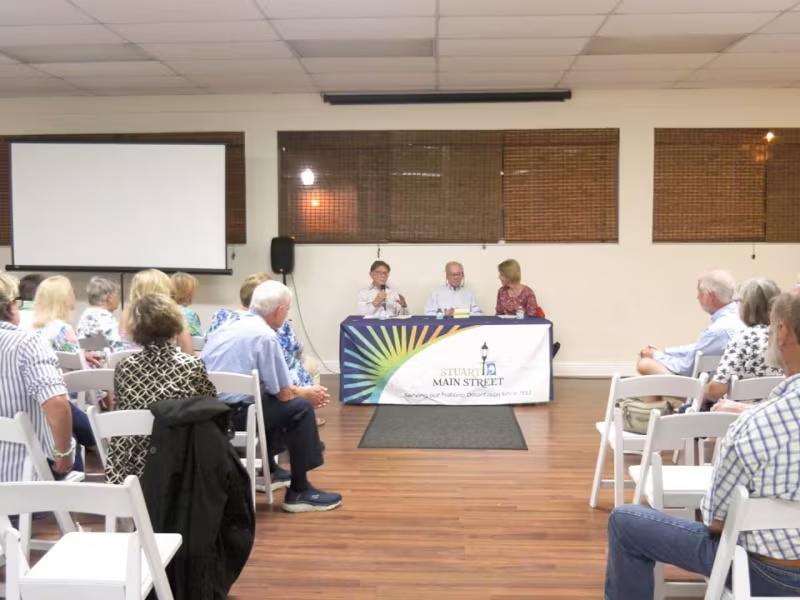
good evening and welcome i am thrilled to see so many out here with us tonight uh this is our last uh speakers until September and we always are concerned that we're going to lose you all during the summer but we're confident that come September you'll be back with us again uh May is historical preservation month and the…
Read full transcript
good evening and welcome i am thrilled to see so many out here with us tonight uh this is our last uh speakers until September and we always are concerned that we're going to lose you all during the summer but we're confident that come September you'll be back with us again uh May is historical preservation month and the museum will be kicking off the historical preservation month uh with the Martin County Historical Board we'll have an open house all day on Monday uh on Monday on Thursday May 1st and at five o'clock to six o'clock they will have a uh a kickoff event behind the museum so we certainly hope you all turn out for that
uh there will be well there will be political speeches get over it but we won't let them run too long and uh there's uh there'll be refreshments provided after so I hope you'll come out for that the preservation board has got some 27 last I saw events going on throughout the month of May i'm not about to try and run them down for you but rest assured there's a uh there's a list out which says where and when everything from uh things over at the Elliot for the preservationist preservationist of the year uh the the uh log cabin in Jensen Beach the the Stewart the old Stewart High School um I'm the Captain Souls House
you know there's something going on every day next this month this coming month so I will have I I hope I'll have that up on my website i'm sure that the preservation board will as well so look for that and take advantage of that information it's out there book signing book signing blake that's what we keep that's why I keep her around she throws things at me during that during that open house on the first we're going to have uh Blake Floyd here signing his book um Stewart helping revitalization of downtown Stewart in the 70s and 80s uh it it's it's just recently been published it is available over at the uh museum and uh
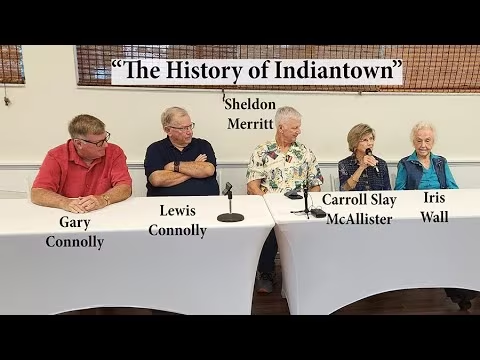
he's taken the time and effort to speak with some of the movers and shakers that were involved with the development re the redevelopment of downtown Stewart and uh hope you'll enjoy that i think that's it anything else coach no I think we're ready for Indian Town uh if I could I'd like to ask those who have said they would volunteer to come up and be a part of our panel to come on up and I'm going to let uh Gloria do the introductions okay we're so happy tonight to have some real Indian town people real ones rs is about as real as you can get and we have Carol Slay Mallister we have Garrett Connley
we have Sheldon Merritt and Lewis Connley and will you all please come up and have a seat i'm going to ask several questions and I probably won't even get to several because once you start talking about Indian Town and people I'm hoping that it'll jar the memory of the person next to you and I won't have to ask any more questions all right now let's start down there with uh Gary Connley johnny Leighton you told me this was just going to be true and false question well you taught me how to lie and and I would be hooked up to a lie detector now what was the question where were you born i was born
in Pahokei Florida but I lived in Martin County all my life we lived in Port Maka till I was 12 years old and then we moved to the big city don't forget of Indian Town y'all ignore my brother he said I went to Okachchobee School for boys that was later but yes we and we moved to Indian Town when I was 12 and so I've been there ever since and I love it amen some people lot of people over here why you live out there i love the people the people are wonderful and I just love it no traffic oh no that's There he is now let's pass it to the next gentleman there no
no well you said gentlemen you said gentlemen you hear me yes my name is Lewis and I'm Gary's brother uh I was born in Pahokei too lived in Port Maki 12 years 13 years till I was 12 anyway ninth grade I moved to we moved to Indian Town so put the mic to your There you go anyway um executed we grew up there that back in the days when it was really a wonderful place to be it probably still is i moved out of there in 96 went to Okachchobee for 4 years and then now I live over here in Stewart on Caner Highway here at Riverland and uh I like Martin County always have
and uh people once in a while you run into somebody that's been here forever i graduated with Bruce back there and I'm telling how many other people I'm not sure but that was a long time ago oh I'm sorry sorry hi I'm uh Sheldon Merritt and real pleased to be here tonight uh I'm kind of a newcomer I guess i was I was born uh my dad used to always kid me and he said that if anybody was born north of Lady Lake Florida they was a Yankee and uh I was born in Leburg so I was just right on the right on the borderline there and uh I moved to uh Port Maka when
I was 13 uh we made a big move south from Vro at that time and in fact it was kind of funny because I got to talking with Gary and Lewis and and they left and then we moved to Portaka and basically did the same thing my dad kind of took over did doing the same job that their dad was doing and we actually lived in the same house that they lived in and uh uh lived out there for good number of years and then as an adult stayed pretty much in South Florida and uh last 20 years or so I was over here at Stewart and then when I retired I went back to
Indian town been out there another six years and just happy as I can I'm Carol Slay Mallister i was born in Stewart i was born in the original hospital in Stewart that's over by Palm Beach Road i believe it is a home today some someone lives there and I am one of the few people who has never moved away from India Town my three siblings all left for a time in their lives but eventually they saw the light and came home back home to Indian Town and um I don't know of a better place in the world to live indian Town has has been wonderful and good to me um I've known Irish she's known
me all my life she knew me before I was born probably all the rest of them too iris and I grew up on the same country road and when I think of myself I think of me as the proverbial country girl because that's just what I am that's that's all I've ever been i've had a wonderful life i just couldn't ask for it to be any better and I'm Iris Wall probably half of you know me in here yeah when I graduated from high school in Martin County there was less than 40 kids in all of Martin County think about that now less than 40 i think there's about 38 of us we That little
old uh band stand that's right down there from the courthouse oh the band shell yeah the band shell every one of us fit there and all the officials appointed in 1948 then of course I married Homer then it we graduated from high school and I hate to tell you but he was the handsomest guy in town the and uh I just adored him 47 years we had together before he died of cancer but I was thinking about these connless down here when the the night the night that their mother passed away we I had supper done and I we lived on the next street over and I got this call and he said "Mr wall
could you come over here?" Said "My mama's really sick." And Homer said "Well supper's on the table i I'll be over there in a few minutes." And he called back in a few minutes he said "Mr wall could you come now?" He said "Mother is really sick." And so me and Homer loaded up and went over there and there I stood with all five of them boys when their mother passed away and so we've had a bond for all these many years that uh it it just can't be broken the people of Indian Town you know you all feel sorry for us those you feel sorry for us you they say "Oh we'll there's so
many people in need in Indianapolis honey." They drive up there in a brand new Cadillac get that free stuff just take it and take it and uh but I've lived there i've five years we camped in the Everglades but other than that I've lived in Indian Town my whole life and I'm 95 years so I'll be 96 in November wow okay this question goes for those two men on the end when you were young little boys did you ever get in any trouble well I I'll put it like this what was the worst thing you ever did i never done nothing bad i got to think about it angel wasn't ready for nothing hey Dad
you can only name one oh that the worst thing I could remember when I was a kid I was out on the front porch doing my homework and my oldest brother comes out there and he lays both of his legs across my paperwork that I'm doing i said his name's James he I don't think he owes up that we're his family but he uh I said "James you need to move your feet." I'm trying to do my homework i said "James you need to move your feet." I took my pencil and I stabbed him and that broken piece of lead is still in his leg to this day that's the worst thing I ever did
the rest of the time I had a halo broken halo too what Who was your Who was your best friend growing up in Indian Town uh some of you know him he's passed ricky Barfield oh okay ricky passed he was my best man at my wedding and he lived uh they lived in Canal Point but Yeah yeah and then he moved to Indian Town him his mother and him yeah who who were some of your school teachers that Do you remember any names oh yes miss Harless Miss Erici yeah there's a list miss Ramanella that was No I don't remember don Ramanella don Ramanella english i had him too he must be 300 years old
well 298 to be exact i can't believe it but I didn't know there was going to be a remembering part of this he was a good friend of mine all right pass it on please and let's ask Mr merritt oh good you missed you missed that one did you don't look like you ever got in any trouble well there there's some folks in here know me pretty good so I'm not going to try to lie the uh uh I got in a little bit of trouble you want uh legal trouble or non-legal trouble but let's go with the non-legal then probably the the worst thing that I did when I lived in Port Maku was
one day Yeah and I don't know why me and my cousin Ronnie Sherman and some of you folks may know Ronnie Sherman god God bless him he's not with us but uh we got the bright idea that we was going to blow up my daddy's mailbox and uh Ronnie had a whole bunch of these uh cherry bombs at the time and uh so we packed it with stuff and put a cherry bomb in there and just blew it wide open and uh that was probably the worst thing and and uh I was uh kind of had remembered that for many days afterwards after my dad got a hold of me so who who was uh
who was your best friend growing up well I I hate to say that I I was I moved to Port Maka when I was 13 and I went to school over in Stewart so I was not as I didn't associate with everybody in Indie Town like these folks here okay uh but over at Stewart you can say my name if you want well one of my one of my best friends over at Stewart was a a man called uh Carl Williams and a lot of you folks probably know Carl and he's no longer with us as well uh but then u you know I had friends in Indian Town but you know not that I
was real close with at that time okay let's ask Carol of course she's Carol who was your best she never done nothing bad so you know girls girls don't do bad things no heck no especially if their hair's red they're smarter you know so what was the question Gloria who was your best friend girl probably Iris's sister going to school uh Katie and I were I think she was born in March and I was born in June and of course we were in school all the years together in Indian Town and we always played together a lot and and as I said we lived we were close neighbors growing up we lived on the same
dirt road all of our life cow hunted on horse she had she rode a Shetland pony oh I rode the wildest iris Iris can remember of course the cow hunting and of course we had a Shetland pony that And you know Shetlands are just stubborn as stubborn as a donkey and um anyway we'd we'd be in the woods riding and and tagging along and Iris always laughs my granddaddy when when the cattle were being uh gathered heard uh um if if we got to lagging behind he'd say "Now watch out for the babies take care of the babies." And here we are gravy young but he was always watching out for the babies because Queenie
would ever so we'd get in the highest palmetas there was and she'd lay down with us oh wow and then you couldn't get her up my uncle would have to come and coax and pull on her to get her to stand up yes well what what did you what did you do for fun oh my goodness everything we did was fun everything we did we sure didn't have no money we roamed the woods uh I I am so sad for children today oh I know what a life I had uh we roamed the woods and picked berries and and uh just enjoyed nature and Merlin and I we never we never had a good horse
we always had some old nag that my uncle would drag up there for us to ride and we'd feed it and get it all better and try to ride it and it'd bump us off throw us off out there somewhere and um but uh and and where where the Martin power plant is today my grandparents always had uh at least that for Pasture Land and a few years ago some guy Big Wink I called him from Florida Power Light he's talking about Indian Town and and I said "Well that that big power plant you got out there it's something." But I said "You completely tore my playground up because I played and I I can
remember um um my my uh my grandfather was crippled and uh there was just girls in our family there was five of us two of them was my mom's sister and three of us the slave girls and Big Daddy would get us and we'd have to go to the woods and help him mend the fence and just do whatever was to be done but what special memories and and I as I'm saying I feel sorry for children today that they do not have that freedom that we have now when when you were growing up um how often did you come into Stewart did did you did you come to Stewart to go to the movies
or Oh my heavens no on the picture show we I remember um uh we had a grocery store it was Clyde Parson's store and probably I was 11 years old and a man started coming on Saturday afternoon uh and he would show a movie all the old westerns up on the side of the building and we sat out on the grass and of course you could go in the store and get any money earl Nolles had that drug store and Earl Nolles had a drugstore and we could maybe get an ice cream that's where I saw I had my first Eskimo pie oh is that Earl Jones and u at that and it really wasn't
a drugstore he sold aspirins and BCs and you know band-aids and that it's not a real drugstore we called it a drugstore but it's a little soda fountain and he sold whatever you call aspirs and that type of stuff we had one telephone in Indian town that's true and one time Mr zerella got mad at somebody in Connecticut and jerked it out of the wall and I tell you we was through with Mr zerella for a few minutes while we got over but we we just always played and and pretended and played house played right cowboys and Indians whatever it was we wanted to play and and then but we didn't have a lot of
play time we always had chores to do yeah we always Did any of your families farm anything yeah his her daddy did my Well Iris was the cowgirl i was the farmer's daughter okay my one of them well my sisters corrected me one of the farmer's daughters there was there was three girls and and then when Myrtle was 8 years old we were surprised with a little brother a lot of people know my brother Clay and we had a brother and Clatty Savage had a brother all of us didn't say we had just had a bunch of girls and then all at once Clatty had that boy of his we had Lamar and they had
and I I seen him last year at the rodeo and I looked at him and I said "Do I know you?" I said "Good Lord you look just like Bud Slade." He said "That's who I am." Does anyone from the audience have a question for any of these sandy I want Iris to tell us what a cracker is what a cracker is okay iris is going to tell us what a cracker is the real the real story now well one thing you know I had I was at this meeting and this voice said "Miss Iris said uh is there any iss a cracker and a hippie?" I said "Good Lord yes." When I got home
I really wrote I wrote this thing what is a cracker and it's good if you want a copy of it you call the Lumbiard and they'll fix you one but it's good i I uh a cracker will do he'll do what he says if he if he tells you he'll be there you can bet on the fact that he'll be there he does what he says he'll do and then a cracker is a person that's uh uh he not only does what he he helps people i've never seen one in my life that you called and asked to help you that he didn't do it he's they're just a people that'll help they they're that's
their nature and another thing is that uh you know you're welcome when you go to a cracker's house you know you're there he's just as glad to see you as if you was his favorite cousin he he he knows who you are and he's he's good he he you're welcome you might sleep on a pallet and you might eat beans and rice but you you're welcome you're welcome there and you know you can depend what they on what they say and you can you they're welcome to your house you you never have to worry about uh if he's going I if he owes you he'll pay you he won't never hide from you he he
might have to pay you 50 cents at a time but he'll pay you what he owes you i just uh you know I love cracker people i I love I love course I love Sandy's my other sister you know what I'm saying they're she and I she's a historian and she's called me and we we've thought about these people that trying to get them straightened out you know and and who they are and where they come from my youngest said "Don't never ask ma grandma her name because if you do she goes back 25 generations and tries to put them exactly where they belong." And I I said "That's true that's the truth." But I
you know I'm just a pure cracker girl folks i tell I you know uh Dr jeremiah says this he said uh um be what you says you'll be and if you don't you'll be what you think you want but you ain't if you if you don't do what you say if you don't say who you are be a person that people respect you know I love I I was telling this lady about Jack Smiles he he just took up with us when he first come here you know he was an only child and he he just he just took up with us and he loved mama cook all these big platters of venison and great
old big things of biscuits and he'd just eat and just he just loved us and when he when he got real old right before he died right before he died he he uh come out to Indian town to see me right when he married Miriam that that doc that passed away and he married Miriam and he come out there to see me and I said "Get in this pickup truck i'm going to take you where me and you eat dinner 50 years ago." And he got in there and I took him out there that same old hammock me had eat dinner at did you I got a question how when did your family arrive in
the Indiantown area around around 1920 we have the records of u grandmother was a post mistress in Indian town in 1925 and I was born in 1929 so and the the 28 hurricane blew her store down she had a general store blew the store down and blew her house down wow and uh she but she bought a house from the railroad and they moved it in and we all grew up there in that house and just got along fine you know that although it took everything they had you know at one time but they were not the only ones it it there was a whole families that and some of them didn't live and one
time this lady I spoke down there in Bohoki or somewhere and they brought me she brought me this letter that somebody had written their father during the uh 28 hurricane and I said so Sandy I said Sandy I'm going to give you this letter because you'll do something with it and and she did I'll tell you she said she I forgot what you did now Sandy Jackie used it and also was used in a book by Um oh didn't Okay but that's a cracker you have a question yes um when you What What did you do out in Fort Waka those years ago you go there now it's just a sign you know i don't
see anything i mean so Well I'm sorry that just is no that that that's all right it is just a sign now and it uh kind of breaks my heart every time I go by there used to be if anybody remembers there was a corner store there called Port Maka Store and uh uh some of you may uh remember the folks that ran it Ski and Noni and uh they had it for many many years they were my aunt and uncle and uh at one time the Port Maka in that store was a just a thriving I won't say metropolis but it was just a thriving area because it was located on the north south
route of 441 from Moachchobee down to to Miami uh it was just bustled with activity uh all sorts of uh commercial fishermen would go in there at that time they used to commercial fish Lake Okachchobee for catfish uh there were all sorts of agricultural crews that stopped in there uh I worked there as a as a as as a kid and uh it was just just a real bustling place and uh for being a kid in Fort Mak it was great it's like Carol was talking about the outdoors i moved there when I was 13 and we just we hunted and we fished and we stayed in the woods did you go to school in
Indian Town uh no ma'am I didn't i went to school over at you know I drove the bus for seven years in 1950 and I was just wondering if you No I did never go to school in Indian town i went to when we first moved to Port Maka I went to school and then uh they changed the rules and you had to go to school in your county and then I started busting over to Murray 9th the first year that that Murray 9th was was available but we would just hunt and fish and just have a great big old time my my my cousin and I Ronnie Sherman uh we're about the same age
and we would go down at night on the canal we'd go to the store and Aunt Non would give us a big old bucket of menas and we'd get our cane poles and we'd go sit down all night by the canal and uh we'd catch its specs all night long and uh we'd be eating sweet rolls and smoking cigarettes when we was 14 and wonder why the next morning our head felt like it was that big and uh those are the kind of things that we did just as kids and and we just spent a lot of time in in in the woods and they still bite down there they still bite down there the
St lucy Canal was our was our playground now I wouldn't even put a toe in it right now I don't think that's right but we used to we had a floating dock down there and when the water went down there was beach areas and it was just our playground and we'd swim all the way across it and and go on the other side and go in those woods and come back and and just just those kind of things just being with with nature and outside and it was just just a really good time so I don't know what these Connie boys did i'm afraid to ask them do you do you remember Gerald do you
remember uh Gerald Matthew well he I went over to the nursing home to visit Wanda Clemens she was my best friend and I went over there to visit her and he was sitting out in the hallway and he was trying to button his shirt and I stopped and buttoned his shirt and he looked at me just as plain as day he didn't know nothing and he looked at me just plain day he said "I'll be doing there's my old bus driver i haven't seen him in years i haven't seen him in years." He said "There's my old bus driver." But we did we did the same thing in the canal we swam and playground and
see that drawbridge was in Indian Town and and they had all them uh uh what do they put on crisso stuff and it would eat us up and daddy said so embarrassing i go by the old bridge and said there's uh Iris and and about 25 boys swimming that kind of but you know you didn't think about you you never thought uh mean thoughts like people do today you never you never even thought of that you know you just Nope times were they were just different they're very they were literally the good old days yeah you know different people had moved Indian town through the years do you know the rights you know Mina right
and and well they one time Terry went off they went off with Terry and uh she called me all day long she like she we like had to put her in Chattahuchi and I said "Uh Mina they'll come home." Said they they'll come home after a while i said "When they get through playing they'll come on home." But she could not understand that she come from Jacksonville you know she couldn't she couldn't understand just letting your young go and play you know right right right but they did it you know you know we get we get a few Yankees come through the museum and they ask how Indian Town get its name i don't know
i do that's why I'm bringing it up i figured we got an expert here yes I do go they named it first it was Annie that was Mr platt he was the first man in 1898 that came there to Indian Town and he had his uh uh they named it Andy after his wife that was his wife's name but in 1915 Mr fountain was a postmaster and he had it changed he had the name changed to Indian Town and listen to this with this new all this new junk in Indian Town that I don't even want to talk about don't ask me nothing about that or you'll be sorry you'll be sorry if you do
but anyhow uh uh he um what was I telling them Carol about Indian Town and it was Annie and then Mr fountain mr fountain that named it uh uh Indian Town and so they sent me they begin to send me these uh these letters and they said uh IT town it town that's no I don't and I wrote them a letter and I said if you ever send me another piece of mail that's got I on it i said I'll move my account Steuart now I said now that's just exactly how s how how bad I feel about it and believe you me that was the end of the IT town i ain't heard no
more about eye town but they they thought they changed it you know to eye it when it was and listen to this let me tell you another thing uh Betty May jumper you all know she was she was the only one well I hadn't I lost track of Betty May her and and all of them uh uh lived there but they left in 1927 because they had bought give the Indians that land down there in Delray and so they they moved down there but and she uh Betty May her mother's name was uh something a Tiger Ayah Tiger that's one thing I can't remember his name but anyhow she uh uh I went down there
Johnny wrote in something down there in Davy and so I went up to pay the bill and Betty May was a clerk of the of the and when she seen that I was from Indian Town she went bonkers and she said "I'm going to take you over to see my mom." And so we went over there and Adah was sitting on the front porch uh uh making them little Indian dolls you know that they made and uh you know me and Betty May really become good friends she just she said "I come to see you." And I say "When you coming?" "Soon." "Soon." And if you ask how long she's going to stay "Oh sometime."
And one time when they had that come home to Indian town thing and that for the library uh uh they let me park my motor home right up there in the middle of it and so there she come up there in this old raggedy car and uh uh so me and her went out to the car to get something out of the trunk and I'm telling you all the truth that trunk was full of money i never seen so much money in all my life like and I said "Betty May my Lord have mercy." I said "Somebody's going to put you kill you for this kind of money." And she said "They look at that
old car and say "Well that'll win you ain't got nothing." She What kind of car one time she called me at She called me at 2:30 in the morning and if she gets got really excited she'd lounge into that semin you know otherwise she spoke English but she would jump into that seminar well she she let out on that seinal and I hung it up real quick i thought it was a drunk Mexican and and so she called three times and finally she said "Betty May Betty May." And I said "Lord Betty May what in the world happened?" She said "My cousin died." Mary Bowers she knew that Mary Bowers had died but you know
I have a a real good relationship with the Sims because grandma they remembered that story way back there when she and her mother's gone now you know and Betty May's gone betty May's passed away isn't it and it it just life goes on and on and on and here's our 75 75 95 i wish it was 75 i wish it was do we have another question from the audience we got I got something I'd like to tell Mr wall though okay tell me i was raised up there too in Indian Town and my daddy owned Indiantown Electric right mr wall Homer was her husband he acquired the seminal lin out there in Indian Town and
my daddy and I were wiring it after I got out of the military there was no work to be around it was just one of them times you know but we were glad to get that work and we had finished all the rooms upstairs and had finished the restaurant part of it we're working downstairs and he said "Mike," he said "Would you and your dad like to be my first restaurant customers?" I said "Sure." Cuz we was hungry you know went on there we'd sat down and made our order and was eating it and he'd opened up the doors for the public then and the first couple that come in they sat down by the
table next to us right just this little old man and his wife and uh they hadn't been there too awful long he want wanted to break the ice and he looked over at me he says "What do you all do for fun in a little old town like this?" And I looked over I said "Well sir I guess that depends on how good you are with a knife and a gun." That ain't any harm but not I hunt stop the conversation anyone else have a question jackie did you ever see Panthers with Panthers in the old days i h I haven't seen one in Indian but see I lived down there in the I moved
down to to Mockoli there in the Everglades Homer cut tense post for 5 years and I I my second baby was born while I was down there and uh you know we one time we was going and and you know we call it doglegged cyp uh cabbage tree that grows down down like that you know instead of growing up like that it grows down like that and there there he stood just He it was he he he was a light sorrow color you know not red not red and not brown just a kind of a real pale and we we've seen several while we were down there but see that's down there at Old Choppy
and that's the end of the world down there in I don't know if you know where Dupe is between Indian Town and Port Maka but my wife and I have seen them out there no kidding yeah that was awesome they're protected now and they you know they they're they're protected gloria coming to the present what are they doing with the seinal and what do I do with it what are they doing with it now it's her sale it's uh they they're running it she's she's giving out she's lost the hip she had to have a hip replace she's a middle daughter and but she's running it okay it's They got a new chef out there
and he's good good good good what was the best thing about growing up in Indian Town or Port Maka what was the very best thing what do you think well you know Hillary Clinton thought she really did said something when she said it takes a village to raise a child but she'd never been to Indian Town because that's exactly the way they was raised in Indian Town it didn't matter who you belong to they if you did wrong you knew it you knew it your mama knew it before you did they take care they raised each other's children that's the best thing and like you know like us we feel like we can do the
Gary and the Connleys and and you don't live and go through life like we had in the hardships and the ups and the downs and the good times and the bad times that you don't develop a a relationship that can't be broken it's like that of a family you know Sandy she said "You probably don't remember me Iris." And I I kept looking at her looking at her and she said "I'm Sandy Good." I said "Lord I can see your daddy in you you look just like your daddy when I but I hadn't seen her in a long long time." And that's that's the thing that I loved about Indian Town is that those of
us that's from Indian Town we're not ashamed of it i can't tell you we're proud of it she's right we're not ashamed of it it was and um just the freedom that I had growing up and and I just want to mention about my family my mother's family came to Indiantown in 1918 so in 2018 I put on a little shindig for our family um uh cousins everybody that was related to us um came home and and we did at our church there and celebrated our family being in in Martin County it was still Palm Beach County when mom when my mother's family the priest when they came uh in 1918 my mother was born
in Fort Lauderdale and she she came to she was three years old when they came to Indian town my grandfather I I have no idea why they came to Indian town he was a deputy sheriff in Broward County and that's where my mother was born and then to come and come to and I think of them uh a horse and wagon is how they came and the old Jupiter road uh which I would give anything if if you could go through what used to be the old Jupiter road but I suppose that's all lost to uh moving forward there's so many uh keys it they fenced locks and fences and but I I remember traveling
through that old Jupiter road but I think of my grandparents coming uh to Indian town in night in on a wagon right and of course the St lucy Canal was being dredged at that time mama said their first stop was in Port Maka i think it she called it SS Ranch i'm not sure of that they but then the canal was not dug she said they actually went around the end of where they were digging to go in into uh what was called Indian Town at that time my dad came um in 1931 from up in the panhandle the as everybody knows um uh that area was a very deprived area uh my dad said
when he came to Indian Town that he was broke and hungry he rode with somebody else on a they drove a Model T and I I think of that trip on a Model T he said "But they kept it the tires patched and it wired together and they came and and um uh they came to work at a sawmill." Mr priest was a Watkins man too yeah my grandfather saw Watkins back of that car look at all that stuff we didn't have the money to buy nothing but we looked at it and um but I I think of my dad and of course it was the depression and he it it he said he left
up there he he had nothing and he said the man that owned the Model T they stayed about 2 weeks and that man said I'm going back up to Northwest Florida do you want to go my daddy said no I left nothing there i have nothing here i will stay and take my chances he said I had five cents to my name and he said he bought a cigar and smoked it didn't waste it and um I just think of the perseverance and and thinking about how I grew up um I I know not long ago u you know when um oh uh the the the president from Plains Georgia um Carter oh they kept
bringing out about Jimmy Carter about how he grew up and I kept listening to all that stuff and I thought he might be a hundred years old but he ain't got nothing on me talking about he he grew up with uh outdoor plumbing uh no running water no electricity i thought hm so did I so did all of us so did all of us we did not get electricity until after the war was over 1946 and the war was over they come down there on the road that we were on in 1946 so we had one power plant over there before that just for a lot of people a lot of people probably don't even
know when I talk about this the house that I grew up in was built out of sawmill slabs that's the first cut of lumber when a tree is it's still got the bark on it that's the house that I lived in and of course now we we never froze to death at whatever we didn't you know you hadn't even dreamed of telephones and air condition and as I told you after the wars when but Jimmy Carter I just they kept talking about I thought I I thought well we did too in in the rural south and um so but they had they got the first new truck after the war after World War II they
got the first truck my daddy and they so they one of them come in either mom or daddy one and said the slaves is going to Mayo Florida so all all of us stood out in the yard and they drove by and we wait but it was my daddy got one the first truck like a two-tonon truck and he built a flatbed body on it and then we call it a state body or a cattle body it would like you to haul cows in it was dual purpose they didn't have cattle trailers they didn't have cattle trailers then no but uh his plan was um that we were going to see he had been for
many many years that he didn't go back to Northwest Florida uh Defunia Springs Walton County one of the poorest counties in this state was where he's from and it is still a very poor county but anyway I've always thought my sisters and my brother daddy made the first motor home because he stretched a tarp across there and we had no See we'd never been any we'd never been out of Mark County they waved to us they they didn't get under their tarp and they passed our house we put a put a mattress in the back of that truck and and us three girls rode back there and they had little two-burner oil stove we stopped
beside the road and heated up pork and beans and hay and two days later we arrived in Defunia Springs at my grandmother's she didn't know we were coming but my goodness what a what a time that was we had never she'd never seen us before and uh and we made several trips to to to Junac Springs on that in that motor home and um I just think about how daddy but then he could use it to haul produce on uh I remember one time we were coming back from grandma's in in Northwest Florida those hard we call them sand pears that they grow up there had brought lots of them they bringing pears home to
everybody well and uh I think it was aka a paka it had got dark and the police stopped us and uh because he didn't have any tail lights on it well grandma's cows had chewed the wiring under there and he took off the lights and we didn't know cuz it's the first time we was driving at night and the police officer said "Well what are you hauling in there?" He said "Well all I got in there is Paris and Young." So take your pick paris and Young so I'm telling you life I I've had such a special life so it's great what do you want to tell Sheldon well I don't know about all that
so the question was if what would what if someone asked you what was the best thing about living in Indian Town or Fort Miata in in in your words yeah the best thing really was just just the freedom of being being a country boy I guess and living in the country i mean we moved uh as I mentioned we moved to Port Maka from Bureau Beach uh in the mid60s and in Vero was a bus in Verau well it wasn't much there but it was all about like surfing and doing all that kind of stuff and then and then when we moved to Port Maka and just embracing the country life I mean it was
just it was just great you come and go as you please you didn't have to worry about things you got to hunt fish swim in the canal uh the house that we lived in and and and like I said we lived in the same house that the Conleys had lived in and when we moved into it it was already probably 30 years old but it was built was it older than that yeah probably 40 years old but it was built up off of the ground and uh so there was a big huge crawl space under there and and of course the dogs would lay up under there but it had no no heat and it
had no air conditioning but it had a great big old ceiling exhaust fan and you could be in July in the middle of the summer crack your windows about like that at night turn on that exhaust fan you had to pull a little cover up on you i mean it just sucked that air through there and just kept the house cool with no air conditioning and uh we would come I would come home on on weekends i come home on Friday and my dad had an old cut down Willies Jeep and uh I maybe bring a buddy with me or something and we'd just load up that Jeep on Friday and hit the woods and
come back in on Sunday you know and just stay out in the woods all weekend and it was just that kind of stuff was just just really great and I'll always remember that and just be thankful that I had a chance to experience it thank you i don't think nobody ever forgets the way they was raised amen things I remember about Indian Town is that uh everybody seemed to know everybody else and if you got into trouble mom dad knew it before you got to the house and uh uh another thing I liked about it was the fact that if somebody was aailing or down on down on their luck or something like that we
always had a community cookout we used to have that big park there they got all them trees planted in there now but uh we'd go out there and have an all day cookout and that's that's where I guess I learned the most about barbecue Mr tommy Clemens m and uh we'd feed everybody and then it didn't cost you anything hardly and it was just a making a donations and then when whoever was ailing or uh death in the family whatever we uh gave them the you know a donation um I really like the people there i always told myself one of these days I'd probably go back I guess go back to see him now
i live in the same house I've lived in for 50 years oh my over 50 years and so do I oh I want to go back to Port Maka that's true uh that old store that Sheldon was talking about my daddy and Mr peewee Smith drove pilings underneath that store and the company he worked for Best Properties built that store there it was originally a packing house on the corner where we called school bus forever and in the middle was a little grocery store and my dad run a filling station on the side of it there that sold gas and that's what it was when it first started and uh we we caught the bus
there forever seemed like and uh we just had some good times in Port Gary and James run a hog down one day run 100 miles that they finally called him and uh I remember that you know people around here don't experience them sand spurs and stuff like that when you walk outside you know there's parts of your yard didn't go in and then my daddy got this urge one time for us to cut the grass away y'all don't understand our house in Port Mak was a 10 acre lot and there was a house in the middle of it the rest of it was yard and palm trees exactly so he planted a little 20-in push
b we used to get out here Saturday Sunday part of Monday mowing that grass you know all he did was slide the gas never seen him pushing it it was You boys need to mow the grass so yeah we had good times still married what I loved about Port Maka ours was talking about a village well my mom and dad had six boys so we were a village in our house but we've got along we never never had too much tustling and like I say across the I don't know if all any of you know where the cemetery is out there but Lord we used to run them woods out there and stay out there
from morning till you had to be in before it got dark y'all remember those times but yeah we we had a good time i had a good relationship with the Connies always always I remember that bus you used to stop there and drop off she don't know how much we love her appreciate her she is one of the finest persons I've ever met every now and then they all come home those of them that they always come over there to church and I love to see them every time they come does anybody remember the the lumber cutting the Huh the the lumber cutting the lumber cutting did you all remember well see we we did
we didn't ever cut lumber to sell not that kind of lumber he cut fence boat you know used to before before we changed before 1945 I think they uh if you hit a cow if you hit my cow you had to pay me for it but they passed the law the railroad got a law passed that said if you hit my cow I got to pay you I got to buy you a new car oh my god wow and so you see everybody had to fence their land now we we'd go in the pasture there in Indian Town and go all the way to uh we'd go all the way to Clatt Savages in in
Palm City so that's a good story what's the story oh yeah and I'm sure they were all lighter and they they well or side either one okay either one and they it was 8 foot long and so we camped down there and Homer went down there first with daddy and he and I come over here to Steuart and it seemed like the old boy's name was Johnny Man oh yeah he was the fire chief yeah yeah well he had a little old trailer that he wanted to sell for $250 and I bought it and when Homer come home from a moachi I was packed up had a baby three months old terry was three months
old and I moved down there with that truckload of of black people that daddy would pick them up in Indian Town and take them down there and they'd stay till Friday night and then they'd bring them back you know for the weekend and go again and uh uh you know Mr hudson used to come and hunt with us you know and we were in a in a dog on reservation i don't know how we got by with it no Mr hus i'm sure I'm sure it was against the law but I don't know what happened but anyhow he had always come down there to mock and but he didn't want to get caught so he
would uh we would we would haul the stuff out that he killed if he killed two deer me and Homer would haul him out for him and he said to him he said "Listen big boy." He said "You ain't never gonna make no money cowboy." He said "That don't pay nothing." He said "When you find out what you want to do with your life," he said "You come see Mr hudson." He said "I'm the money man." Oh my and uh sure enough when we decided to go into the lumber business and Homer went to every old man in Indian town and asked him "Do you think I'll you think he'll go?" You know "Oh no
no Homer don't cuz Homer had a good job he he had gone to work for air products and chemicals." Yeah and he learned how to he memorized the uh the diagram of a diesel engine and he they they made that fuel that those missiles run with that uh with that with those diesel engine and he and he he just went like that till he got to be you know he he was he he made some money and they said "Oh don't quit your good job don't don't do that." But we did went in the lumber business and it's been good to us and but we still I'm still the same old Iris my kids say
to me "Mama's got that depression mentality." And so I probably do i'm if I think it cost too much I wouldn't buy it for no matter how bad I wanted it but that's just my nature that's that but I was raised just like You remember a sawmill the big sawmill that was there well we had Davis's sawmill we had Sherman right over there on the way to Okachob there was three or four right there was Davis and Jenkins saw Irish yeah there was a Jenkins with a big saw wasn't there a small sawmill on that road that went in back of the of that uh Indian town printing my daddy had that was my daddy
saw cuz I remember that my dad had now his was slaves my dad had a sawmill okay right now he didn't saw the lumber where our first house came from of course but later on in years right but I have a story I want to tell y'all about okay um we all remember World War II i was I was 3 years old when Pearl Harbor was bombed and and I had learned that its trauma is usually our earliest memories well I remember all about Pearl Harbor and and just everybody crying and you know Pearl Harbor been bombed and here we were in this war now and and we all know about Jonathan Dickinson Park during
the war i am going to say uh let's see now Pearl Harbor was bombed in 41 uh probably in 44 from Jonathan Dickinson um Camp Murphy was established there they had a training camp that was out Farm Road where we lived irish yep i know they had a they came in there one day all these big army trucks with I they were all they I don't care if there's army navy what they was just soldiers to me I was a kid three years old and they rolled in there it was literally in our front door where they set up a training camp from Camp Murphy um they began to put up these lines we we
thought they were electric lines but it was early radar training we we finally learned is what it was but they worked 24 hours a day uh setting that up they had all their uh all their sleeping facilities camping uh they haul their own water in there and my dad was never in the military but he cut cross ties um for a living at that time and he had several men that worked with him cutting cross ties and that's why he never served in the military was because cross ties was essential to our national defense but we had and they would one one crew would be there and they would set up that big line about
three miles long make communication another group would come in and they would take it down and some of them were some of them were prisoners and but they look just like the American and I'm telling you and many people never realized that but Myrtle knows that we were we were there we were And we had to have those green we could have no light from our house was that where that big old sawdust pile was yes yes and we could and I remember that uh I've talked to a lot of people during my life and I'll I'll soon be 87 so um um I feel very blessed that I've reached this stage in life and
still able to go but a lot of these memories and um I I know I went and talked to a man in Jupiter uh that does a lot of history in Josh Liller that's his name um about this training camp and I've been to Camp Murphy to try to uh verify that but I can find no records of it but it I can tell you I was there i saw it it happened and um they come by the house they come right through anything that those military people needed if we had it they could have it uh whether it be water uh well in fact my dad uh had made sugar cane syrup and we
had this big 55gallon um uh uh pot kettle that he cooked sugar cane uh to make syrup in they used that for to hold water in and and we had a gasoline pump they could start that and pump water when their water truck didn't get there anything we had they had access to and as I'm telling you um we had we could have no light at night from our house it just we we couldn't have it so we had to eat supper at 4:30 so we could all be gone to bed and no lights could be seen all we had was kerosene lamps anyhow that's right all we had was a kerosene lamp anyway can't
see nothing but them anyhow right yes but that has stuck with me my entire life i And I didn't know that i didn't I wondered where in the heck they was going i can remember them going by the house and they blonde them boys was blondheaded you know they looked just like our boys somebody said they're prisoners but I didn't I didn't know that they went they were but I've been I've been over there to um where Camp Murphy was and nobody can tell me a thing about it i was so thankful but almost everyone is gone that from that about it alice would have known it but everybody's gone i know does anyone else
have any questions yes carol tell them about the trip that daddy taken us to the ocean to see the to the ocean to see uh of course we were we were poorer than the church mice and and you know gas was rationed uh times were hard um during that time but and we never went anywhere uh once and you ask about going to Stewart one time i I come to Stewart every day now if I want to but back then maybe it was every two weeks we'd get to go to the Piggly Wiggly or something or either we had a little old grocery store in Indian Town but that that was that and oh Berlin
wanted me to talk about um uh a ship that was um I guess a torpedo had hit it it was off of Hope Sound Beach how in the world we heard about it I I don't know but Sunday afternoon daddy drove us over there to and that ship I remember seeing it it was l I call it loped over on its side smoke coming from it and so so World War II was very very real to me because um we always wanted to to know what was happening and I think of today we we know about the Euro the war in Ukraine now we see it in real time and and I think about that
you know things that happened a month before we'd know about it that's right in those days my uncles were in the Any other questions one more way back then weren't you like afraid of gators and snakes and mosquitoes what was that like we were too ignorant they didn't seem I don't know they seem like they're more afraid of you than they are today they're daring today it seemed like because of people feeding them I believe yeah it just gators and and and snakes just wasn't an issue really i mean it wasn't anything that we were we were afraid of or thought about i mean you see a snake you scoot him out of the way
a gator just let him go and do his thing now the mosquitoes was a different story though yeah but poor Maka got some mosquitoes i'm done i don't care what I carry on i kill big mosquitoes if I can if I can find anything am I m you got after me recently if we have no more questions I want to thank each and every one of you well thank you for letting us speak wonderful