The story in brief
Hudson also paints a vivid picture of small-town life in early Stuart, sharing entertaining anecdotes about local businesses, eccentric characters, and the evolving challenges of running a growing financial institution.
About this story
Ultimately, the narrative highlights the resilience and adaptability of the community, tracing the bank's journey from a single-room operation into a thriving regional enterprise.
Full transcript
I'm Mary Jones the executive director and I'm pleased to have this crowd it's wonderful thank all of you for coming out if you're not members and you'd like to be betting and take care of you out there and it's ten dollars per person twenty dollars for a family we are we've got two more interesting programs coming up…
Read full transcript
I'm Mary Jones the executive director and I'm pleased to have this crowd it's wonderful thank all of you for coming out if you're not members and you'd like to be betting and take care of you out there and it's ten dollars per person twenty dollars for a family we are we've got two more interesting programs coming up this year I want to tell you about before we turn it over to Corky in April I have asked Johnny wall Fleming who is Iris Walt's daughter and she runs the Seminole Wind in the cracker house out in Indiantown she is an amazing speaker when we have been to the Seminole in we took our volunteers there the
board did what an amazing speech she gave so I want all of you to hear that and hear the history of Seminole and Indian Town she's now expanded to Indiantown that'll be April 11th at seven o'clock here our May program and we are still working on this Alice Lockhart has gotten she and Greg a Vasquez to play gentlemen at lyric like we did the Ashley and we have asked permission to show it we the Larry has agreed but so far we have not gotten permission from the people that actually made the film so that is what we're looking for in May there will be a five dollar charge to see it because we have to
pay the lyric but it was made in Port Solano in the 60s uh yeah and it has Dennis Weaver and Vera Miles uh I think when it came out of this movie it was called gentle giant and on TV it was gel fits so most of you probably remember when it was made here oh I want to tell you something if you have it no I could stand up here all night if you haven't been to the museum lately we had the honor of getting three of the most beautiful paintings Uh Kevin Hutchinson who is here somewhere I did say back there way back in the back of Taylor in 2001 and for 16 years
they had been sitting out in the Breezeway at the Stewart Animal Hospital they were going to cut them up and use them for firewood and many times he is one of our board members he said absolutely don't do that even if they've been out in the weather they are gorgeous so he brought them to us we put them up Neil Hartley put them up down the basement with the help of great parents who's here somewhere and we redid the whole fishing hunting camping area and you have to see it it is gorgeous beautiful beautiful paintings natural pains so if you get a chance come by the museum seven days a week from ten to three
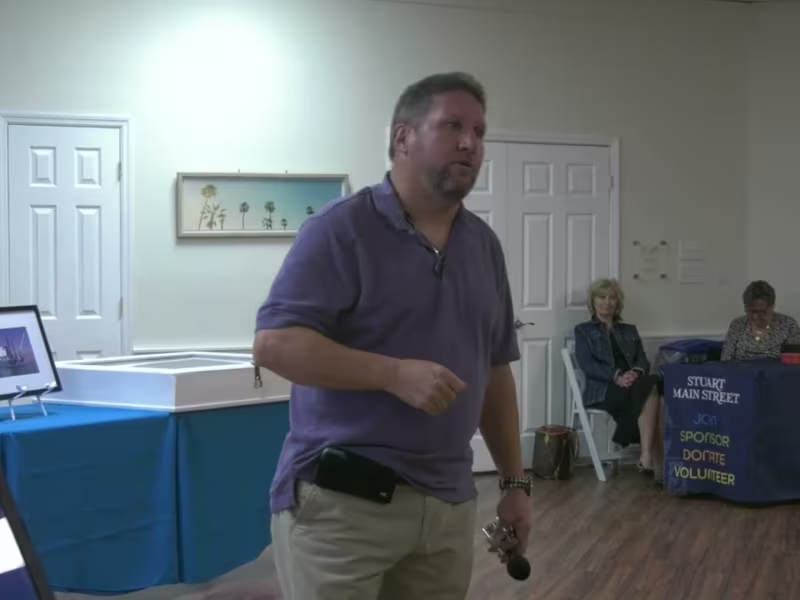
and there's no if no dozens in the museum we will take you down there just to bring this again thank you okay Corky tonight our star is Corky Hudson you can stand up for 150 years somewhere around that right at least and he's going to do a great job he's a great speaker and he's not allowing Dale to speak tonight I'll start a family more here I'm kiss I'm just kidding okay I'm turning it over to you thanks thank you okay let me get set up here okay now is Jim Harrell in the audience yeah Jim the other Jeff just Jim can you hear this okay if I get too far from the magnet hold
it up your hand and I'll try to get closer to Mike well I'm I'm satisfied with friends uh they call me Court I've been in the bank ever since it started which has been almost 100 years so yeah you know the the facts uh and and what I say are a little bit different but my brothers here Dale and on Dale is a fat guy he knows this and knows that and the other well I kind of take the attitude if you don't know the answer just kind of make it up and and so we start out with uh this this lecture tonight is supposed to be on Seacoast bang and his early history uh
well if you listen carefully you will probably think that that is correct if you don't listen to parody you think it's a bold line is what I'm going to talk about tonight is the prior to Seacoast Seacoast babies was a Citizen Bank of Stewart and First National Bank of Stuart and those two Banks became Seacoast Bank and my son is now run into the she goes back so that is good the um I'm going to first I kind of set the stage sequels came here in 1933 in February and she goes what did Seacoast have to face of tales of my father once he goes he ran the bank he and one other person what
did he have to face so I'm gonna set the stage for you what would a banker see in 1933 come into Stuart and they um uh we've got to get this oh there we go I'm losing let me know if I lose the sound okay I can't say the sound I'm seeing them and see my lecture but uh uh to begin with is population the population of Florida was pretty small in the 20s and the 30s I think in about 1920 our population was about a million dollars for a million people for the whole state back in 1898 which is only 120 years ago there wasn't my month it was foresee and there were only
several hundred people living there so Florida has come a long ways quickly uh probably Martin County had maybe 4 000 people in it I can't get this thing right if you're on here and I still all right that's the sound out if you don't uh and that would come to the 1920s when things started moving in Florida and I believe what really caused things to start moving was a railroad uh uh uh Mr tiger got the railroad all the way down to Key West I came to Stewart in the late 1890s probably about 1898 it was probably in West Palm by of 1900 and it was probably down to the Keys before 1920 well before
then and uh people could get to Florida in the railroad and trying to drive down U.S one which was not finished it was a lot of it was a Chevrolet actually I read some years ago that u.s-1 was not totally paid between Jacksonville and Miami until the mid-1930s so if you had to drive your car not too many people came there was no place to stay they would have to camp out and so that kind of helped pickled back but the railroad opened it up and of course they started building hotels on the road so people did have a place to stay and uh value started going up people wrote back home and said Florida
is great this Christmas Day I walked out of my back door and my bathing suit it was nice and warm and I picked four arms and took them in and had a nice pass of fresh orange juice you better come to Florida and people began to want to come to Florida they for a while everybody wanted to come to Florida buy a little bit of land and come down here and live in this wonderful place to live and or come down and buy that and let it make you rich because it was starting to grow in value as people discovered Florida started moving here and they wanted to they wanted a part of Florida so
things are building up and up and up and uh the Realtors and the they were only too glad to help out and my people would come out by train and the Realtors would beat him on the bus take them out to the to the subdivision that has been sold that day and they arranged everything or you could buy a lot and dollars down and ten dollars a month and how can you lose and if you hold a lot a year you could probably sell it for a profit and pay off your debt and have some money for your pocket of people like that and if you're about acreage it was much better and people who
were making a lot of money and it got to be over price you were growing up pretty quickly and people like that and that brought more people in uh more houses were being built subdivision developed and then things were really moving along and prices kept going up and people said well how high can this book you know what is the top limit of Real Estate and I think wise people then started selling out or slowing up but it still kept going and then uh a funny thing happened in Miami a large sand and Schooner the carried cargo wrecked itself right in the channel in Miami and no more ships could come in it was uh
they could not bring any better materials in from the ocean and it took them a couple of months to get that ship moved out of the channel but still we have the railroad right no Flagger hat shut down the commercial shipping freight shipping on the river because his Road bed was giving away it probably wasn't built quite right and it could have been a big hurry and his rodent stuff needed work so he stopped for two months to get the record was back in order so for a period of months no building materials came into Miami and construction stopped people started looking around they saw the big skyscrapers in Miami tall Village are half built
unfinished the subdivisions everywhere around the county around Miami and and that was the same in all of the big cities in Florida and people began to thinking you know that people were not working and they had time to stop the same and they said you know I don't think there's going to be enough people to come to occupy these big tall buildings and to buy the Lots on these subdivisions and people have all the money on their their real estate started saying you know I think we better sell now take a profit and pay off that debt and they slowly did and and of course so the first people in came out okay but as
it went on people begin to realize what was happening and buyers split up and prices were still going up started going down but when the buyers saw that they couldn't buy anything and they sat there and sat on their hands and property didn't sell and before you could turn around prices dropped to zero and anyone who owns real estate and had that on it was out of business safer approval and uh the banks failed about a dozen and uh that was 1925 for the Florida the first Florida real estate a film first and it cleaned part as fuck so anybody for coming into this Martin County in 1933 had that but there was more um
the 1928 we had a terrible hurricane which devastated West Palm I don't know if it hit Miami but it went out into the the weight and the wind under the East blew all the Lord out of the lake but not all of it but blew the water from the east side of the lake to the west side and then on the backside of the storm got there it blew it back the other way and the they say it a Russian water came to uh the cities along the eastern shore of the lake and it just washed right up and they had 10 feet of water in their cities they're drowning people by the hundreds and
that was kind of a downer before uh prosperity in Florida and then in 1929 well you know what happened we had the stock market crash and anything left in Florida and there wasn't much but anything left was wiped out um uh so that's what Dale's dad in mind that and the face in 1933 there were no banks and Stewart at that time there was a period of a little over here and Stewart had no bank that was kind of unconvenient you had to partner with your friends uh you could go to West Palm to Atlantic National and talked to Henry Smith again up to Fort Pierce and the Saint Lucie County bank and talked to
Andrew Lee that was inconvenient but we had a citizen named ed mininger and he is a he was a very important person in our town for probably 30 or 40 years uh his his brothers developed a vinegar clinic in Kansas which was a premium Psychiatric clinic I think in the world at that time and that unfortunately blew his hand off when he was in medical school and uh he did an experiment which exploded blew half of his hand off finding him in a little time and finished his medical career he wound up in West Palm and uh decided to start a newspaper in a little town of Stewart and um the Republic and while he
was in Stuart he um became a very very accepted person he spoke after dinner he remembered every name he could probably name everybody in his room if he'd been here for a while uh that's a brilliant person very positive and happy all the time well he told me one day how you could bank without having a bank and he said he sat down in his office in the steward news he was an editor and owner of the student news and he pulled out checked both of one of the field Banks and he owed the extraordinates with a merchant down the street where he was about some equipment after my my leg all over the merchant
said hi Charlie I want you to introduce things I want you to endorse this trick settle in my debt to you of the steward news bet View and I want you to tell me who you might know at least 150 to well everybody knew it they'd like to figure out what he was doing and he said sure the endorsement check and it said I owe a hundred and more than 150 to the farmer out there who put your chicks at my house the other day and so I had to go out of the farm and told the farmer who it is too and he said sure hit or some chick and he said and Mr
manager I own the grocery a well of 150 so I had to go back to the grocery and the totally goes through the grocery check and that went on two or three more stops and the last stop was a merchant that opened the Stewart News and had sat down and endorsed endorsed it as owner of the Stuart news went back to his desk sat down tore the checkup so that's how you get bank without a bang of the yeah you all know if you've read Alice's of last brochure of this this Museum that uh where we went we went into the the building on Osceola and St Lucie Avenue it used to be where the
alcoholics met that was the only alcoholics a meeting place in Florida that was surrounded by bars we were the fourth Bank in there First Bank was Bank of Steward and it was there from 1912 to 1921 at which time it failed it actually changed their name to Stuart thing and trust and they moved to another building at one time but they still failed um they were brought in most locations by the national game next was the Seminole bank which was in that element of 1921 to 1929 with the Seminole Bank failed Len historic Central Farmers Bank when went into that spot and they were there from 1929 to 1932. and they saw a handwriting on
the wall so you couldn't make any money in the banking business in those days and so they closed up solar assets paid their debts and liquidated they did not fail and there was no loss in the bank but the Bank closed itself that weight pain symptoms of Jacob Stewart uh we were in there from 1933 to 1939 when we moved to from that location down to Haney circle into what is now Duffy's Restaurant and um that was moving out of town actually we were a monopoly there was no other financial institution between West Palm Beach and Fort Pierce except us we were in we had it all and all of it added up to almost
nothing you know being a monopoly brings to my mind a joke on one of my relatives by marriage a guy named chapter 12. he he married my wife's sister Margaret who years later had a breast shot next to her some of you may remember Marcus dressed up well chappie and Margaret moved from Pennsylvania where Jeff he had been an officer in one of the big steel competitions and uh moved in with the pitted ones if his mother-in-law and Dale Pittman was the owner and operator of the Gulf Station on Frazier Creek he's so gas to the boat those boats and Automobiles so the first day championship he walked into the Citizens Bank sits with my
dad's desk and introduced himself and says he would like to borrow a few thousand dollars until they can get settled in Steward and my dad said well I'm sorry Mr Schwab but we don't know loan money into newcomers we wanted to live here a year with a good job so we think we can count on them and then we could maybe consider alone unless of course you have some collateral or someone who could endorse your home that we would accept well chapter was incensed he was being treated that phrase and he lived to his feet called my dad an sov right here to his face and went back to the privilege place where they were
staying there and told Mr Pittman what he had done well Mr Pittman was required public person he led chappie wind down and he said Chapel there's one thing you should know when there's only one Banker in the county you don't call in the son of a bitch right through his face that got around down and it got a laugh for about two weeks so Mr Pittman through the championship under the arm put him in the car drove him back to the bank and they made Arrangement soon and the job he became a very good customer of our bank and a good friend of ours he worked for the Stewart News company and through South Eastern
and printing which was a very very fine printing company owned by distribution which credit secret documents with the government everything had to be letter perfect and the and it was very secure you didn't fool around that building because you didn't know who would be watching you or what might happen um so there we were hike open there was very little money left in Stuart put little money had been lost in the two Max and failed and any money left over any serious money was kept in the post office and postal savings and now his son and was revised in the depression for people who wanted to Bank in a safe secure place rather than a
bank and you can take your money to the post office and Mr Hartman would give you a receipt a little passbook and you could uh and it was showed the amount to a deposited and you could take that money out of any or all of it any day you wanted I've got a little interest but you could not draw tricks on me and uh that's where my dad said it took in five years before he thought he had all brought all the money out of the postal Savage back into the banking business um the um the income for the bank was very small it was there was not many loans the people actually was not
a whole lot of loan demand but unless you were totally desperate and then you couldn't get along the income of the bank came mostly from service charges 10 cents a check if you had a chance if you could have written 10 checks this month when you got your statement there was a dollar service charge 10 cents a check and that one time we were making 50 checks Republicans had a little brain pressure to print your name off a check and Fold It Up the the bank was a center of steward the bank was downstairs two people my dad and a lady named Bruce Stevenson and it was a whole Bank upstairs was the city hall
if you walk into the bathroom in the back end of our bookkeeping Department you would find there's two doors in the bathroom the other door went on the other way and it went into the city police department so if you walk down to the police department and then stepped out on the sidewalk through a van also a few of people having them which was uh right next to the fire station and the fire stations was a great Community centered in those days it had two purposes one was to put out fires and the other was to display anything unusual for you to come look at and that was usually game a big eight point buck
a large turkey armadillo a compared rare one of the rattlesnakes rattlesnakes always butter crab people love to look at rattlesnakes and and uh there is a funny story about the fire station I'm going to take time and tell you about because it's funny the we had a state highway patrolman that was stationed here in those days his name is Patty Earl he was a fine upstanding young man who was very honest and straight everybody liked me and he loved to hunt fish with the boys but it never killed the turkey and that was kind of a rite of passage for the young man and he wanted a turkey pretty bad and so one one uh
a name near Christmas time the boys probably about late afternoon and said tonight we've got about 40 churches Bruce them down in the South border and if you want to go with us we think you'll get a chance to kill the turkey and you should go out and he'd try to jump to the Champs and sure enough about 11 o'clock the next morning they were all back in the fire department with this big turkey hanging on the hook and John and flag standing there so proud and the old boy standing around talking with him and another crowd guys and they loved it one guy said well climb and tell us the hunting story we want
to know how it happened he said it was wonderful so they the boys picked me up about 4 30 that morning and we drove way on 76 and down to Wagon Wheel Road which was one of the main roads to go hunting down the Southport and uh went down to South Fork and they put me out and put me under this big big pine tree and they told me they were going down until it was small and they didn't want me trying to walk into the swamp because I hadn't done that before and they said you stay here when we shoot at the turkeys they would be flying out and uh a turkey that is
afraid we'll try to land in the big tree so we can until he can figure out what's going on and then he might want to fly down to the ground and if you're under a big tree you just might get a turkey come right at you and if you're careful you're getting so everybody said the boys left me and I sit for about five minutes and all of a sudden I heard a club there's a noise of turkey Mage and then I heard a goblet and it was right over my head I said my goodness is there a perfect industry and I said I just slowly looked up and looked up and sure enough there
with a rising light from from the sun coming up there was this big turkey sitting there and his neck was stretched out and I know he's looking at me trying to figure out what I was so I knew I had to be very careful I brought my my gun up very very slowly without making any fast move that scared the turkey and I took swirling right at that big old neck sticking out squeeze it off with a shot and he filmed it right at my feet there he is isn't it beautiful and he pulled the wings out so they could all look at it and fire and one of the guys said hi what's that
hanging up in the in the Turkish feathers there what is that I said I don't know I haven't noticed that he says buy us a card I mean not a very great assistant Merry Christmas from the boys a big farmyard turkey that was so heavy that he didn't want to fly they've got a letter got him up there at night time the turkey stay here so that was fun the Osceola Avenue was the business Street for Martin County at least for Stewart and really for Markham County we would pick a city in the county and uh that's where you had retail and barber shops and such and the movie theater and so Australia was a
very important Street and there we had we had the whole heart of the city and we had the business area right there in our hands and we were the only Bank in town the worthiest saint people Bank we got most of them and I'm going to tell you about a few of the people there there's too many for me to tell you too much uh The Lyric Theater was very interesting there was built by uh the Hancock Joe chancock and his wife and uh I am I admire anyone who probably wasn't in the 20s when everything was so going upwards but that was a big difference building this Tiny Town was such a small population
and it has been a wonderful thing for our town um our mothers would give us a quarter we're going to spending day at the theater you know a ticket was a dime you get a coat right across the street on the other side of the poster of the theater arcade and then you could punch the punch cards for another nickel and a punch guard was a board that had about 50 holes drilled into it and they had a tiny little piece of paper stuff down in there and then it was sealed over it was made in a factory and you punch it out punch out the card oh and unfold it and if it had
the right number you got a free Coca-Cola so it was a wonderful thing to say to see I'm told that that uh Mrs Hancock played the piano back before they had a television I don't know if that's true or not but when in those days by then by 1933 we had talkies in the movies were movies just like they are accounts all the fun thing was to watch Fred Astaire dancing with Ginger Rogers near the end of the scene where the love interests had the balloon he would be saying something sweet and nice to Ginger and her theater again it didn't reply and say listen what is he saying to her what is he going
to say and here came an eight o'clock freight train good care of the thing and they're gonna shake the Bella and chicken see that was not a complaint I could think of for the lyrics next to the lyric was the grains dry goods that was a green family it was a big family here uh Mr Miss green had about three three retail stores throughout the State of Florida and uh they were very good people and they knew how to run the store and they made money right along and their children Robert who was my good friend and his two sisters Lily and Mary Louise although everybody worked in the store everybody worked for Daddy you
know just just American Way and uh that was a wonderful thing it was Mr Green however died in the mid 30s at a very early age his wife Mr Green picked up the range and went to store beautifully Robert later on went to college at Florida State where he was taking a course in retailing and all and the teacher they finally realized Robert knew was much about running a store with anybody Robert became the assistant with the teacher across from greens Dry Goods was a vacant lot with a big two-story of Illinois and that was on the bottoman's barbershop upstairs was Dr Harry hinson's dental office and uh Harry was the only dentist in Martin
County and he used to say they will always pay me he says when I put that first tooth if they don't pay me for it when the next two starts hurting and they come to me I remind them they still owe me twelve dollars and if the people would somehow find the twelve dollars quicker but on the east side of that building was a stairwell a stairs going up on the outside open stairs open to the air and my mother was dragging me up there I was about seven years old and I had to have a filling I wasn't looking forward to it and we I started up the stairs with my mother dragging me
up and I see so much coming down and I looked and it was my good friend Ben armagash it was my age and Ben was on he was crying and his mother Eva looked very angry and uh apparently and men never cried that was when I knew he would hope he would suck it in but he was crying he was willing to go his his lips were all swollen his his shirt was red with blood he was coming out he saw me and he quit crying just long enough to say don't go Accord ing on and went went right fine by me and my mother broke me up we went into the the first room
was the was the sitting room and then there was a room where they did the dental work at the big chair and brother went right in where the big chair was and said now Harry I want to stay here while he worked on work and her my mother's name is Beatrice he says they put his hands on her shoulder turned around put his hand on her back and gently pushed her out in the waiting room and shut her door turned around and looked at me and says get up on a chair and shut up it happened but enough was bad and now I have pain he was grinding down and you know that was a
slow drills they were getting hot and they would burn your flesh and it's not burning flesh and it hurt and the novocaine didn't quite kill everything and I kept sliding down and I wound up sitting on the footstool and Dr Henson was still grinding down and I got it done and uh and uh that was over I was because let's see who else can I tell you about it we come on down and between Osceola Avenue and Flagler which is of Father Railroad when you went past green Strikers was mostly vacant land it was not being used it was no storage on it there was one store freestanding building that had uh Jolly bosomes by
Rochelle Bennett and that's where I got my haircuts and uh Jolly he saved his money he didn't waste his money and I'll tell you about him in a minute but then you come on down to hang his Circle there was no buildings on any Circle it was totally big there was one million there that was Dr Parker's office which was a two-story wooden Frank house and he had to walk through a little field of periwinkle flowers and every time I spoke a smell periwinkle flowers I think of Dr Parker's he was one of the nicest people in the world his biggest problem is he did not like good building didn't want to ask for money
he kind of felt that was impolite and his his wife Margaret just had a fiddle with that because she she was left with a job of trying to collect the money and pay the bills and she worked with him and he he was a dentist I mean he was the only doctor in Martin County and uh he he went out he would drive out your house and look at you you didn't have to go to the go to his office if you didn't feel like it could we come on down to Haney's Circle and there's only that one a billionaire and then you go on down east on Osceola until you come to the Republican
Hotel uh that was a fine Hotel it was owned by The King Family they were a professional Hotel people and bill came ran the business and it was high class the hotel was only open in the winter it was it was Pine Hill over mostly two weeks people which was very unusual we had a very few Jewish people living in Clark County and they all like to fish and this Charter Skippers could pick them up and uh uh take a patient bring them back to the doctor he had a big doctor and uh and the the Anglers would come in and give their fish to um Russell Holloway who was a African-American cook he was
an excellent cook it was really a chef and he cooked for Patton during the war and he would hook their fish for them and they would have fish for dinner that night the hotel was a real nice hotel uh most of the people there the clients Fernando were also in Show Business uh one of them I think his last name was crap Mr Krab and he was a designer he designed many big theaters in New York Chicago and I think in beer he was quite a mooded guy apprehan um the sports writer from the Atlanta Constitution um and um I can't say his name Channel code he was one of my favorites he was a
nice guy there was no later allow that was a rule from one of the king ladies and the finances they wanted to have a drink had to have a drink in a room before dinner dinner was at eight o'clock one seating the my wife who was engaged to me the poor girl we were engaged for a year or so she was desperate of the hotel and one of her job crochet hand out the mail opportunity people and she did so and this one Old Gentleman I used to be in his mail during the dinner hour when everybody's sitting there and he was quite deaf and almost blind and so he would have Anne open his
mail and read it in a lot of ways so he could hear that and of course everybody in the hotel in the dining room heard it and that was an amazing thing I enjoyed that and it was never anything serious in the letters but and read them and the guy named named uh Graham Mr Graham I can't remember his first name he had a big heart agency in Atlanta it was quite wealthy and he was a lot of fun and he he thought it would be a great joke to write a nasty letter to the school his name was proclaimed the language we think of things so it arrived of course everybody in the dining
room was in Uncle Joe waiting for Anna to open that letter and Ann wrote about two sentences before she realized it was a cell not a big laugh the last thing about the the Pelican is a part of the old town that the each room had is fat I don't had a private bathroom they didn't have to walk down the hall that was fun but what was not modern is there was no showers they were big totes with four four Lions deep and holding the tub up if you remember seeing pictures of them if you hadn't seen them and uh he was a little too sit down and wash and protect yourself and of course
one of the old gentlemen turned the water turned the hot water on walked back the goose jumping and forgot and he finally went went out downstairs and water was running through three different floors and give them a lot of damage so that's that's a hotel represents now a change of date on you you've gone from 1935 and now I want you to go at about 1945 or a little later than that the depression Trooper but there's a war on now and then that caused other problems and uh but we live through those problems I'm not I'm not going to get into the war though and I'm taking too long here too I'm trying to wrap
this up um in the there were two nice buildings built after the war on any serpent they were both built by crossover home was his father was dead now the fine realtor and a our search wife Betty Kate had a father named closer architect I think he must resigned design for the good the workplace the one on the the northeast corner is a single story is still there it's curving that air around the street and in it there was a about eight places to rent and um one of them was called the utterly shop that was owned by Julia Jones who was Arthur's sister and and Eva Margaret's sister Ava was the only one of
Ted to helmets daughters to marry June was the main lady but she was fun she was a nice lady and when my dad took me and her I thought I was her mother and she was always so nice I love you look is that a my quality gift shop and the all the girls registered there when they were going to get married so they're silverware and their plate wear could be registered and everybody would know how to give them a gift for the winner and they all pray they would get at least four cents they don't do that anymore the categories across from that is another grounded building it's two stories I was also building
two and the top scorer top floor was for offices the bottom or retail and you notice where Dr Parker's office had been and they had moved it they moved it over to uh Ocean Boulevard which was Fourth Street and where his office had been is now a kind of an open-air restaurant called El Patio and it was owned by Bruce Joe's and I had about six bar stools with a camera that you could eat your breakfast your lunch on I don't think they've served in it and if you happen to be looking this morning a little after daylight you'll see about a five-year-old little girl a perched up on one of those bar stools and
uh Chris jokes he was speaking to her she kind of legs toast bacon and orange juice and uh do you notice she's still in her jammies and you wonder what is that all about and you look down the hill say oh go back towards it felt like a hotel and here comes Philippine walking real fast for the blurry look on his face until he sees his daughter his fifth daughter fuentina and our Manny relaxes she comes on up and has drunk cup of coffee our bill told me that he could not take quentina in she was determined to get up every morning and go to El Patio for breakfast and they try all the ways
they could think of to lock the doors and she could figure them out and she couldn't she went out of the window that went on for three weeks then you look on the North and there is the North Port there is a brand new building the Citizens Bank cashed into the front here's pictures there's some things to look at over here after the store we're going to look at handle on that table but uh the um well that went out of my mind and I heard The Citizen Bank is Art below I believe designed by Phil Park from West Palm Beach it's had probably six maybe eight people then and the interesting thing we had
a big book came into apartment off the lobby there was a black wall all the way across the back end with that located apartment thank all motherboards no windows and my dad had our Joey pistol it was a noted artist in those days and she painted beautiful paintings of birds and wildlife and she loved to paint Heroes and dad had her made a mural on that and it was the most beautiful mural he could see a customer come in and stand in our total unknown and looked at the back end of the equipment Department in terms of specifically of everything and you could look at look like you're looking into infinity and that was really
something it's hard to leave hanging instructor without talking about lady abundance I was told that the lady abundance was given to the city of Stuart the city of course didn't look at their personal amounts and they accepted it but it was embarrassing that some of the the leaders of the city and she was hit down and back into the summer of one of our parks and put a lot of land around so the children and so I'm glad to see the lady of my instance now appeared full sunlight and I think a beautiful promise to be supported um I'm gonna have to there's one other information about it see the archives the father of my
good friend Ben and he was a really a fine reputation one of them the highest regarding people in town and Ernie lions who was probably by then was the editor of the Stuart news apparently used to do a lot of after dinner talks and everybody loved them and then he one of his talks was on how Charlie Orbach had tried to suck him in to a real estate deal of course everybody's ears are picked up because Charlie was not that kind of a guy everybody knew it he says what is Ernie God in his mind what's up his sleeve let's listen to this and Ernie said that Charlie called him one afternoon on Friday and
says Ernie come over here if you will I'd like to talk to you about something Ernie said I jumped in my car I was going to maybe get a story here with a paper and he drove over there and Mr armaged said Ernie and said you'll never get anywhere or have any money until you have real estate you can't make any money on the salary you go to make money on real estate and I've got a deal here I think you ought to get into it it'll make you some I think it'll make you quite a bit of money in those a few short years and Ernie said well what is it a strong acid
he explained and he said well how am I just financing foreign on any real estate total arranged and it was not with the bank I'll say that he said I've got an old range and uh and if you can't make it down payment I'll make the down payment for you and you can pay me back when you sell the property down the road and uh and just signed here and we'll do that Ernie said well last shot and then I went home I went to bed that night worried about it it says all day Saturday I worried about it suddenly I worried about it finally on Monday morning I I put it back over to
Mr Cash office and said he said Mr armaged you caught me at a weak moment I really don't like that I got out of the deal and he said Starbucks open his door or pulled out the deal that Ernie had signed and tore it up to Pieces he said okay you're out of the deal Ernie said I felt better but he says the end of the story is at Mr Arbogast follow the law he was not allowed me to get out of the deal but he didn't he followed his his Instinct of what is right what is wrong and what is ethical and because of the high ethics of Mr Arbogast is why I'm not
a millionaire today that goes appropriately he had to be satisfied was part of the heart of what is now Port St Lucie knew that it was being you know they were getting ready to start the development ongoing so that was a funny story we came up with our federal Charter in 1950 our state chart in 1958 and became a national bank which was people from the north were not sure of how each state chartered their Banks and whether they might be weak or not but if it had the word national in it it had to have certain qualifications and that's why dad wanted to have the National Bank so deposit in 1958 or 12 million
loans were about four uh dad is a tough vendor they had a lot of jokes about him one of them is that my dad I had a friend who was very sick and needed a blood transfusion and he's he's and so my dad gave him a blood transfer as you but the guy died and so for what folks a guy tonight says he froze the disc think about it and uh and of course there was the old joke this is more from our first national and they said what's the difference between a terrorist and First National and uh the answer was you could reason with the terrorists continue I'm gonna have to stop here I've
been talking almost for an hour another 15 minutes if you want to okay I'm going to skip down to another funny story in about 1959 we had run out of space at any Circle we had tried to be on four trailer winners in a market day Saturday all those four windows were filled with people in the line went all the way out the front door it was a mess you couldn't even walk in a Lobby and when he put in a drive-in window we were on the first bank she put in a drive-in after something too and the way it was on Colorado Avenue of right next to where Duffy's is now same building and
uh you would drive upon them on the cycle often to get pedestrians out of your ways to do your business and then drive back down and try not to run into a car on Colorado and it was clumsy it was confusing and it was dangerous and our our a guy in a bank named David Peterson used to go out and try to help direct the traffic and it was a mess and all that we really needed space and why didn't we put out a branch for people who could come to other places and deal with us because branches were illegal in Florida when a Depression hit a state legislature made branching illegal he said if
you let them have branches they'll get deposits but they will not bring in town and then the week in the banking system so we will not let them have branches and then they'll have to go out and raise capital and start a new bank get a new Charter and it'll be a safer a banking system and that is true but we can still have branches and stay safe the so we needed space and we couldn't find out anything and but behind us was the wind woodrum's home and she lived there with her husband and it was right on Colorado and it would be a perfect perfect with what we needed it would solve our problem
and uh Louetta however was a smart guy she was real estate or she knew the value of honey and she knew real estate and she was used to business she was a free dealer she could she could transfer property with her own signature and not her husband she did not need her husband to sign with her on real estate if you weren't afraid either you're a woman you had to have your husband go along with any real estate deal you did so imagine Ms bedroom was was no dummy and she and my dad negotiated for several months and it went nowhere I began to think well it looks like we're going to have to see
to miss Woodward but then we had a miracle if you remember Jolly bosom the fireworks save this money well he bought real estate about and he walked into our bank unannounced one day sat down on my dad's desk and said Danny have I got a deal for you for you and he had property on US-1 and Colorado Avenue and he said I'd love to sell those to you man my dad said how much and he told him he says I write your check right now and he said no I want you to give me a mortgage I want to tell my friends that the bank holds me and but that was out of town Colorado
Avenue going from the regular track was a little narrow one lane Rose and Faith but if you passed another car you had to put two of your wheels into the repair each side and the US one was almost vacant so we thought well we're moving out of town uh what Chicana do so we moved out of town and in September 1961 uh we opened the bank where it is now uh at least the headquarters that I think is the deposits were about 15 million by then and the loans are about 6 million uh don Armstrong who was the local guy was the architect of that building that was a beautiful building and uh I mean
Don was a good friend of ours and I was so glad that he got the job uh so we wound up with a big Lobby we had nine counter stations in above no longer before we had nine we couldn't think we'd ever need more than that that is great and we had four dry advantage and this is funny they were on the back side of the bank they had to be connected to the bank or they would be called a branch which was illegal so we had four of them across the back side of the bank and and they were sideways they didn't Crush 90 degree angle they were right up against the bank and
the drivers had to drive around with other cars so he goes around four cars and we're still had to go around and start over so it was not satisfactory and David just came in one day he looked so upset I said well what's happened David he says but those two guys out there almost got in a fight and they banged their fingers together and I tried to calm them down and he almost jumped on me and so I I said well gosh what are we going to do well we had a another miracle of the daibo company uh embedded a vacuum to stay away that could be wrapped in in a waterproofing material you could
vary it directly in the soil and you could run that from the bank to a driver for 100 yards or so and so then so then I could drive a job where they are now to the east side of our bank and they're still connected to the bank so that we're not non-frances and we did that and we made sure we did enough and uh we had eight tribes out there and it started out for four months then guess what happened the state legislature made ranching legally you'll find a beautiful large quiet subdued lobby with nine tailored spaces because maybe two total character that's why you see those eight drive-ins out there four were used
to park our cars out of the sun and the other four they're using about two of them that's why that happened and uh it was our mistake was not assuming that the state would find it a lot of ranch but not your whole brother's story I don't have time to think about that that brings us up to about 1960 1970 I'm going to finish up now one of the biggest ones we had after those days was Flower Farms Martin County was a flower farm captain of the world we're probably 10 years so it came in from Pennsylvania said he was a flower farm and he opened an account and said he's going to grow chrysanthemums
but I said oh sorry to hear that you can't representative of the father they go up North and he said you watch and they did they the flower Farmers became very wealthy they knew what they were doing the events were Beautifully Broken till they brought in German Peak by the time in fact Germany finally made it illegal to export the running out of it and they could put a seat there and it would feel beautiful so it was sterilized totally no bugs so they would pull black cross across the fields to make the flowers I think it was summertime and they would grow tall and big long stems big Armstrong's tents and then when they
would take the black cross off and put lights on the tables at night the whole County would be lit up by these hundreds and hundreds of likes and that would make man think it's springtime and it would bloom and they actually could put a seed in the ground that they know would be a a red chrysanthemum for Mother's Day they could they could do it like that that was great and that was a big thing and put a lot of people to work with labor intentions every housewife in Arkham County almost was used to roll those flowers into newspapers then it was back in boxes so they could get the market without any damage we
went into credit cards and I hated that I hated credit cards and I didn't know I think it brings people into trouble uh they started in Chicago and so we were going to have to do it so I called Mr mechanic down in a Toyota National in West Palm Beach father National an credit cards for a number of years and I said Mr McKinney he says it looks like we're going to have to go into credit cards and I don't know if that's going to cost within the gentleman he says son as long as you don't ask him to pay it off you'll be all right and so so we sat down we spent two
months with old staff going through our own records our composite records and telephone books or anything else we could think of to try to find people we thought would be worthy enough to get a credit card within that of three hundred dollars we didn't know how to jump into it all right and we did it right so there's two problems one problem we had a one of the bad of this got remixed into the goodness we didn't know that until later and the next thing we did is we bought the portfolio of one of the local restaurants and uh that was a mistake because almost none of those people paid but we had the restaurant
in town we still have it over the years we didn't lose anything but credit cards now are having problems is so not credit problems it is a throttling problems it is horrible the gangsters and underworld have learned how to use fraud they don't come into a bank of economy they do it with computers so I don't know where that's going we had the automatic color machines but there was no teller we had a Saturday and Sunday to train our city population of how to use them are you advertised it and had people there come we had people that are outside showing them how to push the buttons and put in the car and pull it
out and everything and then they would get a instead of getting cash to get a little slipper which which to say had they had one maybe a dish or a TV a little radio something like that well they were busy holes either came Sunday but we thought people have to do it the final thing was fun with banquet Chambers making cameras I have I respect for the I think it's the only government people that you can really trust and depend on I really believe that the OCC is also the control of the currency the Federal Reserve I believe their cameras are serious I believe they're trying to do a good job I believe they want
to make the banking Community stronger and uh I really had my requirement despite what I say behind the matter and the old days it was one night or two of us in the other day today they're not nice at all they don't dare be nice but in the old days we used to take them to dinner and drinks after the exam and always wonders if this doesn't seem right if we do it and the genres what I did because talk about banking problems and everything it was retreated information they taught each other's things it was it was nice and uh one thing about our bank in those days we mailed out the bank statements with
your checks in it remember when you got your checks back mail them out at the end of the month the last day of the month everything went up and care about the law in those days okay here care about insisted that when you finished your work on the last day of the months whether you're an officer or an employee of the bank you would report yourself to to the booking department and roll up your season help stuff statements exam and they were ready to go to summer well I'm sorry but we've got to go up here and help sweater the statements are just going to take us a good hour and they said well we'll
go with it we'll help you stop it bang the challenges perhaps I was running a bank I thought that was wonderful oh my dad always said if you keep a strong Bang uh you can reach the examiners and I would sit at his desk and cringe on he breathed with a janitors and they would criticize him with the Lord he says Mr Hudson you you told us you that he would reduce this month last year and here it is another year and it hadn't reduced it and when is he going to pay it and Adam will say well probably when he dies and there was shrug their shoulders and Let It Go of that and
uh we had no trouble with the exactly because we did have a strong Bank um the memory comes to 1983 we've been in business 50 years and we formed a bankrolling company which was called Seacoast Banking Company and our deposits from 1983 it was 205 million dollars and the loans were 130 million I'm sorry to take so long but I just get I skipped a lot of stuff in here I couldn't help I tried to get the same sort of funnier thank you very much I want to make two comments and half a question from Mr Hudson yes sir your thanks was very successful and I can tell you one of the reasons why I
had a bill come due for insurance which I found out the man didn't Bill me he said you have to give me a hundred and ninety dollars today well I had a check coming in about a week so my friend said go to the bank don't talk to old man Hudson talk to Corky both of us were young back then and I went in there for a hundred and ninety dollars and you're too new in town to give you that much money and now you know what I got for a loan nothing and then your son I was an advisor to a young boys club and your son was in it and he came to
me and he said I won't be at next meeting I said what's wrong he said I have to go down we're having a board of directors meeting at the bank so you did a good job with that land because now he runs the whole operation he got the brains but here's the question I was of the impression your dad got started in Okeechobee can you tell us anything about that I thought you would never asked gee I can talk more um it worked in banks for seven years before he came to Stewart he had been in the U.S army for two years and uh we worked for banks before the Army and after the Army
and the depression came when he was working in a bank down south of Stuart way down south on the east coast and that bank failed my dad was employed by he was running and the state control recognized our father as a very able fellow and he asked about two liquidate and that managed to get a liquidity and I think no loss then he had a liquidate several others oh so that new Banks and he knew the controller and he asked for a charter and he got a charter through the Citizens Bank of Okeechobee and he ran that bank for four or five years this cashier and that's the bank that he brought to Stewart anybody
else want to ask him a question I really appreciate it you did a fantastic job if you'd like to we'd have you come back again and finish