The story in brief
Furthermore, the narrative chronicles generations of historic shipwreck salvagers, from early local finders using primitive methods to modern divers utilizing advanced marine technology like blowers and GPS.
About this story
Ultimately, the speaker highlights that beyond the pursuit of valuable artifacts and gold, the true reward of underwater archaeology lies in the preservation of history and the lifelong friendships forged among the diving community.
Full transcript
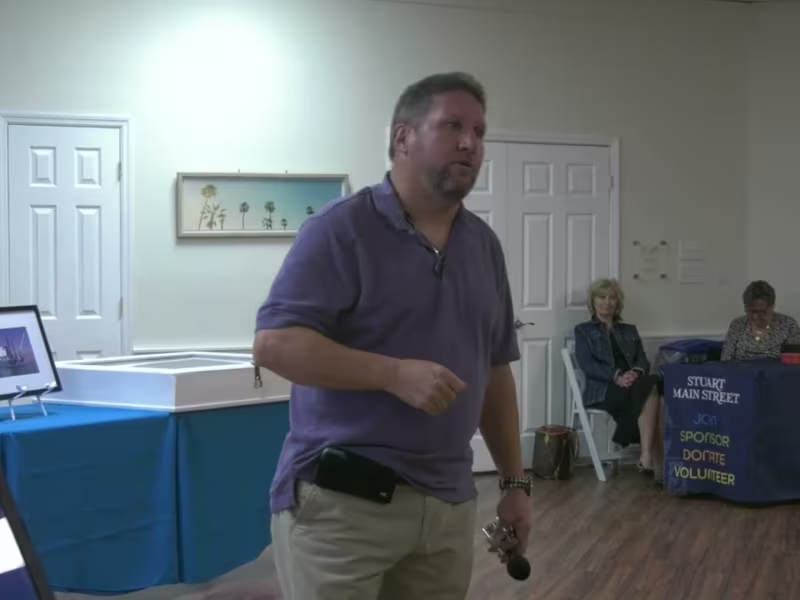
good evening even and welcome to the Stewart Heritage Museum November presentation we've got a couple things to go over tonight before we get to the presentation uh first off I want to make sure everyone is acutely aware that on December 2nd we'll have an open house at the Museum from 10:00 a.m. to 300 p.m. we'll have light…
Read full transcript
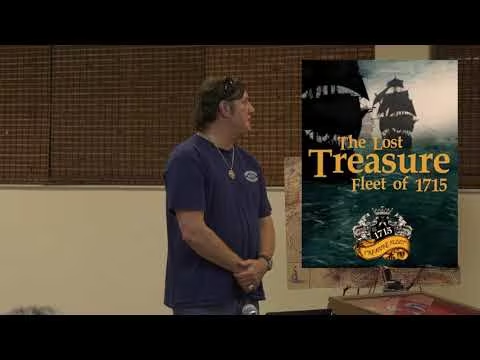
good evening even and welcome to the Stewart Heritage Museum November presentation we've got a couple things to go over tonight before we get to the presentation uh first off I want to make sure everyone is acutely aware that on December 2nd we'll have an open house at the Museum from 10:00 a.m. to 300 p.m. we'll have light refreshments we'll have tours going on uh we should have a a trolley tour around Stewart uh and at that time we will be raffling off the basket you see over there uh I can't go into details all the things that are in there but I know we've got donations from uh Rare Earth Here in Stewart downtown Stewart we've got stuff from uh this from the Museum from Maria's restaurant from uh siml uh the stemel family uh there's very interesting stuff in there and you know we are going to get a list of what's in there so let you know what you're winning uh but I encourage you to participate with that you do not have to be present to win we'll draw that uh probably around uh 2 o00 on December uh seconds also you know December 1st city of Stewarts having their uh Christmas parade Down East Ocean it amazes me every year we participate in that and see all the people out there along the roadway just it's fascinating down to business this is our annual meeting and at our annual meeting we elect one half of our board uh they're elected for a two-year term and so we alternate each year with members of the board uh the board members who were up for consideration this year R Ronda glass Barbara hodat and John Leighton they've all agreed to continue serving on the board uh I noted on the ballot that if there's others who would like to participate in the board we love to have you come on board I'd ask that you come by the museum sign up as a volunteer because obviously the board work is volunteer work and uh we can go from go forward from that point but right now I would entertain a motion to uh accept the nominees to accept unanimously the nominees presented for reinstatement is there such a motion I have a motion do I hear a second second I have a second call the question well first is there any discussion anyone have question about what I'm doing here okay I do but keep coming back uh all those in favor of accepting the re Nomes uh to continue Serv on the board signify put your hand up anybody opposed to this unanimous acceptance oh thank you now I don't have to count the ballot position what are you doing well I told her to put her hand up she wants to count the balance that's the business side of tonight uh what yall came for wasn't to hear me talk about the business it's to uh hear our guest speaker tell us about his experiences here in the waters of uh the treaser coast and throughout the uh throughout the Caribbean as understand uh Thomas Gus uh is a native Floridian lives out of down that Community down south of us here Jupiter Jupiter Beach we we we accept that we still accept him in the neighborhood uh but he's got extensive experience and archaeological findings and uh treasure diving and I'm going to let him tell you about it rather than me trying to tell you about it look for the h this um thank everybody for coming out tonight and especially to Gloria for inviting me to speak um as they said I am a netive peridian I was born in the Orlando area and um for the past 32 years years I've worked as a historic shipwreck saler and not only in Florida I started on the 1715 Fleet back in 1991 um first working for a diver and then the next year 1992 I got my own subcontract from male Fisher started working for Mel and I've worked um 1715 Fleet in some capacity every year for the last 32 years um I've also worked on some other wrecks much older uh the 1618 wreck which is off uh Bureau Beach there's a Spanish Gall from 15 7 or so off of Juno Beach which is what caused me to move down here in 2008 um the Jupiter wreck which is 1659 and I've worked some Recs up in North Carolina too and then also on the Gulf Coast U but tonight we're going to talk about the Lost Treasure Fleet of 1715 we'll do a little bit of the backstory on it and it's kind of done chronologically um I actually ended up with about 153 slides and then realized I'm not going to have time to speak on all of them but I'll try and get them up on the screen real quick and go through them and and then we'll go from there um also there's some artifacts if you all want to look after we're done at the artifacts um some of these are very old and unconserved so please just look but don't touch and there's some real treasure up here in this displ Cate so let's get started so we got to do a little bit of backstory about the 1715 Fleet and it actually goes all the way back to 1701 Charles II was the ruler of Spain and when he died he had no heirs so they named Phillip as the new king of Spain but Philip was a French descent so it sorted a actually a series of wars in Europe it was called The War of Spanish succession it ran from 1701 to 1714 and you had France and Spain on one side you had England the Netherlands and Austria on the other and um it was finally resolved towards the end of 17713 although it kind of carried on for a few years and then Philip V as he was called had two wives his first wife was Mary Louisa he married her in 1701 she died and then uh she died in 1714 and then later in 1714 he married Elizabeth farnesi who was the Duchess of of Parma um and that's kind of like uh what started a lot of the interest in the 1715 Fleet is because for the new Queen they sent uh dispatch boats the 175 Fleet had already left for the new world and so 1713 the new Queen came in 1714 so they sent some really quick Dispatch bootes over um trying to get jewels for the new Queen so that kind of plays into the the story too later on um when the fleet left Europe it was called the West Indies Fleet it actually com comprised two fleets the New Spain Fleet which sailed and went to verac Cruz Mexico and then the Tierra FMA Fleet which went to carda which was uh in columia oops and there's kind of a map that shows you where they went they got to the new world um they actually had a boat that broke off and went to Puerto Rico to get tobacco and then the ships went to their Cruise of Mexico and down to cardana these are some of the items that we see listed on the Manifest we actually have the ship's manifest from 1715 they have been deciphered for us and a lot of the things we see were things like I guess I'm pronouncing this correctly coach which was a type of red pigment Dy it was actually an insect um Indigo I have a small piece of indigo up here they found some uh bells of indigo on one of the rec sites back in the 1980s and the divers got into these bells I don't know how they made it through all these years and it turned the divers blue they were actually blue for a couple of days because it turned the water around them blue um they brought back tobacco cocoa bean Logwood which is actually a type of a flower tree to make a black dye and casava so those were some of the things that they were bringing back and then of course the precious metals like copper there's some crude copper ingots of course everybody likes the silver those are clean silver Pieces Of Eight there and then the gold coins the gold escudos um the copper mainly came from Mexico this silver was from bosi which is a a mountain of silver um in Peru now it's in Bolivia and then the gold came from hispania do Dominican Republic Puerto Rico Cuba Peru Columbia Mexico and then they had various mints in the new world uh Vata aosi Lima and Mexico City and then also they had the manilia gallons and manilia gallons would sail from the Philippines and China across the Pacific Ocean they would land in aapo Mexico all of that cargo was loaded onto mules and then they take the MU Overland to Vera Cruz and then they would get loaded on the ships and then the ships would go to to Havana and back to Spain they also had Jade gunpowder silk spices Ivory and so we come to July 31st 1715 the fleet there's 12 vessels in the fleet 11 Spanish ships there's one French ship that sailed with them they're sailing up the coast of Florida and they head in massive hurricane on July 31st I'm sorry that slide's so small but that shows you where the wrecks are there's actually six wrecks of the 11 Spanish ship wrecks only six of them have been found of the six one of them is an archaeological site that the State of Florida made that's off of Pepper Park the the um State of Florida believes that the wreck is the Erma a lot of treasure salers don't agree with that they think you know it was misidentified but anyway it starts up around um Sebastian the cabin wreck and then Vero Beach is Corgan also Vero Beach you have the Rio Mar wreck Sandy Point wreck um then the Yura Del Lima which is at Pepper Park and then at Fort Pierce they call it the gold wreck or the colored beach wreck and they have worked those wrecks continuously over the last 70 years they're F still finding gold and treasure and artifacts off of them so those are the Loc of them they not a secret there's Stu on the internet you can find the GPS coordinates for all them so after the ship's wrecked uh the Spanish had various methods to recover their treasure they used drag chains they would actually drag a chain between two boats and uh try and hook on to something they used grapnels they sent down free divers and they even had an early version of a diving bell they would lower the Bell into the water it would trap the air into it and the divers could go up get a press you know breath of air and then dive back down they didn't really use the diving belt in the 1715 Fleet rexo because the water was so shallow most of these wrecks are in water 30 ft or less and the majority of the stuff comes from about 15 ft of water or less um the Spanish worked the recks between 1715 and 1718 and they recovered and estimated 40 to 50% of the Lost Treasure and when I say 40 to 50% lost treasure that's the manifested treasure we have the Manifest we know what each ship carried but they were known for carrying Contraband usually another 50% in Contraband treasure so we have no idea what's left out there uh we do know ships like the one at uh at um Sebastian the cabin wreck there's 300 chests of silver coins missing each of those chest holds 3,000 coins so there's 900,000 coins approximately that haven't been recovered yet so there's still a lot out there but the Spanish were actually very successful um just as an example in 1733 just what is that 18 years later a whole Fleet of ships went down in Florida Keys so 1733 Fleet there were about 22 of them when the Spanish were done salvaging that Fleet they actually recovered more treasure than was listed on the Manifest and the king of Spain was not happy about that there were Court Marshals and inquiries I'm sure some people went to to jail because of that um but they recovered approximately 40 to 50% of the treasure there's a a diver going down they would take a a heavy rock that would pull them quickly down to the bottom and then they would attach a rope to whatever they could find I think that's from National Geographic that's uh a friend of mine that's diver Mike Perna and he's actually holding one of those grapples that we were talking about to hook into a box of the treasure so we recovered one of the grapnels um from one the Shipwreck sites um as I mentioned in 17713 the war of Spanish success ended and what happened is you had all these seaf fars all these Sailors that were working for the government at the time they were called privateers and they had permission from the government to raid um the enemy The Merchant ships of the enemy but when the war ended and there were peace now you had all these guys that were out of work and a lot of them went on account which meant they became Pirates so about the time when the 1715 Fleet wrecked that started the Golden Age of piracy and they actually had some Pirates come up from Jamaica I don't know if I have another slide for that here we go so Pirate Henry Henry Jennings and Charles vain they came up with about three or four ships about 150 men at night they landed between the two major camps of the 1715 Fleet jia's capitana and it's Mor and they ended up taking about 350,000 pesos of treasure um on that raid what's interesting if they had been about two weeks earlier they would have recovered 4 a million because they just had they had a storehouse about where the mordi museum is today and uh they had just shipped 4 million pesos back to Havana that they had salvaged so they uh they missed the big Hall but they still got quite a bit of treasure that was in uh that was was in the end of 1715 when they did that um that's an actual um decipher document I don't know if you can read any of that but it is talking about the Pirates on there it says the Palmer da that's circled in that area the Palmer a is again spashing area and um Jack H Haskins Bob Marks and uh some other people are the people that deciphered these old documents back in the 1960s and I have about 200 pages of documents like this that talk about the sage and the shipwrecks so this is a book that my friend um Bob Willer wrote sunken treasure on Florida reevs and he basically tells this story that I just told about the sailing and the sinking of the fleet and the Pirates and the salvaging and then he used a phrase he said after that the story of the 1715 Fleet disappeared into the musty pigeon holes of time I have no idea what a Mustique pigeon hole is but that always bothered me it's like no that can't be right cuz he picks up in the book after this and then he picks up 1960 Kip Wagner and real eight I'm like no there had to be more than that and there was quite a bit more in fact the story of the 1715 Fleet probably never went away it was probably passed on from Sailor to sailor generation to generation and um we found that as we're salvaging these wrecks there's a lot of other shipwrecks in the area from 1700s and 1800s we kind of suppose that maybe they were coming in to work on these wrecks they call it fishing on the wrecks and maybe became shipwrecks themselves so that's skip Wagner I said no not yet Kip we're not ready for you this is an actual newspaper article from the year 1716 this is the London Gazette and it talked specifically about the 1715 Fleet they were waiting for uh you know had all the merchants in Europe that lost money on that cuz all the shipwrecks and they were waiting for Spain to finish the Salvage so they could get paid for the goods that they shipped over so that's a actual newspaper here's another one it says letters from cadis which is in Spain say that about 3/4 of the plate and money plate is just the word Plata silver the plate and money the gallions that were sunk have been saved already a great deal of coach and Indico we talked about that we're taking out but damaged so it was in the newspapers all over Europe at the time and then in uh 1774 there was Bernard Romans he was a surveyor and a photographer and a naturalist if you remember Florida had a British period I think it was in the 17 who knows the date 1760s or so was a British period And so when uh Britain had Florida they had to map Florida Spanish didn't share any other Maps or intelligence with the British so he came down here and he surveyed South Florida and while he was down here he knowe that there were still Mass from the fleet still visible above the water so we're talking 50 60 years after the fleet sunk um you could still see wreckage above the water of those shipwrecks and then he also said while walking the Strand repeatedly found pisin and devil pisin which are silver coins so these surveyors in 1774 as they were walking the beach were finding um shipwreck treasure on the beach and then also he made a map and it's really interesting on this map he noted it says opposite this River perish the Admiral commanding the plate Fleet 1715 the rest of the fleet 14 in number between this and the bleach yard um he was off in the the count of the ships it was actually 12 and uh the bleach yard if you're familiar with the steart area uh Mount Elizabeth and there's Mount Pisa and and on the West Shore there's a lot of high hills in there that's what they're referring to as a bleach yard they were just high hills back then they were there was no vegetation on them they were just sand dunes and the Spanish could see those out at Sea and they use that as a landmark and that's just listening to some of the wrecks that are on there I think this is from the map that you show me in the museum museum um honestly that's probably a third or the fourth of what's out there I'm looking at these and I can think of a bunch that aren't even listed on here Mel Fisher says that there's a shipwreck every quarter mile between you know Sebastian and Q West and he's probably right um but like I said we think that a lot of these uh ship rcks may have been salvaging the 1715 Fleet if you look at some of them and you look at where these ships originated and where their destination was they never should have been anywhere on the east coast of Florida so it looks like some of them made little stops to uh to fish for Treasure um here is a story from 1899 and what I'm just trying to build up here is that again the story of the 1715 Fleet probably never went away it didn't end in in 1718 and then pick up again in 1960 it was always in the in the consciousness of people it was in the newspapers here this talks about it um this is the newspaper this is the St Lucy County Tribune from 1906 says Captain by goes to the scene of the wreck this is is the one that's at Fort Pierce up at Pepper Park um he salvaged some canons from there so they knew about it in 1906 um this was an article from 1965 but it references 1911 and this is stemman Parker and and to me Stedman Parker was the true founder of the 1715 Fleet shipwrecks he actually applied for leases from the state of Florida back in 1950 uh 10 years before real a did um but he says in 1911 when I was 14 I was with my father and Arthur kigal and Ed futch some of you guys may know the futch family they've been around here forever on the Treasure Coast and they located one of the floater wrecks in later years with the geologist's help I determined that it lay at the side of a closed Inlet so even way back in 191 uh the locals knew about these wrecks that's 1928 they recovered a bunch of uh cannons off the Old Fort Pierce Inlet again which is that pepper park that's where the original Fort Pierce Inlet was you can see they have like an old model te pickup truck there and they loading cannons on it if you ever been to Fort Pierce they have some in one of the parks there they have some really um bad canons in bad shapes there's just hardly anything left and that's Unfortunately they didn't conserve them when they when they pulled them out of the ocean you can't do that you've got to conserve them immediately that's 1928 193 two leaso Beach treasure um they had found cannons relics in leaso beach so again it was still in the newspaper 1939 Bureau Beach Press Journal guy named Joe Conway who was a local guy recovered cannons artifacts gold coins it's hard to tell in that picture but they're actually looking at a big piece of shipwreck record right there so there's still quite a bit of wood left from these gallions even to the 1930s and so uh 1940 Spanish V waser Shore south of Sebastian Inlet golden copper coins and bronze cannons were found near the wreckage which is interesting the bronze cannons in 1941 Charles higs who was kind of like a avocational archaeologist came down here and started looking around on the beach and he was finding things like Pieces Of Eight Chinese pottery and other items and this ended up being in the area of the MCL Museum and again that was one of the Salvage camps they had several of them but that was the main Salvage Camp of the 1715 Fleet um not only did the survivors you know have to live there until they were rescued but then you had three years of of men coming to salvage it and um that's where they lived so he found quite a bit there in 1942 he published this was in the Florida historical quarterly the Spanish contacts with the A's Indians and again he talks quite a bit about 1715 reck in there and there's a photo of some of the wreckage on the beaches big piece of Records there and that's say 2 miles south of Sebastian Inlet all right this is 1950 and this is actually the lease that stemman Parker took out um through the State of Florida um through the Florida Internal Improvement fund December 12th 1950 and if you look on there it gives you the actual um section township and range and you can go online they have free apps that you can go online websites you can go to and you can plug in that information it'll show you exactly where that is but this one was just south of the cabin wreck it says bravard County at that time that area was bravard County and then after they built the um bridge over the Sebastian Inlet I think they changed it and bravard County ended up on the North side of Sebastian and L then anything thing after that was Indian River County but at that time was bouar County so in 1950 St Parker actually took out a lease um for it Unfortunately they weren't out in boats working the Shipwreck site they brought in the Big Crane like that with a bucket and they were swing they they dredg sand out and they built a little fake Pier of sand and they went out there and they tried to salvage a shipwreck using a bucket and they weren't very successful doing it that way that's from 1951 that's the Miami hero right there and that guy right there he's got an old metal detector mind detector he's sifting some of the sand that they're pulling up from offshore um that wasn't a very good way to do it there's stemman Parker right there going over some old Maps um this is a another avocational archaeologist his name is Homer KO you may have heard Homer KO he found quite a bit of treasure on the beach and he also found some stuff Inland on the uh on the Sebastian River and he supposed that after the Pirates raided the Spanish Camp there on the beach that they made another camp on the other side of the Indian River on the mainland about um where the Sebastian River Bridge is today there's a a big Bluff there on the south side and he thinks that they had a Garrison on um on that side of the river just to give them a little bit of extra protection get everything off the beach uh another 1955 article they found some silver wedges there that's Jack Carr this is 1955 Jack car treasure salver art mcke came up from the Florida Keys and they Salvage they got a pile of cannonballs there that all came off the Sandy Point wreck um and they Salvage a bunch of cannons too I think about 16 cannons or so so again this is all pre you know real eight and and treasure SS and then here we go here's a picture of Wagner examining some artifacts on the fleet there's Mel Fisher with a big pile of gold coins so now we're up to the the 1960 the 1963 era when real a started when Kip Wagner started real eight um most of those guys were just part-time he hired a lot of guys that work for um NASA and for cap Kennedy and you know like Lou Willian um from the Air Force Harry and Dan Thompson guys like that and they only work part-time they were find a lot of treasure but they just didn't have time to do a full-time operation in 1963 or so Mel Fisher was coming he was from California he was coming through Cal through Florida to go down and work a wreck in the Caribbean and he stopped by to see Kip Wagner and he said listen Kip you know you have more wrecks down here than you will ever be able to work in a lifetime I have a group of men how about letting us come down and work for you we'll work for a year for free if we don't find anything we just call it quits um so they had an agreement they started a ma had a company called Universal Sage I think I have a slide of the actual agreement between him and kit and so Mel and his team worked for free for a year and they were getting almost to the end of that year it was like 360 days or something and they hit that big Hall off the gold wreck at Fort Pierce I think it was over a th something gold coins at the time so uh that cemented their agreement and they worked together for seven mon years and that's kind of a a blend of both treasure salvers and real eight that's Kip right there there's M Fisher uh that's Mo molar Mo molar was a uh a boat mechanic that Mel picked up from Panama it was a stellway he brought it back to the United States Mel told me he would take him to Disney World California so Mel said sure they work with him Mo ends up being probably one of the greatest treasure divers that ever lived I work for Mo I worked off his boat the virgila and the guy was just incredible he was still diving for Treasure into his uh into his 70s he's since passed away so that's a cool little photo of both real eight and uh treasure salvers there's another picture of them uh that's Bob Mor Bob is still alive he's about 92 years old good friend of mine um there's Mo again there's Mel's wife Dio and some more of the treasure salver guys there's Mo coming up with a silver disc solid silver disc that weighed about 7 lbs that's Mel Fisher with him there's Kip Wagner that is a almost intact chest of silver coins that they found on the cabin wreck so that's what one of the chests looked like all the coins in there are kind of fused together into a clump U but it still got the bottom one side and one of the other sides but uh I think they found two of those but back then they were finding so many coins that the divers used to say you could you could rake them up with a rake on the bottom and they used to tell the divers don't don't go down there and pick up the individual coins look for the clumps of coins they were finding so many um that they stopped counting them they used to weigh them I think I have a slide here of them and these big Burl up bags that they would take to the bank and they would just weigh them they' figure out how many coins there were to a pound or whatever and they sto counting them which many need to count so that's an intact chest they found there's them bringing it up off the bottom there's a clump of corroded Pieces Of Eight there's the burlap bag bunch of sitting there in the floor um that's Tommy Gore Tommy Gore was a state of Florida field agent back then when they first started this program um the state required that fied agent be on every boat um later on it got to the point where they had too many uh subcontractors and and Lease holders that the state couldn't afford to put it in agent on every boat so Tommy became like the main guy and he would just run around out there in a speedboat and check on all the boats kind of went on the honor System and then sometime in the early 2000s I forget they did away with having a state agent at all out there and uh Tommy actually retired and became a treasure hunter after that and he knew all the good spots because he worked for the state for 30 something years and Tommy's still alive he lives in he lives in Georgia there's do fisher with a a p plate um there's Mel with some of the Thousand gold coins that he found he's laying there that's his wet suit with all the coins on them there's do with some more gold coins there were actually two big FS there's the one that treasur salers found and then also real eight found another thousand something coins um I think the very next year again on the same wreck that's SCT out of Fort Pierce um there's some uh that's the dragon whistle that they found that was actually found on the beach Kip Wagner's nephew Rex stalker found that on the beach it's interesting if you find it on the beach you get to keep it you didn't have to divide it with the state or anything like that so um they kept that they actually traded some shares of real eight stock to um to Rex for that so Rex became a member of reala and they ended up selling that at auction for $50,000 back in time it's probably worth it's probably Priceless today but that's called a dragon whistle it actually had like a solid gold it had like an ear wax spon on it you could blow into it it was like a a bosen's whistle that chain is an 11 foot gold chain um so that was found on the beach there at Sebastian Inlet and then you've got some silver coins and then some kangy porcelain China can I ask why the silver coins that I'm sorry that why do they all become one Club well they were usually carried in as I showed you chest like that and the saltwater action on Silver causes them to kind of fuse together sometimes they were put in individual small bags and then put into a chest and we've even seen the silver the silver coins with the imprint of the burlot bag on the coins themselves from sitting that way for for 300 years um this is uh Bruce Ward and there were two guys named Ward and Neeman Bruce Ward and Don Neiman and they had actually been finding treasure down at Fort Pierce um their local guys long before real eight came along and they cut an agreement with Kip Wagner to show him where the Rec site was and they put him on the Rec site so these were some of the original guys that were finding coins um this ties in locally here to Martin County the Martin County Historical Society actually had lease from the state of Florida to look for shipwrecks in this area their original lease was for a mile north of the um of the House of Refuge in a mile south and then I think they expanded that but there were people that uh and still believe that one of the 1715 wrecks uh made it all the way down here somewhere around St Lucy Inlet and we believe that for a few reasons one is the ship that wrecked in that area they actually did a reading at the time they did with a quadrant and they uh plotted their their location is around 2715 which kind of puts it in that area it's not up where uh the state thinks it is at Fort Pierce the other reason they think it's there is because uh they said we are the southernmost wreck they actually wrote letters to the king of Spain when they were trying to get the Salvage boats to come to their Rec site first and they said we are the southernmost wreck um so again it couldn't be the wreck at Fort Pierce um because there's one south of that um that's Bob Marks Sir Robert marks in 1968 he was made um the researcher for real eight and Bob went on to salvage shipwrecks by that time he already had he had already excavated the sunken city of Port Royal um Wrecks All Over The World California um and when really started this is what they were using they were using two methods to search they were using an airlift and what an airlift does is it pumps compressed air down to the end of a bigger tube and as the air rises up the tube it creates a suction now you can only use an air lift in about 20 ft of water or deeper it has to be deep enough that there's enough um Power you know as the air goes up for it to expand and create a suction if they were in shallower water what they did is they pumped water down into the pipe and as the as the water went up the pipe again it created suction so they used a water dredge or an airlift and as you can imagine it was really slow going um by the way this is not on the Treasure Coast the water does not look that clear on the Treasure Coast but that's what they used it was a very uh slow method to excavate the bottom and they needed to excavate because most of these ships after 300 years are under anywhere from two to 8 10 15 ft of sand you got to move a lot of sand to get to the bottom um and then I think that's one of the real a boats I think you can see the one of the dredge pipes on the boat right there so they were using that method and then male Fisher came along and he invented something called the mailbox and they called it the mailbox because that's the original one that's what it look like and I have a I have a little boat here my son made this for me so I have to show this off um but this is what it looks like now here's the boat and they have this device in the back it looks like a tube and this is how it is when it's raised and when you're riding up and when you get to the Rec site and you anchor the boat this thing lowers down and that end goes directly behind the propeller and all you do is you just gun the engine and it takes all your prop wash and it directs it down towards the bottom and it removes all that sand and it does it a 100 times more than what those airs are that you're using um when Mel invented this the he actually invented it to try and get clear water down to the bottom um the visibility here the Treasure Coast is terrible if you have 6ot visibility that's considered really good visibility but a lot of times there's no visibility we call it rail diving you know you get something in your hand you got to hold it right up to your face mask just to see what's in your hand so Mel invented this to try and get clear water down to the bottom but he discovered it moved a lot of sand too so um they call that the mailbox or they call them blowers or blasters or dusters um there's my friend Terry Armstrong there's one of the original uh blowers so when the boat is out on site you have to do a three-point Anchorage you have a anchor off the bow and then you have to do two off the stern and then you lower your blowers down and you blow a hole if you want to move the boat all you do is let out on one line on the stern and pulling on the other and you can move it over six feet you blow another hole you try and connect your hole so you're not missing any of the bottom or you can let out on the on the bow line and pull in on the stern lines and you can move the boat forward so you can go forward forwards backwards left or right um over the course of the day and you try and connect all your holes so you don't miss any of the bottom there's an illustration again of how the mailboxes work there's a blower being lowered on the back of the creb that's what they look like in the water some boats have two blowers on depending on the props some have one there's the model of the virgila shows you what it looks like there's a diver under water with his metal detector he's going down into the the hold that the blower just blue metal detectors are like these that we have here these actually clipped to your to your BC and then you put your earphone under under your mask and this thing just waves around you wave this around the bottom these are very sensitive this will find a silver coin under about 18 in of sand so these are pretty powerful this is about a I think these SC sell are about 1550 $0000 today that one's a little bit older but they are expensive um there's a boat out at Sea blowing a hole so you can see it kicks up a lot of sediment as they're digging holes that's at the Jupiter record water is really clear but you can actually see the excavations that it's made so that boat has been pulled forward backwards to the side and it's digging holes through the sand you have to go all the way down to bedrock that's where all the artifacts are after 300 years the coins and the artifacts kind of just percolate through the sand and they don't stop until they hit something until they hit Reef or until they hit the hard pan uh that's me on the cre blower on the creb those are some big blowers right there on Fisher boats those are down in the keys but it gives you the idea um you know there is a limit to how deep you can go with those things though um you can work them really shallow water you can go down um those boats will probably dig in about 60 ft of water in fact the Atocha is in 55 ft of water and that's why they have vessels that big um if we get to areas that are too deep for the blowers to work we use little things like that that's actually a a diver propulsion vehicle it's supposed to pull you through the water but we just turn around and and use them to blow holes in the sand um back in the day before GPS we had to plot our our where we were working and where we were finding treasure we had to keep log sheets for the State of Florida and also for ourselves and we had to figure out where our positioning was the state of Florida on all the rec sites along the Treasure Coast um erected these Beach markers they were orange signs some of them a Rec site would have letters another Rec site may have numbers and they were spaced certain distance apart and they were all plotted and when we were offshore we had to use a sexti and I have one right here to figure our position now a seon is a a navigational tool Celestial navigational tool and normally you use it like this you look at it and you're sighting a a star and you're figuring out your position but we use it like this you turn it on your side let's say there's a beach marker there a beach marker there a beach marker there we're offshore in the boat and you had to go like that and this thing slid right here and there's numbers on here and we would figure out our position um where we were working the state gave you a nice little data recorder card if you if you uh pass the test there's some more more guys taking readings and then they did away with that I think around 1996 or so uh GPS differential GPS came into play um that at the bottom is the base map so we had these big maps that we had to plot our hits on at the end of the year we would plot all over our hit sets the green cabin wreck up of Vero Beach but you can see there's the C marker they had the markers and then you had to use a three arm protractor and plot your position on these maps and those got turned into the state um the only thing about this system is I can never figure out how to get back to that spot again in my life I don't know how other sers did it it was useless to me I kept good readings but I never knew how to get back to the to the same spot so thank God for GPS that's what GPS looks like those are some units that you could you know on your boat and then that's a little handheld unit and this is the Catana that's a nice setup because where the blowers are right above it they have that that's the GPS Anna so they know exactly where the hole is that they're digging and those things with differential are accurate to about 6t they're pretty accurate so you can get back to the same spot again and again and again um so here we are in the 1970s this was a shipwreck remains found at corgan's 1970s there's a whole gallion anchor that was found on the beach in the 70s um that's my friend Alex Alex lives here in hopes sound when he found that that is the biggest G artifact found on the 1715 Fleet he wasn't a shipwreck saler him and some friends were scuba diving in buau Beach looking for lobster and he found that thing they didn't know what it was at first they didn't even know it was gold they thought maybe it was bronze as they were driving back up towards Melbourne they were holding out the car window you know you do your hand out the window they're doing it with that um the State of Florida took that um they did not have a lead it was in the water technically belongs to the State of Florida the state of Florida in return Alex was with two other guys so I think between the three of them the State of Florida gave them about 200 uh $25,000 worth of gold coins I don't know what that came out to they've probably long cashing those coins or whatever but it was just a beautiful find um it's in Tallahassee in the ra Gray Building um Alex is still researching that they think it came originally from the Orient they think it's a glove tray was actually for aristocracy when you would come in you would take off your gloves and you would lay it on your solid gold tray how much does that weigh um honestly I I don't know it's got to be a few pounds that's solid gold um Alex wrote a book about it again he's still researching and there's his book so uh good for him that was neat that's John Brandon and Debbie Smith looking at a bunch of uh you can see the gold bars there gold coins look at that date on there July 23 1985 it says treasure divers hit gold at second site the second site being off of Vero Beach three days earlier in July 20th they hit the motherload of the Atocha $400 million shipwreck and then here in Vero Beach they found another million dollar or so so Mel was having a really good month in July of 1985 um there's Mo molar and Harold Holden um in the 1980s I think Mo found something like a lot of these pictures that you see in here are the gold coins that Mo found I think over 800 gold coins again at that same shipwreck at uh at Fort Pierce gold wreck or the color Beach wreck there's some more incredible jewelry and uh artifacts there's Bob Marks and mo looking at some the treasure that they found there's some rings that Bob Willer found again from the gold recck the color Beach recet Fort Pierce some beautiful beautiful rings in there those all came up during the 1980s um that's cool that's an intact chest if you look at that right there there's an intact chest that Mo found they thought it was a chest of coins got a lot of publicity they opened it live on the news and it was full of split shot which are like a type of a like musket balls that are joined together and you would fire them and they would kind of spin as they came out of the musket but it was full of split shot it was not the silver coins they were hoping for there's my friend Kim frell and Roy vuler with a bunch of coins those came from the cabin wreck as Sebastian and then this is where I come in 1991 so uh I like I said I started working as a diver um for a guy and we didn't even have a boat back then you were supposed to have a a boat and everything we were using an inflatable boat and Diving off the beach which Mel and Taffy Fisher were not very happy about um we would get in the water at Turtle Trail I don't know if you're familiar with Vero Beach Turtle Trail but it's at one of the rec sites and we would get in the water and we would walk way down to the South it would take us about 30 minutes to get down there um about where the Ballance pile the Shipwreck was and we did that a few times it was August it was hot you know 90° and it was hard work to do that and finally I said Chris why don't we just go out right here where the boardwalk is and go out here and search it's part of the recite there's there's Beach markers Beach marker f and g let's search here and Chris agreed to do that and on that particular dive I found a a iron Spike which is my first artifact ever from the 1715 Fleet I found a cannon that nobody knew was that far north on the Rec site but Chris did really good Chris found that emerald ring right there um that ended up selling years later $139,000 we were using you know metal detectors and you can't get close to another person use a metal detector they start chattering they started interfering with each other so we had to kind of keep apart but I could hear his Bubbles and I heard him yelling when he found that I was that close to him um that's Mel's son Kane Fisher found a bunch of gold at the real Mar wreck in Vero Beach in 1991 Steven chupe found a bunch of treasure in '93 um this was the letter I was telling you about that Mel Fisher uh that Bob Marks wrote to Mel Fisher on my behalf I heard Bob speak at a uh a presentation like I'm doing down in Palm Bay and the next day I wrote him a letter asking him for a subcontract and he wrote to Mel and so Mel gave me the subcontract so by 1992 I had my own subcontract there's my card that they give you B's company was called cob point at the time there's me shaking hands with Mel signing the agreement that's Taffy Fischer behind him there's me and Bob Marks at one of the cookouts shortly before Bob died there's me and Mel again at Vero Beach there's some of the beautiful kangi porcelain that we find on the rec sites um that's my brother David holding two pieces of kangi that he found uh 1993 this is at the cabin wreck in Vero Beach Bob Weller and Chris James Chris was a guy that I started working with in 1993 they found this beautiful jewelry 8 ft of water just Chris was out there swimming around with the metal detector an old old Garrett's metal detector and found that those you can't really tell but those are diamonds in there one had 170 Diamonds the other one had 150 those are are broaches and then the earrings they little pineapples um they were calling them at the time Queen's Jewels um but I don't think they were the queen Jewels we actually have a list somewhere of what the queen Jewels were and there was nothing like that listed in there but still an incredible F just multi multi-million dollars 8 feet of water right off the cabin wreck there's some more pictures of it um 1996 I wrote an article for L Treasure magazine about it it was my very first article I wrote and I made the cover I was very excited about that um this is 1995 a Treasure cber named Mike Maguire um says he found it on the beach um I'm not going to say any more than that he found it on the beach he gets to keep it all it was very valuable it's a solid gold box I had a CR crucifix in there and some beautiful gold rings um that Steve Hancock look at all that treasure he's holding he was very successful in the 1990s um he also finds a lot of treasure on the beach too so just look all these gold chains old Rings that's Steve right there 6,000 $600,000 won't change the lifestyle Steve Hancock that's me working the virgila there's me with moar working the virgila we were there off of uh corgan's wck and Vero Beach there's my son Danny I had to get him in here um so now we're to the so we've gone chronologically now we're to the 21st century we're in the year 2000 sunken 1715 Spanish Fleet still surrendering its riches is and um there were a lot of people that thought by the year 2000 that the wrecks were worked out and you know there wasn't anything left to find but boy we're in for a surprise there's 2003 John Wilson another gold box at the cabin wreck look at that gold cross with emeralds in it again he found that in about 10 ft of water um right off of Kip's cabin um there's a crew that I work for that's 20 2006 we went bought a boat off of eBay we all worked together Port Canaveral put it together put some you can see the blowers they haven't even been used to look how shiny they are um we're getting ready to sell from Cape Canaveral we brought it down to uh Sebastian and work the 1715 Fleet had a few years there's a pile of unclean silver coins the reason they're green is because there is a small copper content some of the coins maybe there were too much copper in these coins that's what they look like um Gloria you were talking about how they conserve that artifact that's a silver sword handle and that's what it looked like when it came out of the water and that's what it looks like after going through when it's properly conserned they did a beautiful job conserving that this is an interesting story in 2010 Bonnie Schubert a treasur salber her only partner was her mom Joe her mom Joe was in her 90s and was helping her pull lines Joe didn't dive but she pulled lines and kept the log sheets and did all the on the on the boat she found this gold artifact again off the gold wreck at Fort Pierce um it's a Catholic religious object it's called a pelican and piety and it's the whole story of of the Pelican would you know tap its own beat to draw blood to feed its to feed its babies and uh you can see how big that artifact was it was beautiful but it was missing one of the Wings on it um Bonnie got to keep that I think she sold that for $800,000 but it was missing one of the wings look how beautiful that thing is that's solid gold there's another picture on it there's her mom Joe so exactly 10 years later so now we go from 2010 to 2020 by the way Bonnie looked for a long time for that missing Wing another group went out there in that same area and they found the missing Wing when they plotted their coordinate of where they found it compared it to where Bonnie found the bird 10 years earlier it was 6 feet from where she lost it so um it was really cool because they did there it is as they found it um so there it is there's the wing reunited with that those are the tags at the State of Florida reers we tag our artifacts with um whoever bought that artifact for $800,000 ended up buying the wing too so they now have a complete artifact but that's really cool that 10 years apart that they found that um now we're coming to the year 2015 the 300th anniversary of the 1715 Fleet sinking and that's my friend Jonah and on the anniversary day you can't make some of this stuff up anniversary date is July 31st on July 30th they found 50 gold coins from the Rec site on July 31st they found 300 gold coins on the 300th anniversary of the fet sing to the day so 350 gold coins in 2 days and that's some of it right there there's a pile of it right there uh just unbelievable and there he is he's spelling out capitana 300 73115 so that's pretty cool look at those coins just stacked in piles really neat stuff big smiling Jonah um these next three uh pictures are interesting you can see how close to the beach they're working some of the guys that have been more successful and and another reason why there's been a lot of treasure found in the last couple years is in the earlier days they tended to work out in deeper water with the ball paws where most of the Ballas Paws were in about 18 ft of water and so they tended to concentrate in the deeper water and only recently some of these guys have uh figured out that you know when the ship sank there were tons of ballast in the bottom of the ship rocks that that kept the ship you know from chipping over and then all the silver coins were loaded on top of that so when the ships hit the reef the silver coins and the ballast dropped to the bottom right there but the upper works of the ship in the stern castle where they kept all the the gold treasure and the the private Treasure of individuals broke up and everything got washed to the beach and they figured out that most of the stuff is still underneath the beach are in very very shallow water so these guys started working in shallow water and have been very successful you can see how close they are they can actually jump off the the beach and off the boat and and they're on dry land practically back in the in the 1980s my friend art Hartman tried the same thing he backed his boat up to the beach like that um he didn't even have divers in the water he was so close to the beach they were standing there on the beach and he's gunning the engines and he's digging a big hole and it's kicking silver coins up onto the beach and his divers are just picking him up and pretty soon he had a crowd of people people coming around to see what was going on and all of a sudden it kicked up a clump of coins about the size of a football and one of the bystanders there grabbed it tucked it under his arm and took off down the beach nobody ever saw the guy yet but uh yeah the guys that start to work and look how close the story is that they've started finding a lot of treasure um you can see though the water is extremely flat you can't do that if there's really any sort of a chop on the water um you got to know the limits of your boat also too there are blowers in the Water behind that boat and I've worked in water that shallow and and when you get that shallow they call the blowers cookie cutters because the boat moves up and down and those blowers start hitting the bottom and you're in the hole below those blowers so you got to time it so when the boat comes up on a wave there's enough room for you to scoot out of the hole and get out of there before it comes back down again on top of you uh there's my friend Kim frell I'm going to go through these quickly a lot of these are my friends I just wanted to get him in here that's gr look at that beautiful picture frame that he found at the cabin wreck um there's me I think that's my that's my 30th Salvage season on the on the 1715 fet 2021 uh that's Bill black that's the guy I work for he runs search and Salvage at Sebastian uh he had a couple of boats the one that he's on he just sold recently we're just down to one boat now Bill runs the operation he's a good guy that's my friend Mary ell coming up with the clump of coins you can actually see one of the coins right there that's a big piece of eight right there that was off the cabin wreck you can tell it's a cabin wre cuz look at that water it's not very clear at all and then there she is with a bunch of them as are laid out on the towel some silver coins um that's my friend Chris Tac I'm sorry I don't know the diver on the left holding the gold coin I wanted to include Chris in here he just passed away about a week ago from cancer um really sad he was only in his he was only in his 50s I think his mid-50s or so so Chris was a longtime 1715 Fleet treasure hunter there's my friend Karen that's a picture I took of her one of the Cannons from the cabin wreck you can see it right there uh there's Mike Perna he's a very successful treasure sber um if you guys ever watched the show Cooper's what was it called Cooper's Treasures or Cooper's gold he was in that show that was the astronaut Gordon Cooper that supposedly detected shipwrecks from space and they had to show one one um this was just found I believe this was found just a few weeks ago that's Karen I think her name is Ashley that's a onion bottle an intact onion bottle that they just found you can see them wearing full wet suits I think there's a few of these guys are still out there working this year that was found on the Catana with Greg bounds but there's Karen and and Ashley with the beautiful bottle and there's Karen with a beautiful gold ring that she found there's the ring up there and she's holding a piece of eight she just found very excited obviously um these next three slides one of the things you have to remember although we love these shipwrecks and we love going out there finding treasure and gold um you know it was actually a disaster because 1500 people died on those shipwrecks total I mean they were they drowned they were buried on the beach they crawled up on the beach half alive and so my friend on the left Jim Wilson a couple years ago came out with this idea that he calls it the laying of the Roses so on July 31st of every year he gets some volunteers and we drive down the Treasure Coast and go to Every Rec site and we plant a rose on the beach um and I came up with a prayer uh this was two years ago we say a prayer and we go to Every site and we lay roses on there just as remance for the the 1500 people that died there's candy laying a rose on the beach there's a prayer that I came up with that we read there's a nice shot of the row 1715 and then people always ask me what's the most important treasure the best treasure everything I found and the real Treasures of the friendships every year in wabaso at the Penwood Motor Lodge Penwood Motor Lodge was a good choice because that's what brought Kip Wagner down here in the 50s he was the contractor on that hotel and every year they let us have a cookout I think uh this past year was the 12th year that they've had one so we have one every year it's open to the public historians treasure Hunters um we have this big cookout in 2012 um I was diagnosed with uh stage three colon cancer and they actually had a second cookout that year for me and they raised over $10,000 for me helped me pay a lot of my medical bills um John Redmond started that um he actually started at his house in Orlando I think the first two years we had it at his house and it got to be too many people so we found this site in Sebastian so if you all ever I think every April we have it I think it's the last Saturday in April you're in the area we have this great cookout it's free we ask for a donation though you know bring something to eat but um that's it that concludes my presentation you have when you find something not on the beach what how do you make money from that when it's not on the beach yeah you have a license with the state so they got share but what what is your take in that then we're working as subcontractors now first of all there is a group that that has the rights to these Recs it's called Queens Jules LLC and they were named the federal custodians of the rec originally Mel Fisher was so they Fisher family is not involved at all in any of the Treasure Coast rcks they sold the rights to that in 2010 to a guy named William Brisbane who was a millionaire billionaire living on Jupiter Island and William bought him for his son Brent I guess his son was bored and gave them some shipwrecks to play on for a while and then the brisman sold it to the current group so they have the rights to them so we're working as subcontractors so as subcontractors we get 50% of whatever we find however the State of Florida because we're working in Florida waters the State of Florida can take up to 20% of whatever we find right off the top of the list they get first pick they don't always take 20% sometimes they don't take anything at all um they they're pass to the point really to where they're interested in Treasure they're more interested in unique artifacts so you're going to get anywhere from 40 to 50% of what you find now if you're working by yourself right you get to keep it but if you're not working by yourself you got divers you got investors you know nobody's getting rich off of these wrecks clearly yeah Bo boats operate cheap too right that's right diesel feels expensive and all that beautiful jewelry in the Rings why were they on the ships I mean they're coming to the new world they're not going to sell them to the aags or something like that a lot of that was just the personal wealth of of passengers one thing back then is gold was taxed if you bed it if you were bringing gold back from the the new world and like bullion form or a bar you were taxed on that I have a replica of a gold bar here and there's tax stamps on them if it was jewelry you weren't taxed on that so a lot of people that's why you see all the gold chains they brought it back in the form of jewelry you can make it into gold chains gold jewelry and you weren't taxed but a lot of that is just wealthy passengers Oh I thought it was just treasure I mean just people selling for the queen to find treasure of spices yeah wasn't that made in the new world was incate the rosaries and things weren't they made here yeah oh yeah yeah they were made in the in the New World um actually by the 1700s in in uh in Mexico they had brought artisans in from the Philippines and from China in fact I showed you that gold plate that my friend Alex found that everybody thought was from one of the Manila Gall but he found out that there were actually um Chinese artisans in Mexico at the time and it might have been made in Mexico but yeah all this stuff was was made here in the new world and and carda and bar Cruz and Havana yeah did you hear about this morning on the news they um talked about a Spanish ship found off the coast of Colombia and it had2 billion so that is the that shipwreck's called the San Jose that actually figures into the 1715 Fleet because as the war was going on Spain needed money badly they needed these fleets to come back with with all this Bion and gold in 1708 the Spanish fleet was attacked off of cardana Columbia and the San Jose went down um that's the one that you're talking about and then in 1711 another Spanish Fleet sunk off of Cuba so Spain needed this money from 1715 Fleet bad and when it it sunk it almost uh ruined their economy not just in Spain but throughout Europe I mean all this all this money um you know is what everything flow so yeah and you're right they're saying that thing is worth billions of dollars if you've ever seen pictures of it it's in water too deep for anyone to dive on I think it's thousands of feet deep but there's just bronze cannons laying on the sea Flor there's thousands of pieces of the that Kang SE China you can see gold coins playing on the bottom Columbia wants to try and Salvage that before the current president leaves office in 2026 um but Spain is disputing it there's actually an American company that says that they found it they're disputing it so we'll see what happens is there anybody trying to find the one that you think is off the coast of Martin County um I I've heard seen like some divers out there at one point Around the House of Refuge at that's there was a group that worked out there a few years ago looking for that now again we don't we don't know where it's at but they believe it's somewhere in this area um you may have heard of a guy named Dave Jordan Dave Jordan said that he found a bunch of cannons off of tiger Shores beach he's been looking for a wreck there um Jona Martinez who found those 300 gold coins he's been down here looking with the group um back in the 1960s Expeditions Unlimited and and Norm Scott they look down there off of rans Pier which is south of the House of Refuge they've been looking down here the Martin County Historical Society um has been looking down here too yeah yeah and it could be something as simple as you know when they when they dredged the inlet you know they they destroyed the um yeah the the recite um there have been a lot of things found off of PEX Lake I can tell you this I have talked to friends who have found coins there from the 1715 era I have a friend that found a a beautiful emerald ring off of there um that's an interesting area from the Inlet South to around PEX Lake even a little bit south of there um so who knows yeah so what's the best time to like walk the beach after big hurrian after a big hurricane or after nor eer um unfortunately I could spend a whole another hour talking about Beacher nourishment I am not a fan of it they do it down there where I live in Jupiter um they actually put so much sand on the beach there was a a Nearshore Reef it had worm Rock and it had reef and there were fish in there and they made the beach so wide that they obliterated this entire Reef um even further south off of Jupiter Beach there was a uh an artifact called a capston off of a a steamship from the 1870s it was in four feet of water it was sitting on the bottom and you could snorkel over it it was a beautiful artifact take pictures of I had pictures of it snorkeling over it and I GPS the location of it I know exactly where it is the state county whatever did a beach re nourishment project there and they made the beach really wide so out of curiosity I got my GPS unit I went back looking for that instead of being 80 ft offshore and 4T of water it was now literally in the middle of the beach under about 6t of sand i sck a a stick in the sand marking the spot and I stood back and looked and it was nowhere near the shore anymore and uh so I'm not a big fan of beach Tre nourishment it keeps hiding these artifacts that we're looking for um but after a hurricane or or nor Easter it's the best time to look I want to find that gold chain yeah dry land dry land I don't and if you find it on the beach it's your the keepy um there's different ways to do that a lot of these guys do it privately um there's a guy named Dan Sedwick who has these auctions every year he's a very famous guy who lives in in Winter Park his dad Frank Sedwick um they were coin experts but they started doing these auctions they buy a lot of these coins directly from the treasure hunters and auction them off um but it's not hard to find what's that do it online they do it they do they do it online yeah it's like a it's like a live auction but most of these guys don't have any trouble finding it um just be aware though there's a lot of counterfeit stuff out there I would never buy anything from eBay or or any of these online there's a lot of uh you'll see it online now for 175 emeralds 90% of that stuff is fraud anybody can buy an emerald and say they found it on on the shipw there's been very few emeralds found on the 1715 Fleet especially loose emeralds most of them are are in the jewelry in the Rings but there's a lot of un scrupulous people that are are selling these things uh if you buy try and buy it directly from one of the sers you know somebody that's connected to it you should get a nice certificate of authenticity um with it that shows you the provenience of it who found it where it was found contract you get everything take % right yeah yeah I don't know what Queens Jewels you know they get half of I don't know what they do with their percentage and you know I'm not worried about that but yeah some of them most of the stuff that I found I haven't sold it's you know it's going to go to my kids um I love the artifacts I like finding the artifacts as much as I like finding the yeah you know the coins the treasure and I just don't do ship Rec stuff I was telling Glory i' over the years I've been diving up in the lockah hatchee river in Jupiter I found thousands of old bottles and Indian Pottery that's thousands of years old I found woolly mammoth teeth that are 10,000 years old and I just like being in the water you know looking for history so and like I said I usually don't sell any of my stuff anybody else thank you w